
Vandaag of morgen in huis

Kwaliteit gegarandeerd

Welkomstaanbiedingen ontgrendelen: GRATIS bezorging | Tot 80% korting | Gratis 30 dagen JoyPlus-proefperiode
Download de app
A knocked-over glass, muddy paw prints or a stain on the sofa: a regular vacuum cleaner will pick up loose dirt, but it won’t always remove moisture and grime from upholstery. A carpet cleaner or spot cleaner can be a more practical choice. However, these appliances vary widely in suction power, tank capacity, hose length and ease of use.
The product description doesn’t always tell the whole story, either. Before you buy, look out for these common pitfalls.
A high wattage doesn’t automatically mean an appliance cleans better. Watts indicate electrical power, while pascals are generally used to express suction pressure. In practice, performance also depends on the brush, water flow, hose and seals.
Compare several specifications together. For example, a machine with 13 kPa suction power, a suitable brush and separate water tanks may be enough for spot cleaning. A high figure on the packaging is no guarantee of a dry finish.
A compact spot cleaner is handy for stairs, car seats or the odd stain. However, if you’re cleaning a large sofa or several rugs, you’ll need to refill and empty it more often. Always check whether the stated capacity refers to the clean water tank, the dirty water tank or the total.
Separate tanks are useful because they keep clean and dirty water apart. Also check whether the tanks can be removed and dried thoroughly after use. Otherwise, leftover moisture can cause unpleasant smells.
Not every fabric is suitable for wet cleaning. Test the cleaning solution on an inconspicuous area first, and follow the care label on your upholstery. Don’t use a carpet cleaner on materials that are dry-clean only or aren’t water-resistant.
A machine that sprays a lot of water won’t necessarily deliver better results. Its suction function also needs to remove enough moisture. Ventilate the room, and don’t use the furniture or carpet until it’s completely dry.
A carpet and upholstery cleaner usually works in three stages: spray, brush and suction. This combination matters more than the stated motor power alone. A narrow brush is often enough for small stains. For a sofa, rug or mattress, a wider nozzle can save time.
A wet and dry vacuum cleaner is mainly designed to pick up liquids and wet dirt. An upholstery cleaner usually adds targeted spraying and brushing. So check that the product is intended for cleaning fabric, rather than just vacuuming dry or wet messes.
Two separate tanks are useful for regular use in a family home. A clean water tank of around 1 to 1.5 litres is generally better for several small jobs than a very compact reservoir. Larger tanks do, however, make the appliance heavier.
Check:
A long cable and hose are important if you want to use a carpet cleaner for cars or clean a large sofa. For a car, a portable model with a flexible hose is more convenient than a large upright appliance. A cordless model gives you more freedom, but has a limited run time and needs to be recharged.
Check the weight and noise level, too. Noise levels of around 74 to 84 dB can be clearly audible in a small room. A lighter appliance is easier to use on stairs, car seats and for quick clean-ups.
The recommendations below are based on product specifications that can be checked in the supplied product information. Claims about cleaning results or material suitability come from the product descriptions provided by the relevant brands or sellers and are not a guarantee for every surface.
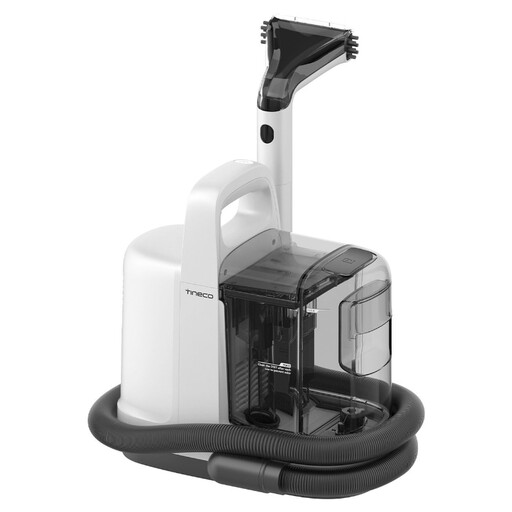
Why it suits this type of user: This corded model is designed for spot cleaning sofas, carpets, mattresses and car seats. Its compact shape makes it a good fit for households that only need to clean from time to time.
The product information lists a power rating of 400 W, two water tanks and a removable tank. This gives you a clearer idea of what the appliance is designed for than a model with only a general cleaning claim.
400 W power, a rotating brush, an upholstery nozzle and a corded power supply for continuous use.
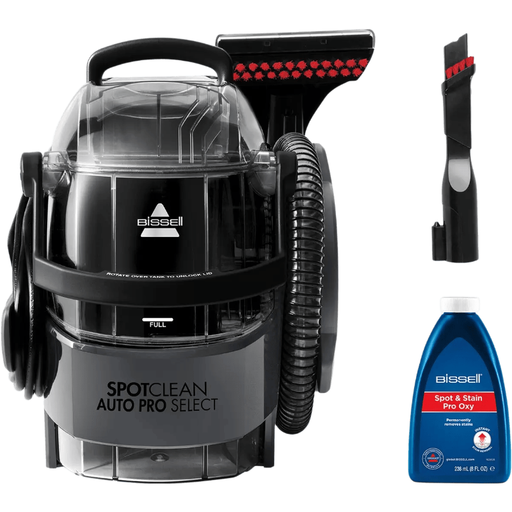
Why it suits this type of user: This model is a good choice if you regularly clean carpets, stairs, furniture and car interiors, and want a larger water capacity.
The product information lists two XL tanks and a power rating of 750 W. This makes its capacity and intended uses clearer than a vague claim about deep cleaning.
750 W power, two larger water tanks and included 8 and 15 cm brushes.
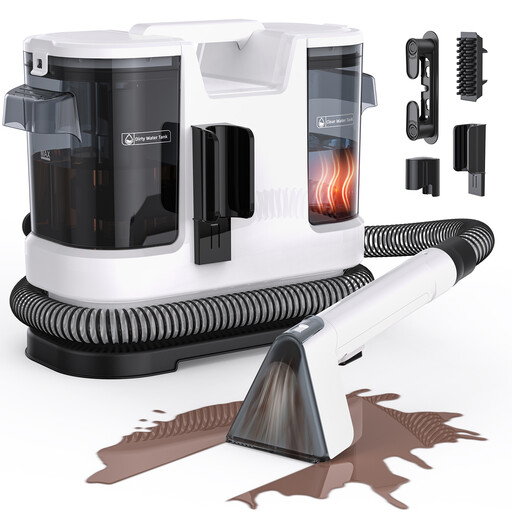
Why it suits this type of user: Its stated power of 1,400 W and suction of 15,000 Pa may appeal to households with several upholstered surfaces, such as carpets, sofas and car interiors.
The specifications list both suction power and wattage, as well as a large tank and long cable. Before buying, check the current product listing for the exact tank capacity.
1,400 W power, stated suction of 15,000 Pa, and suitable for carpets, sofas and car interiors.
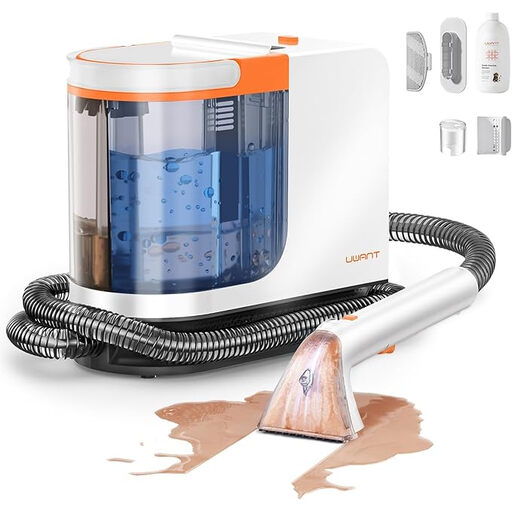
Why it suits this type of user: According to the product description, this portable model is designed for pet stains, sofas, carpets and cars, among other things. Its portable design and self-cleaning function make it suitable for regular use.
The product information lists two water tanks and a self-cleaning function. This makes maintenance easier, but you’ll still need to empty and dry the parts after use.
Stated suction power of 18,000 Pa, 600 W power and a self-cleaning function.
We’ve put together a comprehensive, up-to-date list of products that meet these strict selection criteria and comply with current European safety regulations.
Only if the upholstery is water-resistant and the care label allows wet cleaning. Test an inconspicuous area first. Use a suitable upholstery cleaner and avoid soaking the sofa.
A carpet cleaner for cars is particularly useful for fabric seats, floor mats and upholstery. A compact model with a long hose is practical in a vehicle. Make sure electrical appliances don’t come into contact with water, and that the car is well ventilated while everything dries.
Its lifespan depends on how you use, maintain and store it. Empty the tanks after every use, flush the hose through and remove hairs from the brush. Also check the warranty terms and keep the manual. Your statutory consumer rights in the European Union continue to apply; any additional manufacturer’s warranty varies by brand and product.
