
Vandaag of morgen in huis

Kwaliteit gegarandeerd

Welkomstaanbiedingen ontgrendelen: GRATIS bezorging | Tot 80% korting | Gratis 30 dagen JoyPlus-proefperiode
Download de app
A flat car battery often strikes at the worst possible time: before you leave for work, while you’re on holiday or in a dark car park. With a car jump starter, you can sometimes start a 12V vehicle yourself, without waiting for another car or roadside assistance. But not every model is suitable for every vehicle.
When comparing models, pay particular attention to the actual starting power, vehicle compatibility and jump lead safety features. Claims about thousands of amps or a large battery capacity only tell you so much unless you know how these figures were measured and what the device is suitable for.
A model rated at 2,000A or more sounds powerful, but peak current isn’t the same as the current available throughout the starting process. So check the stated starting current, maximum engine size and whether the figures differ for petrol and diesel engines.
A diesel engine generally needs more starting power than a petrol engine. So a jump starter for cars with a small petrol engine won’t automatically be suitable for a van, motorhome or SUV.
Capacity is often listed in mAh, but manufacturers may state either nominal capacity or a related output capacity. For example, the Porbi S901 lists a 20,000mAh lithium battery and a nominal output capacity of 10,000mAh. So don’t compare products based only on the biggest number on the packaging.
Also check the charging time, charging port and care instructions. If a jump starter is left unused in your car for months, it should be recharged regularly in line with the instructions.
A jump starter with a power bank, LCD display or LED light is useful, but these features don’t replace good jump lead protection. Look for protection against reverse polarity, short circuits, overloading and overheating as a minimum. Also check that the clamps are sturdy and the leads are long enough to connect safely.
Treat any CE or RoHS listing as information provided in the product description. It’s not a reason to skip the instructions or use a device outside its stated specifications.
Most portable car jump starters in this selection are designed for 12V vehicles. Check your vehicle’s voltage before buying. A 12V jump starter isn’t designed for 24V systems, such as those in heavy goods vehicles or buses, and it isn’t a charger for an electric car’s high-voltage battery either.
Next, check the maximum engine size:
Peak current is a short-term maximum figure. Starting current gives you a different idea of the current available while starting the engine. For example, the Porbi S903 lists a peak current of 2,000A and a starting current of 800A. The GOOLOO GP4000 lists a peak current of 4,000A and support for all petrol engines and diesel engines up to 10.0 litres, according to the product description.
Use these figures to compare products, not as a guarantee that every flat or damaged battery can be started. An emergency car jump starter won’t fix a battery with internal damage, a faulty starter motor or a problem with the charging system.
Always follow the sequence in the instructions. In many cases, the red clamp goes on the positive terminal and the black clamp on a suitable, unpainted metal earth point. Don’t try to start the engine for longer than instructed, and let the device rest between attempts.
Store a lithium jump starter somewhere dry and out of direct sunlight. High temperatures inside a parked car can affect battery life. Check the charge level before a long journey and recharge the device after use.
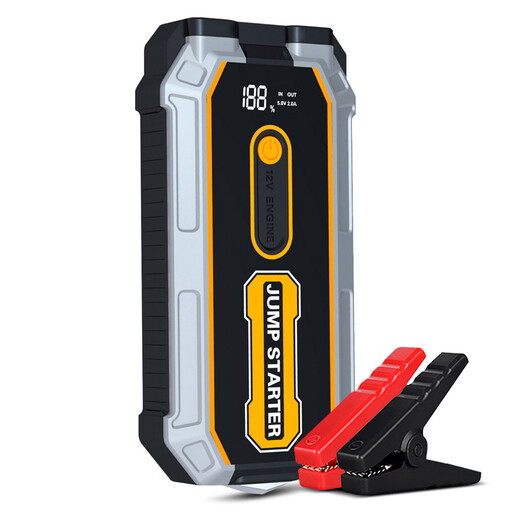
Why it suits this user: According to the product information, this compact model weighs around 330 grams and is designed for 12V petrol and diesel vehicles, motorbikes and boats.
As well as a peak current of 1,200A, the product listing gives a starting current of 600A and shows the remaining charge on an LCD display.
12,800mAh lithium battery, 10W USB output, LCD display and three-mode LED light.
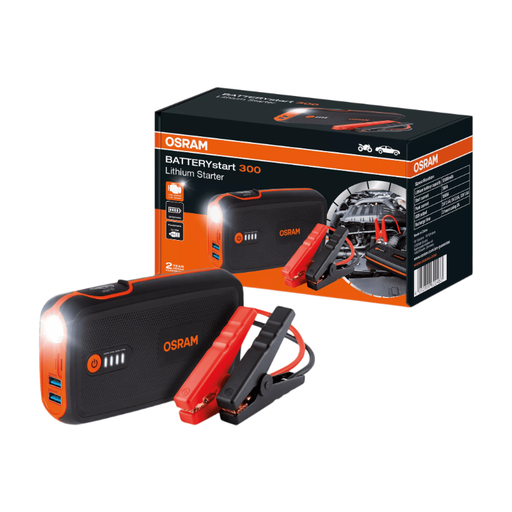
Why it suits this user: The stated specifications are aimed at everyday use with cars and motorbikes. It’s from a well-known brand and comes with a stated two-year warranty.
The product information separately lists a peak output of 1,500A, a 12V system and support for petrol engines up to 6L and diesel engines up to 3L.
13,000mAh lithium battery, two USB outputs and an integrated LED light.
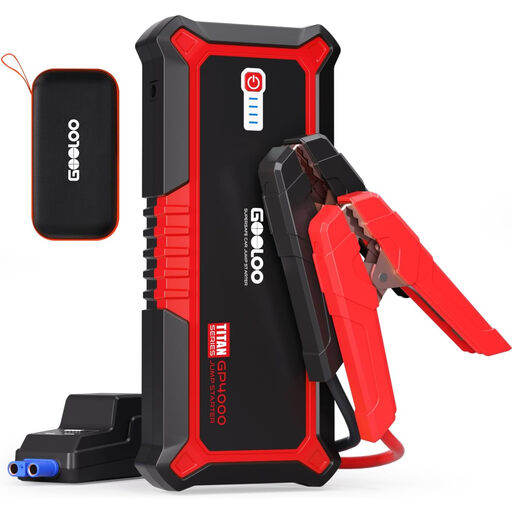
Why it suits this user: According to the product description, this powerful jump starter is designed for all petrol engines and diesel engines up to 10.0 litres, as well as motorhomes, pick-ups, boats and tractors.
The listing mentions 10 built-in safety protections, metal clamps and an operating temperature range of -20°C to 60°C.
4,000A peak current, two USB ports, a Type-C port, storage case and built-in torch.
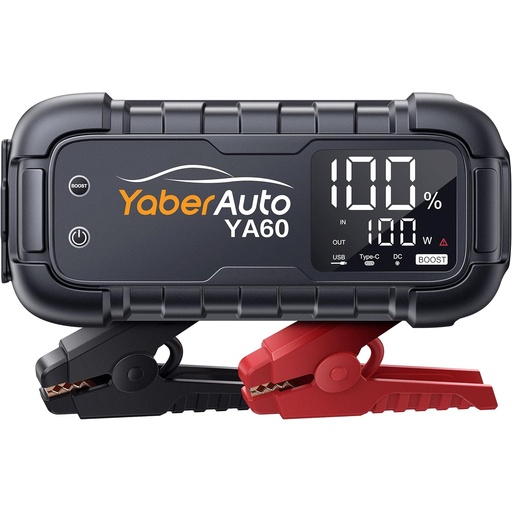
Why it suits this user: This model combines a jump starter for SUVs and vans with several charging options for phones, laptops and 12V devices.
The product details list 10 safety protections, 8AWG jump leads and stated support for 12.0L diesel engines and all petrol engines.
65W USB-C, two USB-A outputs, 150W DC output, 600-lumen LED light and 26,800mAh lithium-polymer battery.
We’ve put together a complete, up-to-date list of products that meet these strict selection criteria and the applicable European safety regulations.
No. Check the engine type, capacity and maximum starting current in the product information. A 12V rating only tells you the system voltage. Don’t use the device with 24V vehicles or for other applications not listed by the manufacturer.
It depends on the battery type, storage temperature, use and care. Charge the device in line with the instructions, for example after use or at regular intervals if it’s going to be stored for a long time. Don’t leave a jump starter uncharged for an extended period or store it in extreme heat.
Many models have USB outputs, so they can also be used as power banks for phones, tablets or cameras. Charging speeds vary by port. A model with QC3.0 or USB-C Power Delivery may charge faster, but check that your cable and device support the same standard.
