
Vandaag of morgen in huis

Kwaliteit gegarandeerd

Welkomstaanbiedingen ontgrendelen: GRATIS bezorging | Tot 80% korting | Gratis 30 dagen JoyPlus-proefperiode
Download de app
A flat battery often happens at the worst possible moment: on a cold morning, by the motorway or just before setting off in your campervan. An car jump starter can be the answer, without relying on another driver. However, not every compact device delivers what its product title promises.
Pay particular attention to these three common pitfalls:
Looking only at peak power
A high amp figure sounds convincing, but it does not tell you everything about whether the device is suitable for your engine. Also check whether it is suitable for petrol and diesel engines, what engine sizes are specified and whether your vehicle uses a 12V system.
Confusing battery capacity with starting power
A capacity stated in mAh indicates how much energy the internal battery can store. Starting performance is also affected by factors including the stated starting current, the cables and the condition of the car battery. So a larger power bank is not automatically a more powerful car jump starter.
Overlooking safety features and maintenance
Protection against reverse polarity, short circuits, overheating and overcharging is important. A jump starter left unused in the boot for months must also be recharged regularly according to the instructions.
Most portable jump starters in this selection are intended for 12V vehicles. This generally includes cars, motorbikes, SUVs, vans and some boats. Always check your vehicle’s manual before buying. A 12V jump starter is not intended for a 24V system, such as that found in a heavy goods vehicle.
Also pay attention to the stated engine limit. Some models specify support for petrol engines up to 6.0 litres and diesel engines up to 4.0 litres. According to the product information, other variants are suitable for larger engines. These claims come from the brands’ product descriptions and should be compared with your vehicle’s specifications.
A car battery booster with a peak current of 1,200 to 2,000A may be suitable for many standard cars, while SUVs, campervans and larger diesel engines may require a model with a higher stated current. However, a higher figure is not a guarantee in every situation.
Also consider:
A product with clear specifications is easier to compare objectively than an offer that only uses terms such as “extremely powerful”.
An emergency jump starter should be practical when you need it. An LCD display can show the remaining charge, while a jump starter with LED torch provides extra visibility during a night-time check. A power bank function is useful for a phone, sat-nav or camera, but check the USB output: 10W, 18W, 65W and other ratings indicate different charging speeds.
Storage conditions also matter. Many lithium models should not be stored for long periods in a hot car, damp room or direct sunlight. CE and RoHS labels are mentioned for some products in the supplied product information. According to the relevant product information, these labels refer to compliance with the stated European requirements; always check the current information on the product page before buying.
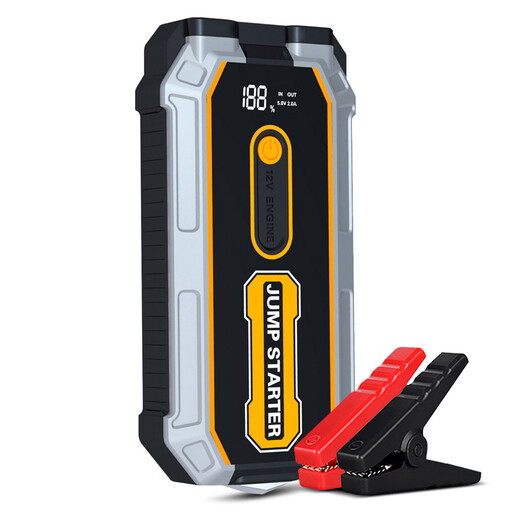
Why it suits this profile: According to the product information, this compact model weighs approximately 330 grams and is intended for 12V petrol and diesel vehicles. That makes it practical for everyday use in a car or motorbike.
The product page lists both a 1,200A peak current and a 600A starting current, as well as an LCD display. This means you can see more than just a marketing figure.
Stated capacity of 12,800mAh, 10W USB output, LCD display and LED lighting with three modes.
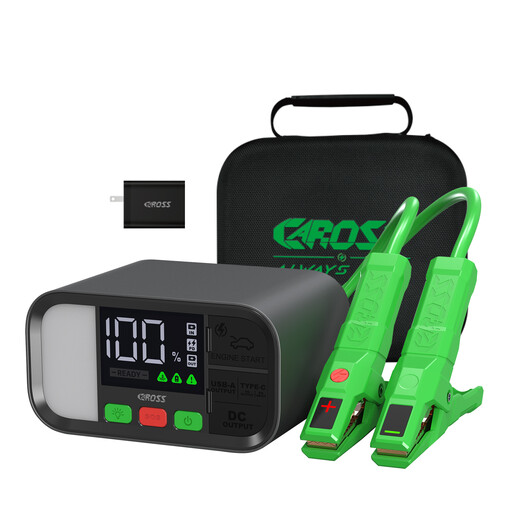
Why it suits this profile: For drivers who value a well-organised system and extra charging capacity. According to the product information, the device is suitable for 12V vehicles and features a digital display.
The product description mentions Smart Connect with non-polarised clamps and reverse-polarity protection. Always follow the supplied instructions when using it.
1,600A peak current, 16,000mAh battery, 65W PD output, 3-inch display and protective case.
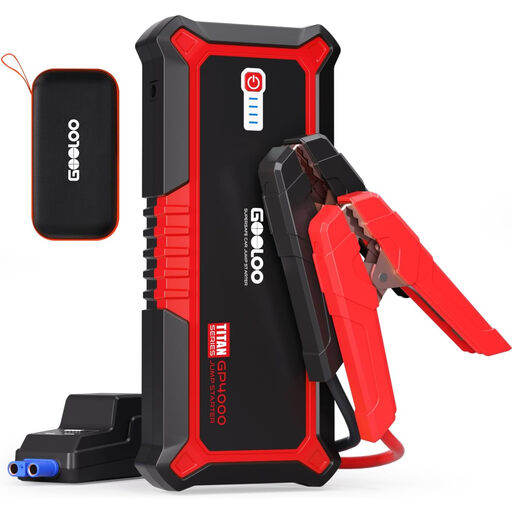
Why it suits this profile: An option for SUVs, campervans, vans and other larger 12V vehicles. The product information states that it supports petrol and diesel engines up to 10.0 litres.
The description lists ten protection features, metal clamps and a boost function for low battery voltage. Check your vehicle’s compatibility beforehand.
4,000A peak current, two USB ports, USB-C input, storage case and built-in torch.
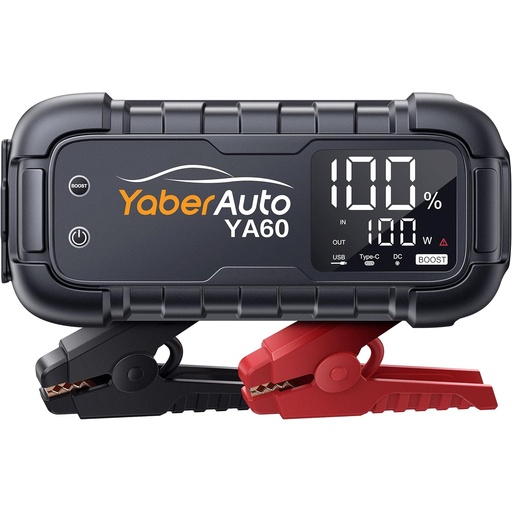
Why it suits this profile: Designed for users with a large vehicle or several power requirements on the road, such as a campervan, SUV or boat.
The product information lists 10 safety features, a boost function, a water- and dust-resistant housing and maintenance advice. Nevertheless, keep the device dry and check the instructions.
Stated peak current of 8,000A, 26,800mAh battery, USB-C 65W, 150W DC output and 600-lumen LED lighting according to the product description.
We have put together a complete, up-to-date list of products that fully meet these strict selection criteria and the applicable European safety regulations.
Read the instructions before using the device for the first time and charge it using the specified method. Switch off the car and check that the jump starter is suitable for a 12V lead-acid battery. In many cases, you connect the red clamp to the positive terminal and the black clamp to the negative terminal or an unpainted metal earth point. Start the engine briefly, usually for a few seconds per attempt. Remove the clamps after starting, following the instructions.
Do not use a booster with a leaking, damaged or swollen battery. A jump starter is not a substitute for a faulty battery or charging problem. Have the car battery checked if it keeps going flat.
This depends on the battery type, storage temperature, usage and charging frequency. Recharge the device after use and check the charge level every few months, unless the instructions specify a different schedule. Avoid storing it in a hot car for long periods.
Only if the model is stated in the product information to be suitable for diesel engines and your engine size falls within the specified limit. Diesel cars often require more starting power than comparable petrol models. Therefore, check both diesel compatibility and the stated litre limit.
Not always. A deeply discharged, damaged or faulty battery may be beyond the device’s capabilities. Some models have a boost function, but this must also be used according to the instructions. A jump starter is intended as an emergency starting aid, not as a replacement for repairs or battery maintenance.
