
Vandaag of morgen in huis

Kwaliteit gegarandeerd

Welkomstaanbiedingen ontgrendelen: GRATIS bezorging | Tot 80% korting | Gratis 30 dagen JoyPlus-proefperiode
Download de app
A flat car battery usually happens at the worst possible moment: in a dark car park, during a camping trip or just before setting off for work. A car jump starter can be a practical addition to your roadside emergency kit. However, portable jump starters vary considerably in starting power, vehicle compatibility and ease of use.
Pay particular attention to these three common pitfalls:
A 12V jump starter is designed for vehicles with a 12V battery system, but the suitable engine size varies by model. Petrol engines generally require different support from diesel engines. If you drive an SUV, van, motorhome or lorry, check the stated maximum engine capacity specifically.
Check the following before buying:
A battery booster for a diesel car often needs a greater margin, particularly with larger engines or in low outdoor temperatures. Manufacturers’ claims about starting capacity are based on the brand’s product information and do not guarantee performance with every battery condition.
A useful car jump starter has smart jump leads with clear indicators. Helpful protection features include:
Do not use a jump starter on a visibly damaged, leaking or frozen battery. During multiple starting attempts, the device must be allowed to cool down. Connect the red clamp to the positive terminal and the black clamp to the negative terminal or a suitable unpainted metal earth point, depending on the instructions.
A car jump lead without a built-in battery only works when connected to a second vehicle or an external power supply. A jump starter power bank works independently, but it must be charged and maintained correctly.
A jump starter with an LED light can help when checking under the bonnet or dealing with a breakdown in the dark. SOS and flashing modes can be used as warning signals. A jump starter with a compressor or jump starter with an air pump is useful if you have both a flat battery and a soft tyre to deal with.
When considering a compressor, look for:
A compressor is not a substitute for a repair or a tyre inspection at a garage. Treat this feature as emergency assistance for safely reaching a suitable tyre pressure.
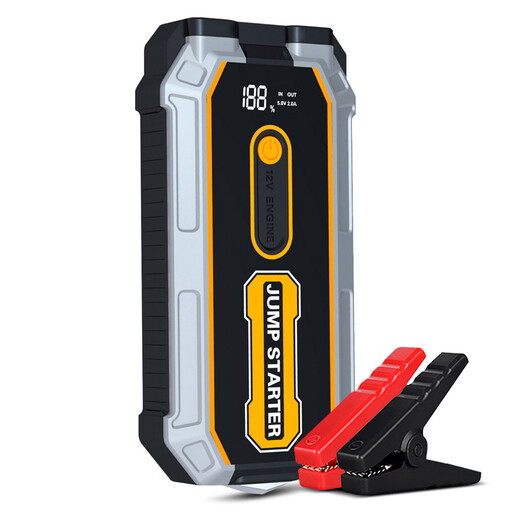
Why it suits this profile: According to the product information, this compact model is suitable for 12V petrol and diesel vehicles, including cars, SUVs and motorbikes. Weighing approximately 330 grams, it is easy to store in the car.
The product page lists both the 1200A peak current and the 600A starting current. This gives you more information than just one large marketing figure.
12800mAh battery capacity according to the product information, LCD display, USB power-bank function and LED light with three modes.
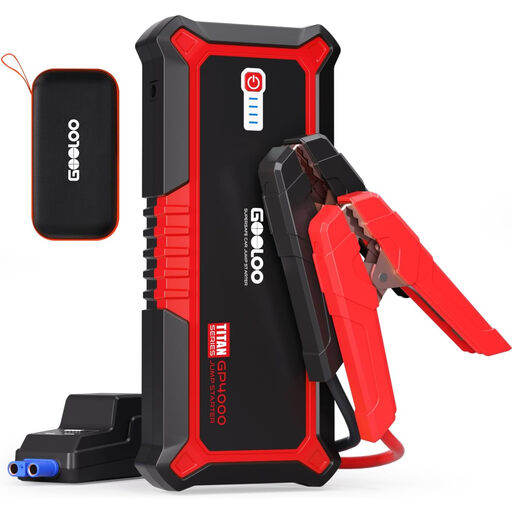
Why it suits this profile: According to GOOLOO, the GP4000 is designed for 12V vehicles and petrol engines up to 10 litres or diesel engines up to 10 litres. This makes it suitable for drivers of larger SUVs, motorhomes, vans and other vehicles.
The specifications list 4000A, 10 built-in protection features, metal clamps and a stated operating temperature range of -20°C to 60°C.
Two USB ports, USB-C input, LED light, storage case and support for larger engines according to the product description.
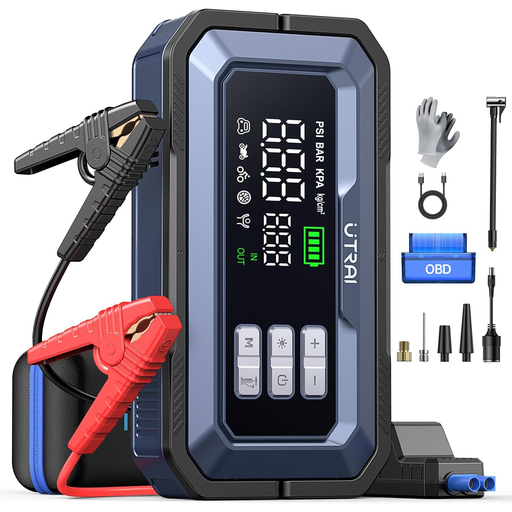
Why it suits this profile: According to the product specifications, this model combines a car battery booster with a compressor, OBD2 adapter, 160W DC output and various USB connections. That makes it suitable for travelling, camping and intensive use on the road.
The built-in pressure setting, automatic shut-off according to the description and temperature protection make the compressor function easier to control than a simple hand pump.
7000A peak current, 150 PSI air pump, 2000-lumen LED panel, 18W USB-C charging and stated suitability for diesel engines up to 14 litres.
A portable jump starter is only useful if it is ready when you need it. Fully charge the device before using it for the first time and check the charge level a few days before a long journey. Product information from various brands recommends recharging after approximately two to three months when the device is not being used.
Store the jump starter:
Do not leave the clamps connected for longer than necessary after starting the engine. Start the engine briefly and allow the device to cool down if the first attempt is unsuccessful. A worn or faulty battery may continue to cause the problem; a car emergency starter is not a permanent repair.
We’ve put together a complete, up-to-date list of products that fully meet these strict selection criteria and the applicable European safety regulations.
First, check that the jump starter is sufficiently charged and suitable for a 12V system. Connect the red clamp to the positive terminal and the black clamp to the negative terminal or a suitable earth point. Wait for the correct indicator and start the car according to the instructions. Remove the clamps once the engine is running.
Its service life depends on the battery type, storage temperature, charging frequency and usage. Recharge the device regularly, even when you are not using it. Also check the cables, clamps, casing and charging ports for damage. The charging cycles or standby times stated by brands are product-specific claims and may vary depending on the conditions of use.
That depends on how you intend to use it. If you only need to deal with a flat battery, a compact model with jump leads and an LED light will be sufficient. If you travel frequently, go camping or want to be prepared for a soft tyre, a jump starter with an air pump can be especially practical. When comparing models, look beyond the price and also consider the maximum pressure, automatic shut-off, accessories and weight.
