
Vandaag of morgen in huis

Kwaliteit gegarandeerd

Welkomstaanbiedingen ontgrendelen: GRATIS bezorging | Tot 80% korting | Gratis 30 dagen JoyPlus-proefperiode
Download de app
A flat battery often strikes at the worst possible moment: before you leave for work, during a camping trip or on a dark country road. With a car jump starter, you can try to start a 12V vehicle yourself in some situations, without relying on another car.
However, not all portable car jump starters are the same. A high amp rating on the packaging doesn’t tell you everything about suitability, lifespan or ease of use. Watch out for these common pitfalls.
A rating such as 1500A, 3000A or 8000A sounds impressive, but you should always consider it alongside the stated engine compatibility. A device may be suitable for a petrol engine up to 9.0 litres, but have a lower limit for diesel engines. Diesels generally need more starting power.
So check:
A 12V jump starter isn’t automatically suitable for a 24V lorry or a high-voltage electric car battery.
A jump starter power bank with USB ports, an LED light and a compressor can be useful. But extra features also make the device bigger, heavier and sometimes more expensive. A compressor, for example, is handy for low tyre pressure, but it won’t replace a professional repair if you have a puncture.
Think about how you’ll use it. For occasional roadside assistance, a compact portable battery charger with jump leads may be enough. For a motorhome, SUV or outdoor gear, a model with a DC output, compressor and powerful light may offer more value.
Check which protections are actually listed. These might include reverse polarity, short-circuit, overheating and overcharge protection, as well as spark-free connections. A jump starter with smart jump leads will often alert you if they’re connected incorrectly, but you should still follow the instructions.
Also check the supplied cables, the condition of the clamps and the recommended storage temperature. Don’t use a device if its casing is cracked or its battery is leaking.
Starting current is often listed as peak current. Use this as a point of comparison, not as a guarantee that it will start every vehicle. A lighter model is often enough for a small petrol car, while a diesel SUV, motorhome or van may need a more powerful one.
Here are a few examples from product information:
This information comes from the relevant product descriptions. Always check the manual and your vehicle’s specifications before buying.
Capacity is often shown in mAh or Wh. A higher capacity may provide more starting attempts or extra USB charging, but it doesn’t tell you on its own how much starting current is available.
Also check:
According to the product information, the YaberAuto YA60 has a capacity of 26.800 mAh and 65W two-way charging. The GOOLOO GT4000S lists 100W charging and comes with a 100W car charger. These are verifiable product specifications, but actual usage time depends on the temperature, vehicle and battery condition.
A sturdy casing with rubber edges can be useful in a car or work van. Also consider the dimensions and weight: a model weighing almost a kilo is less suitable for a small breakdown kit than a compact device weighing a few hundred grams.
Temperature information is also relevant in British conditions. Don’t leave a lithium-powered device in direct sunlight or extreme heat for extended periods. An LED light with SOS or flashing mode is useful if you need to be visible at the roadside, but always put out a warning triangle when you break down and follow the rules of the road.

Why it suits this profile: At around 330 grams, its compact casing is easy to store in a car, rucksack or emergency kit. According to the product information, it’s suitable for 12V petrol and diesel vehicles.
As well as 1200A, the product description lists a starting current of 600A, an LCD display and a limited range of vehicle types. This gives you more to compare than peak current alone.
1200A peak current, stated 12.800mAh battery capacity, USB output, LCD indicator and LED light with three modes.
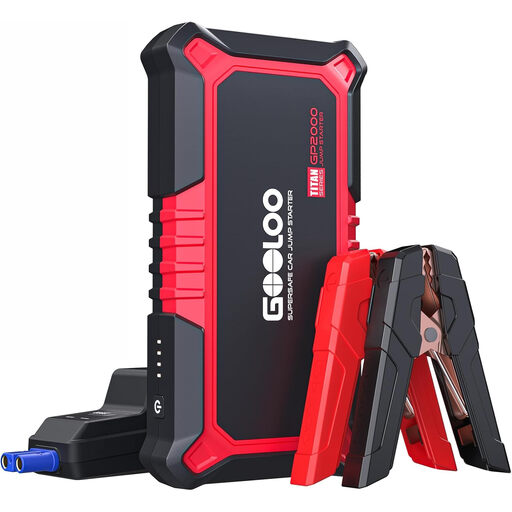
Why it suits this profile: This model combines a 2000A peak current with smart jump leads, USB outputs and a casing that, according to the product information, is drop-resistant.
The specifications give clear limits: up to 8.0 litres for petrol and 6.0 litres for diesel, plus ten listed safety features. This makes it easier to check whether it’s suitable.
400-lumen LED light, USB outputs, approximately 545 grams and a stated standby time of up to 24 months.
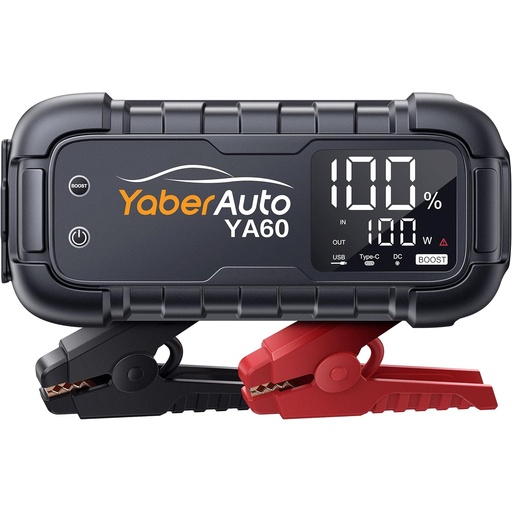
Why it suits this profile: Its high stated peak current, 65W charging and 150W DC output make it a good fit for motorhomes, work vans and outdoor enthusiasts who take several devices with them.
As well as starting power, the manufacturer lists specific engine limits, 10 safety features and an operating temperature range. Use this information alongside your vehicle’s manual.
26.800mAh, USB-C 65W, two USB-A outputs, 150W DC output and a 600-lumen LED light, according to the product description.
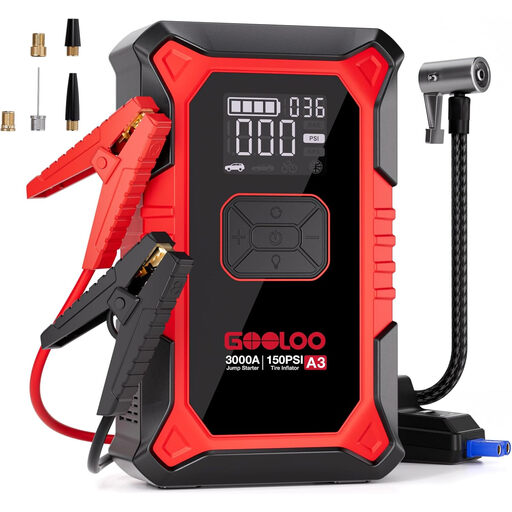
Why it suits this profile: A jump starter with a compressor is handy if you want to inflate tyres, bike tyres or balls while you’re out and about, without carrying several devices.
According to the product information, the compressor has digital pressure measurement, automatic shut-off and different modes. That means you don’t have to rely on a high PSI figure alone.
3000A, compressor up to 150 PSI, airflow of 35 L/min, LED screen and support for 12V vehicles within the stated engine limits.
We’ve put together a full, up-to-date list of products that meet these strict selection criteria and the applicable European safety regulations.
Also check that the product comes with clear instructions, warranty information and relevant conformity information. A CE mark is no substitute for correct use or checking vehicle compatibility.
That depends on the battery type, storage temperature, charge level and how it’s used. Follow the manufacturer’s maintenance advice. Some models recommend recharging every few months, while others state a longer standby period. Don’t leave a lithium battery unchecked in a hot car for years.
Yes, but only if the specifications support your engine. Check the stated limit for diesel engines separately. A jump starter for petrol and diesel vehicles may need a higher capacity or starting current for a larger diesel engine.
The electricity used to charge one is usually minimal, but the device does need to be recharged periodically. The main costs are the initial purchase and any replacement needed due to wear. A model with a power bank, LED light or compressor may offer extra features, but only choose them if you’ll actually use them.
