
Card player without a separate monitor
You want to be able to read the playing area on the built-in screen, so you’re comparing screen size, resolution and the laptop’s overall dimensions.


You don’t automatically need a large gaming laptop for card games. Choose a generous built-in screen if you want to play without a separate monitor, or check the laptop’s video output if you usually play on a monitor or TV. A larger screen makes a laptop less portable; extra graphics power is mainly relevant if you also play other games and your chosen configuration meets their system requirements.
You want to be able to read the playing area on the built-in screen, so you’re comparing screen size, resolution and the laptop’s overall dimensions.
You usually play in one place and mainly want to make sure the laptop can connect to your large external screen.
You don’t want to opt for powerful gaming components by default if the games you play don’t call for them.
Choose this if: you want to view cards and text on the laptop itself, without setting up an external screen.
Bear in mind: a larger laptop is less convenient to carry around regularly.
Choose this if: you mainly need a large screen in a fixed gaming spot.
Bear in mind: you’ll also need to consider the connection, cable or adapter, and the space available for your setup.
Consider this if: you want to play demanding games as well as card games.
Bear in mind: a gaming label or powerful graphics card alone doesn’t prove that the configuration is necessary for the games you play.
| What to consider | What should you check? | Who should pay closer attention? |
|---|---|---|
| Readability on the built-in screen | Compare the screen size and resolution of the exact configuration. Also consider whether the interface is easy to read with your preferred Windows scaling. | If I play without a separate monitor, I want to be able to read cards and text clearly on the laptop screen. Around 40% of consumers give built-in screen space their highest priority. |
| Avoiding unnecessary gaming costs | Check the system requirements of the card games you play and compare the full configuration, not just the GPU name or the word ‘gaming’. | I don’t want to choose a powerful graphics configuration if my games don’t call for it. Around 30% of consumers prioritise avoiding unnecessary gaming costs. |
| Large picture on an external screen | Check the video output on the exact laptop and the input on your screen. Also check which cable or adapter you’ll need. | If I mainly play in one place, I want to be able to connect my monitor or TV. Around 20% of consumers give connecting to an external screen their highest priority. |
| Playing other games too | Compare the published system requirements of your other games with the processor, RAM, GPU and operating system of the exact configuration. | I want to find out what my other games require first, then choose a laptop for card games. Around 10% of consumers make other games their first priority. |
Screen size, resolution and graphics specifications are separate features. A powerful GPU alone doesn’t tell you how easy your game’s interface will be to read.
First consider your screen setup and game interface, then compare the system requirements of any other games you play.
A port with the right shape doesn’t automatically confirm that the exact laptop can send a picture to your monitor or TV.
Check the stated video output for the exact configuration and compare it with the input on your screen.
A listing with product specifications doesn’t automatically mean that the configuration is available to order when you’re ready to buy.
Check the seller’s current order status before deciding to buy.
The LOQ 17IRX10 configuration 83JH008FMH is an example of a gaming laptop with a large built-in screen.
The OMEN 17-db1630nd, product code BV5K0EA#ABH, is a 17.3-inch configuration worth considering for a technical comparison.
The Predator Helios Neo 18 AI configuration NH.QVFEH.001 is worth considering if an 18-inch screen and a listed HDMI port are important to you.
These Joybuy product picks are aimed at playing on a large built-in laptop screen; details of an external display connection are also listed for some configurations.
 Image unavailable
The built-in 18-inch screen is well suited to playing without a separate monitor.
WUXGA, 1920 × 1200 pixels; Ryzen 7 260; RTX 5070 Laptop GPU; 16 GB RAM; 1 TB SSD; QWERTY keyboard.
According to the product description, the power adapter must be purchased separately.
 Image unavailable
The built-in 18-inch screen gives you a large picture without an external monitor.
WQXGA, 2560 × 1600 pixels, 240 Hz; Ryzen 9 8940HX; RTX 5060 Laptop GPU; 16 GB RAM; 1 TB SSD; QWERTY keyboard.
According to the product description, the charger is sold separately.
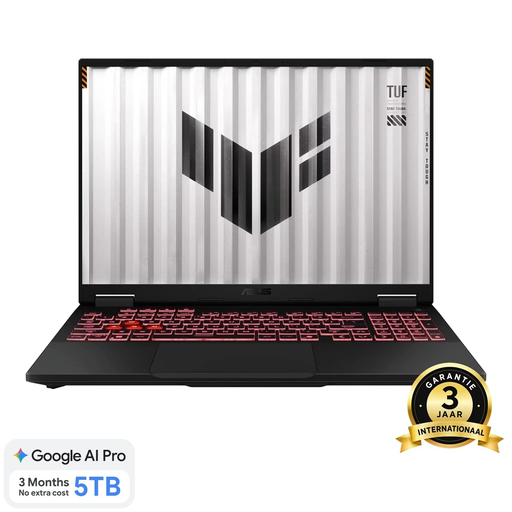 Image unavailable
This configuration combines an 18-inch built-in screen with listed ports for a possible external display setup.
WUXGA, 1920 × 1200 pixels, 144 Hz; AMD Ryzen 7 260; GeForce RTX 5060 8 GB; 16 GB DDR5; 512 GB SSD; Windows 11 Home; QWERTY keyboard.
The product description lists HDMI 2.1 and USB-C with DisplayPort functionality; check that they’re compatible with your screen.
 Image unavailable
The built-in 18-inch screen is an option for playing without a separate monitor.
UHD+, 3840 × 2400 pixels, Mini LED, 120 Hz; Intel Core Ultra 9 285HX; RTX 5090 24 GB; 64 GB DDR5; 6 TB SSD; Windows 11 Pro.
 Image unavailable
The built-in 18-inch screen is well suited to playing on the laptop; the product description also lists HDMI for an external setup.
WQXGA, 2560 × 1600 pixels, 165 Hz, IPS; AMD Ryzen AI 7 350; GeForce RTX 5060 8 GB GDDR7; 16 GB DDR5; 1 TB SSD; Windows 11 Home; QWERTY keyboard.
Check that the listed HDMI port matches the input on your screen.
No, not based on the game category alone. The publisher describes Balatro as a card game, while Tabletop Simulator is also a 3D sandbox that includes card games. Check the system requirements for the games you play before choosing a GPU configuration; these examples aren’t a performance comparison.
First, connect a compatible screen using a suitable cable. You can then identify and arrange the detected displays in Windows and adjust the scaling or resolution for each one. Microsoft Support explains these settings; before buying, also check that the exact laptop has the video output you need.
If you buy online from a business as a consumer, the Dutch government says you’ll often have a 14-day cooling-off period; not every transaction counts as a distance sale. If a product is faulty, the seller is responsible for helping to resolve the issue, not just the manufacturer. Also check the terms and conditions for your specific order.