If you want to stock the biscuit tin for several afternoons, compare a pack of 12 or around 468–480 g with smaller packs. Mini caramel waffles are more convenient if you want to hand out smaller portions. If gluten-free is essential, choose a pack explicitly labelled gluten-free and check the other allergens on the label too.
Which size is right for you?
Families topping up the biscuit tin
If you’re buying caramel waffles for several afternoons, check the number of pieces or portions and the storage instructions. Jumbo, for example, lists 12 portions in its 468 g pack; Lidl lists 12 pieces in its 480 g Sondey pack.
Parents who want to serve smaller portions
Mini caramel waffles may be a better fit if you don’t want to serve a full-sized one every time after school. ALDI and Albert Heijn include these options in their ranges; check the size of the pack you choose.
Families checking for gluten or other allergens
An explicit gluten-free label may be essential, but it doesn’t tell you whether the product is free from all other allergens. PLUS also lists egg and lupin in its gluten-free caramel waffles, so check the label of the variety you choose.
What should you look for when choosing?
First, work out how many caramel waffles you want to keep for upcoming snack times and how you plan to portion them. If an allergen or a gluten-free label is a deciding factor, check the label before choosing a pack size.
| What to consider |
What to check when buying |
Who it’s relevant to |
| Pack size |
Compare the number of pieces or portions, and read the storage instructions. |
If you’re filling the biscuit tin for several afternoons, you’ll want to know how long one pack will last; around 46% of consumers prioritise having enough in stock. |
| After-school portions |
Check the size of each caramel waffle and the nutritional information per portion. |
If you want to serve a smaller amount after school without using a full-sized caramel waffle every time, you’re not alone: around 36% of consumers prioritise portion size. |
| Allergens and gluten-free options |
Read the ingredients and allergen information on the pack, and look for an explicit gluten-free label if needed. |
If someone needs to avoid a particular ingredient, the pack you choose must meet that requirement; around 18% of consumers put this check first. |
What could you get wrong?
-
Assuming a large pack is an obvious everyday snack choice
A multipack makes caramel waffles easy to reach for, but the pack size doesn’t determine how often you want to serve them. For children aged 4 to 12, the Dutch Nutrition Centre recommends choosing snacks mainly from its Wheel of Five, such as fruit and vegetables.
When filling the biscuit tin, think about when you’d like to offer caramel waffles as a treat.
-
Assuming gluten-free means free from other allergens too
According to the product information, PLUS’s gluten-free caramel waffles also contain egg and lupin. Regular varieties from Jumbo and PLUS list ingredients including wheat, milk and soya.
Check the label on the exact pack you’ve chosen for every allergen relevant to the person who’ll be eating it.
-
Relying only on online ingredient information
Albert Heijn says that ingredients, nutritional values and allergy information can change. Online information is therefore no substitute for checking the label on the pack you’re using.
Before serving, read the ingredients list, allergen information and storage instructions on the pack.
Brands and ranges to consider
Daelmans
A classic caramel waffle variety in a pack of 10, as described by PLUS.
- PLUS lists butter, cinnamon and vanilla in this variety.
- The product information lists wheat, soya and milk; if you have an allergy, check the latest label.
Albert Heijn / AH
Albert Heijn’s caramel waffle range includes both regular and mini varieties.
- The different sizes give you the option of choosing a pack to stock up or smaller caramel waffles.
- Albert Heijn recommends checking the pack, as product information can change.
Jumbo
Jumbo lists a 468 g pack of butter caramel waffles with 12 portions.
- The stated number of portions can help you plan for several snack times.
- This variety lists wheat, milk and soya. Jumbo advises storing it in a cool, dry place.
Sondey / Lidl
Lidl describes Sondey Butter Caramel Waffles as a pack of 12, weighing 480 g.
- The number of pieces makes it clear how many waffles are in each pack.
- Check the pack for the ingredients, allergen information and nutritional values of this variety.
PLUS
PLUS offers both regular 480 g caramel waffles and a separate 240 g gluten-free variety.
- Having separate varieties makes it easier to start by choosing a pack size or checking for an essential gluten-free label.
- The gluten-free variety also lists egg and lupin; check the allergens on each pack.
Caramel waffles at Joybuy
This pack of eight caramel waffles is a good fit if you want to spread a smaller pack across several after-school snack times.
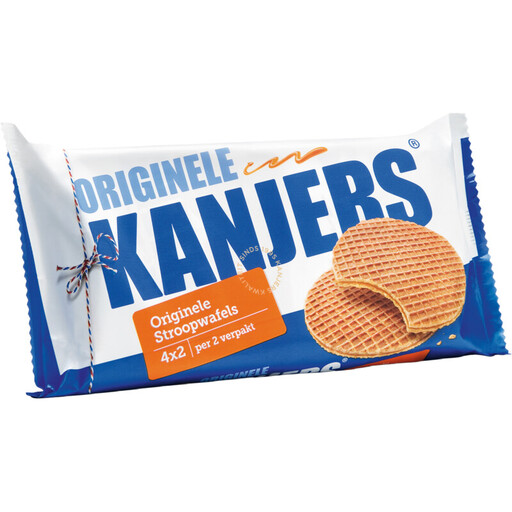 Image unavailable
Kanjers Original Stroopwafels, 8 pieces
For anyone who wants to spread caramel waffles across several after-school snack times. The pack contains 8 pieces.
View at Joybuy
Frequently asked questions
Are caramel waffles an everyday after-school choice?
For children aged 4 to 12, the Dutch Nutrition Centre recommends choosing snacks mainly from its Wheel of Five, such as fruit and vegetables. You can save caramel waffles as a treat for a particular occasion.
Are gluten-free caramel waffles also free from other allergens?
No. PLUS’s gluten-free caramel waffles also list egg and lupin. As well as checking the gluten-free label, read the full allergen information on the pack.
How should I store a family pack of caramel waffles?
Follow the storage instructions on the pack you’ve chosen. Jumbo advises storing its butter variety in a cool, dry place; for other packs, follow the instructions on their labels.
Why should I read the label if I’ve already looked at the product information online?
Ingredients and allergy information can change, as Albert Heijn notes in its product information. So check the label on the pack you’re using, especially if an allergen or dietary requirement is important.


