
Caramel maker who wants to adjust the heat
When making caramel sauce, you’ll want to adjust the heat as the sugar changes colour. Rutger Bakt explains why sugar should be heated neither too gently nor too intensely.


Choose based on your pan, the space available and how easily you can adjust the heat while cooking. Induction requires a compatible pan; ceramic and classic electric hobs are alternatives, but check each model’s controls and required clearance. The hob’s temperature setting doesn’t prove that the sugar in your pan has reached that temperature.
When making caramel sauce, you’ll want to adjust the heat as the sugar changes colour. Rutger Bakt explains why sugar should be heated neither too gently nor too intensely.
You’re looking for a cooking zone that fits on your worktop, with the clearance specified in the manual, and that you can put away after use.
You want to know whether your saucepan is suitable for induction, or whether you’d prefer another type of electric hob. Consumentenbond explains what kind of base an induction hob requires.
| What to consider | What to look for when buying | Who is this important to? |
|---|---|---|
| Being able to adjust the heat | Compare the controls and settings on the exact model. Keep an eye on the colour and progress of the sugar in the pan. | When I make caramel sauce, I want to be able to adjust the heat and see for myself how the sugar changes colour. Around 33% of consumers make heat control their top priority. |
| Worktop space and clearance | Measure the space for the hob and pan, as well as the clearance specified in the manual. | With limited worktop space, I want to know whether the hob will fit where I have room to use it. Around 27% of consumers give worktop space top priority. |
| Pan suitability | Check that the base is suitable for induction and that the pan’s diameter is within the model’s specified range. | If I want to keep using my existing saucepan, I’ll first check whether it works with the hob I’ve chosen. Around 20% of consumers make keeping their pans a top priority. |
| Connection and safe use | Read the manual for information about the plug, positioning and ventilation. Keep flammable materials away and stay nearby while cooking. | When working with hot sugar, I want to know how to position and use the hob safely, and whether the connection is suitable. Around 20% of consumers make connection and safe use their top priority. |
A temperature setting describes how the hob is controlled; it doesn’t measure how hot the sugar in the pan is. Sugar can burn if it gets too hot.
Use the settings to adjust the heat, but keep an eye on the colour and progress of the sugar in the pan.
Induction requires a suitable pan base, and the pan must be within the hob’s specified size range.
Check your pan’s base and diameter before buying. Alternatively, compare a ceramic or classic electric hob.
The manual may specify additional clearance. For the Inventum KI120T, the manual requires at least 10 cm at the sides and back, and warns against using it in small spaces.
Measure the space you’ll use in line with the manual for the model you’re considering, including the space around and underneath the appliance.
Brandweer Twente advises staying nearby while cooking. Princess says the ceramic hob on the 303020 stays hot for a long time.
Stay with the caramel sauce and let the hob cool down as instructed in the manual before cleaning or putting it away.
The S-Line 2100 is a portable induction hob for comparing different power and temperature settings.
This comparison includes both the KP 1071 induction hob and the classic electric KP 1091.
The 303020 is a portable single-zone ceramic hob to compare with induction models.
The KP-6191 is a classic electric single hotplate with a dial.
The KI120T is a single-zone induction hob for pans with a specified diameter of 15 to 20 cm.
This selection includes portable induction hobs and a ceramic hob for comparing heat settings or continuing to use your existing pans. Check each model’s pan requirements and the space needed for positioning.
 Image unavailable
An option if you want to adjust the heat settings, provided your pan is suitable for induction.
The product name lists 8 power levels, a temperature setting of 60–270 °C and compatibility with pans measuring 12–26 cm.
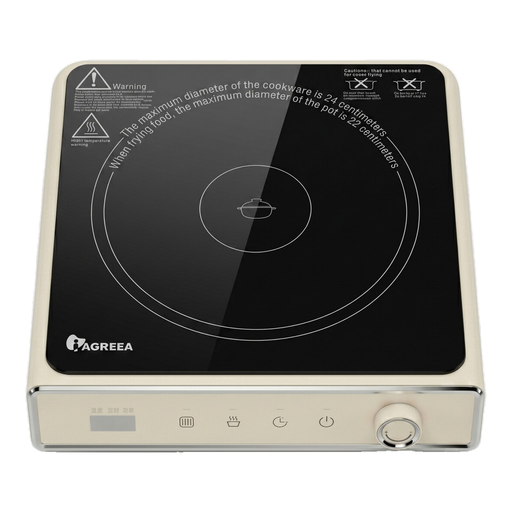 Image unavailable
A ceramic option if you don’t want to rely on having an induction-compatible pan. Check your cookware’s suitability in the product documentation.
The product information lists 8 temperature settings, 8 power levels, a 180-minute timer and automatic shut-off after 1 hour. The surface can get hot during use.
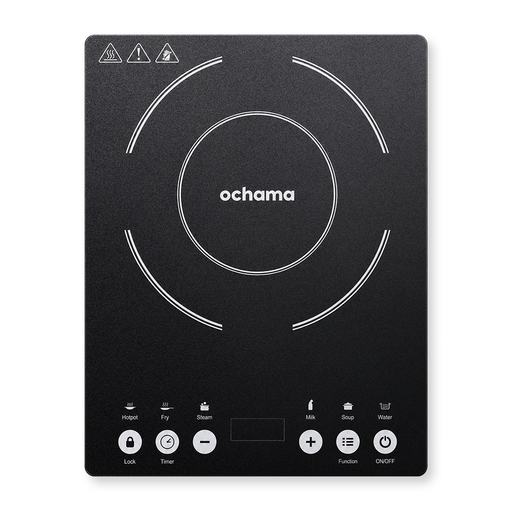 Image unavailable
A portable induction option if you want to adjust the heat and your pan is suitable for induction.
The product information lists 10 power settings and touch controls. According to the description, only magnetic cookware is suitable.
 Image unavailable
An induction hob with adjustable heat settings, provided your pan’s base and diameter fall within the specified range.
The product information lists 10 power levels, a temperature setting of 60–240 °C and compatibility with pans measuring 12–26 cm. According to the description, suitable cookware has a flat, induction-compatible base.
 Image unavailable
An induction option if you want to adjust the heat and match the pan’s diameter to the cooking zone.
The product information lists 10 power levels, a temperature setting of 60–240 °C and a cooking zone with a diameter of 100–200 mm. Suitable for induction pans.
Only if its base is suitable for induction. According to Consumentenbond, it must be magnetisable and conduct heat. Also check that the diameter is within the range supported by your chosen hob. A suitable base alone doesn’t guarantee that a small pan will be detected.
No. Use a timer as a reminder at most, and stay by the hob. Brandweer Twente advises staying nearby while cooking and keeping flammable materials away; sugar can burn if heated too intensely.
No. Check the positioning requirements for the exact model. For example, the Inventum KI120T manual requires at least 10 cm of clearance at the sides and back, and warns against use in small spaces. So measuring only the external dimensions isn’t enough.
If a product doesn’t perform as you could reasonably expect during normal use, the seller must resolve the issue under the legal guarantee. ACM ConsuWijzer explains options including repair, replacement or a refund. Online purchases generally also come with a cooling-off period of up to 14 days after delivery, subject to legal exceptions.
For electrical equipment covered by the relevant EU rules, the Dutch Ondernemersplein explains that manufacturers must provide a CE marking and an EU declaration of conformity. A statement in a product description doesn’t independently confirm that the appliance is safe to use or suitable for your kitchen; consult the product documentation.