
Vandaag of morgen in huis

Kwaliteit gegarandeerd

Welkomstaanbiedingen ontgrendelen: GRATIS bezorging | Tot 80% korting | Gratis 30 dagen JoyPlus-proefperiode
Download de app
A car tyre pressure gauge may seem like a simple product, but there are big differences between gauges, pumps and a complete tyre pressure monitoring system. A compact digital gauge is handy for a quick check. If you drive a caravan, motorhome or trailer, wireless tyre pressure sensors that alert you while you’re on the move may be a better choice.
Choosing the wrong product can lead to extra costs or leave you with something that sits unused in the boot. So don’t focus only on a low price or a long list of features. Pay particular attention to the measurement range, power supply, compatibility with your valves and how alerts are delivered.
A gauge that measures up to 200 PSI isn’t automatically suitable for every car. For a car, a clear display and suitable accuracy are particularly useful. Caravans, motorhomes and lorries often require higher tyre pressures. Always check your vehicle’s recommended pressure and compare it with the gauge’s range.
A caravan tyre pressure gauge, motorhome tyre pressure gauge or lorry tyre pressure gauge must also be suitable for the load and valve type. A system for four tyres won’t be enough if you need to monitor six tyres or a trailer.
A cordless pump is easy to carry, but a flat battery makes it useless when you’re out and about. Check whether it can be charged via USB-C and whether it also has a 12V connection. Also check the maximum operating time and recommended breaks. A pump can get hot during prolonged inflation.
A portable tyre inflator with automatic shut-off means you don’t have to keep watching the display. Even so, it’s important to check the pressure again after inflating.
A car TPMS measures and reports changes in tyre pressure and sometimes temperature. It doesn’t repair a puncture. A tyre repair kit is intended as a temporary fix and isn’t a substitute for a professional inspection. According to OSRAM’s product description, the TYREseal kit is intended for temporary repairs only; have the tyre checked as soon as possible afterwards.
Choose a display that lets you switch easily between PSI, bar and kPa. For vehicles in the Netherlands, bar is usually the most practical unit. Check that the range is suitable for your car, SUV, caravan, motorhome or lorry. A system such as the GUTA GT40+4GS02 has a stated range of 0–13 bar and an error margin of less than 2 PSI, according to the brand’s product information.
Check how external sensors attach. According to their product descriptions, the TPMS systems mentioned are designed for standard Schrader valves. This makes fitting straightforward, but check compatibility before you buy.
On longer journeys, monitoring tyre temperature can provide additional information. A TPMS can be set to alert you to issues such as rapid air loss, pressure that’s too high or too low, high temperatures and a low sensor battery. This is different from a standalone tyre pressure gauge, which usually gives you a reading at a single point in time.
Check the alert thresholds too. According to the brand’s descriptions, various Tymate systems automatically set a reference pressure and provide alerts when pressure is around 15% lower or 25% higher. Treat this as a product specification, not a substitute for the values in your vehicle handbook or on its tyre pressure sticker.
A system with four sensors is suitable for many cars and SUVs. For a caravan, motorhome or lorry, the number of sensors and wireless range are more important. Some systems support a repeater for longer vehicles.
Check the batteries in the sensors too. GUTA’s description specifies a CR2032 battery with an estimated life of around four years. Tymate specifies around two years for CR1632 batteries. These are the brands’ stated specifications; actual battery life may vary.
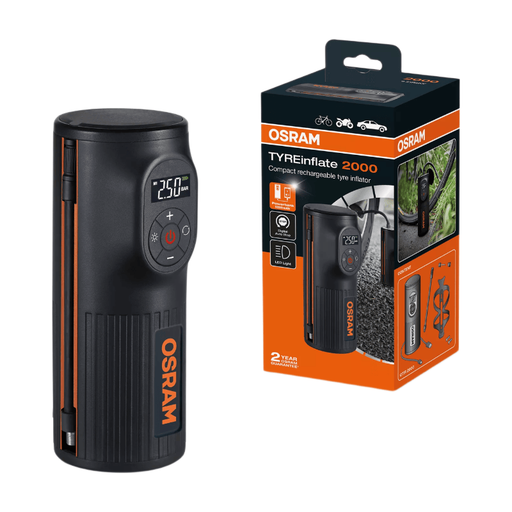
Why it suits this type of user: A compact electric tyre inflator for drivers who want to top up their tyres themselves from time to time and have limited space in the car.
The illuminated digital display shows bar, kPa or PSI, and the automatic shut-off helps prevent over-inflation.
According to the product description: USB charging, LED light, pressure memory and a maximum operating pressure of 5,5 bar.
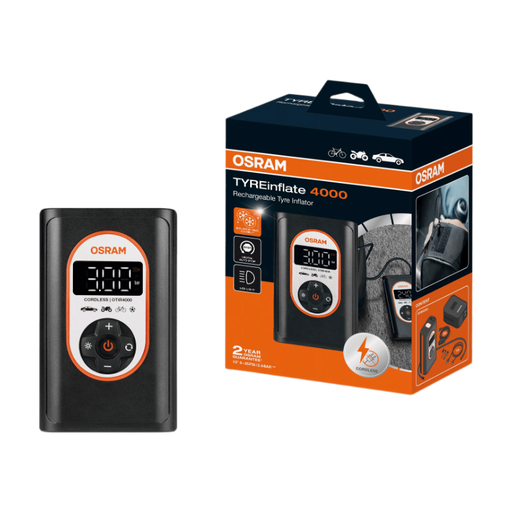
Why it suits this type of user: A good choice if you want a rechargeable pump with extra controls for travelling, camping or everyday maintenance.
As well as its built-in battery, a 12V connection is available if the battery is running low, according to the product information.
Automatic shut-off, pressure memory for four vehicles, deflation valve, LED light and a maximum operating pressure of 8,3 bar.
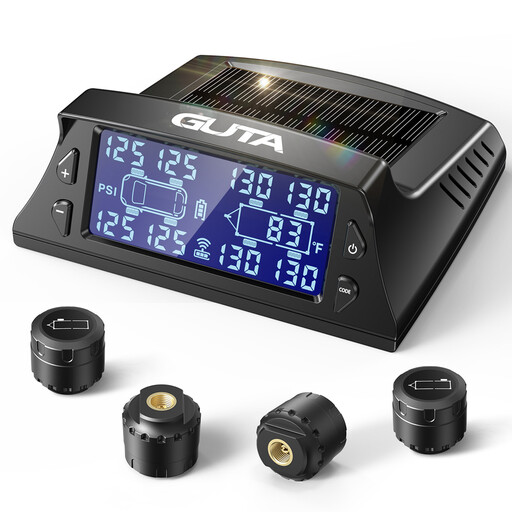
Why it suits this type of user: Designed for caravan, motorhome, trailer and semi-truck users who want to monitor pressure and temperature while driving.
The four external sensors provide more information than a one-off reading. For vehicles longer than 20 feet, the manufacturer lists a repeater as an optional extra.
According to the product details: pressure range up to 13 bar, temperature measurement from -20 to 105 °C, five alert categories and a stated sensor battery life of around four years.
We’ve put together a complete, up-to-date list of products that meet these strict selection criteria and current European safety regulations.
CE marking and a RoHS statement may be included in the product documentation, but they don’t mean that every system is suitable for every vehicle. Always check the technical details, number of sensors and included accessories.
Not necessarily. How useful it is depends on its stated margin of error, the condition of the device and how you take the reading. A digital gauge is often easier to read, especially in the dark. Always compare the reading with your vehicle’s recommended tyre pressure.
It depends on the model and how it’s used. According to the product information, GUTA states a battery life of around four years for CR2032 sensor batteries, while Tymate states around two years for CR1632 batteries. Treat these as the manufacturers’ estimates. Temperature, transmission and operating conditions can affect battery life.
A TPMS alerts you to a change, but it doesn’t inflate the tyre. A portable tyre inflator is a practical addition if you want to top up your tyres yourself. If a tyre is punctured or damaged, it still needs a professional inspection; monitoring and inflation aren’t permanent repairs.
