
Vandaag of morgen in huis

Kwaliteit gegarandeerd

Welkomstaanbiedingen ontgrendelen: GRATIS bezorging | Tot 80% korting | Gratis 30 dagen JoyPlus-proefperiode
Download de app
Buying a loose socket set for your car may seem straightforward, until a socket does not fit, a bolt is damaged or a tool does not provide enough reach. Whether you are changing tyres, repairing brake lines, changing the oil or loosening and tightening bolts, the right size, drive and application are particularly important.
As a Joybuy Product Recommendation Officer, I filter product information based on verifiable specifications. This helps you avoid paying simply for attractive looks or an impressive torque claim.
An impact wrench with a high stated torque is not automatically suitable for every job. The machine must match the drive size, the sockets used must be suitable for impact loads and fasteners must not be tightened with unnecessary force.
Do not use standard chrome vanadium sockets with a cordless drill or impact wrench when an impact socket set is required. For impact work, sockets made from chrome molybdenum steel, for example, are a more logical choice.
An adjustable wrench can be useful, but with seized or delicate nuts there is a risk of damage if the jaws do not sit parallel and make full contact. Brake line nuts in particular require a tool that surrounds the hexagon as fully as possible.
So check whether you need a standard combination spanner set, an open-ended spanner or a flare-nut spanner. The latter has an opening that allows it to be fitted over a pipe, while the spanner still supports several faces of the nut.
More components do not automatically mean better value. A set made up mainly of imperial sizes is impractical when working on a car with metric fasteners. Also check that the sizes are clearly marked and arranged in ascending order, and that a storage pouch or case is included.
For many cars in the Netherlands and common garage jobs, metric tools with sizes in millimetres are a practical starting point.
Sockets and ratchets are often described as 1/4 inch, 3/8 inch or 1/2 inch. A 1/4-inch ratchet is suitable for smaller fasteners and confined spaces. A 3/8-inch version is versatile for many maintenance tasks. A 1/2-inch drive is better suited to wheel bolts and heavier work.
When choosing an impact wrench, do not look only at the maximum loosening torque. Also consider:
A stated torque is a product specification provided by the manufacturer. The actual result depends, among other things, on battery condition, the connection, lubrication and corrosion.
Chrome vanadium steel is widely used for hand tools such as ratchet wrenches, combination spanner sets and flare-nut spanners. Chrome molybdenum steel is commonly used for impact sockets because it is suitable for fluctuating impact loads.
Shape matters too. A 75-degree offset can provide clearance around obstacles. A small return angle, such as 5 degrees on a 72-tooth ratchet, is practical in a cramped engine bay. This does not mean that every design is suitable for every job: always check the available space and the direction of rotation.
With an oil filter wrench, the adjustment range is more important than the handle length alone. According to the product information, the WORKPRO oil filter pliers have a range of 60 to 102 mm, three adjustment positions and a length of 30.48 cm.
For brake lines, the sizes of the flare-nut spanner are crucial. A set with 10 x 12 mm, 13 x 14 mm and 15 x 17 mm covers several common connections, but check the size on your vehicle beforehand.
A roll pouch with printed sizes helps keep garage tools organised. This reduces the time spent searching and prevents a spanner from being left in a workshop drawer.
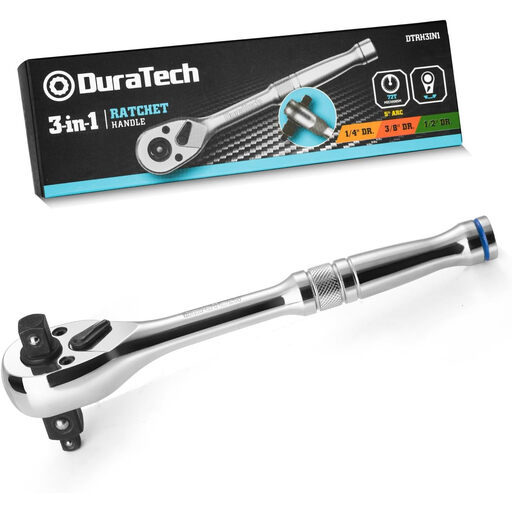
Why it suits this profile: One ratchet provides three drive options for a wide range of jobs on cars, motorbikes and household appliances.
The 1/4-, 3/8- and 1/2-inch drives make it less likely that you will immediately need to buy several separate ratchets. However, pay attention to the maximum torque ratings for each drive.
72 teeth, a stated return angle of 5 degrees and a reversing lever. Maximum values according to the product information: 84 Nm, 304.5 Nm and 350 Nm.
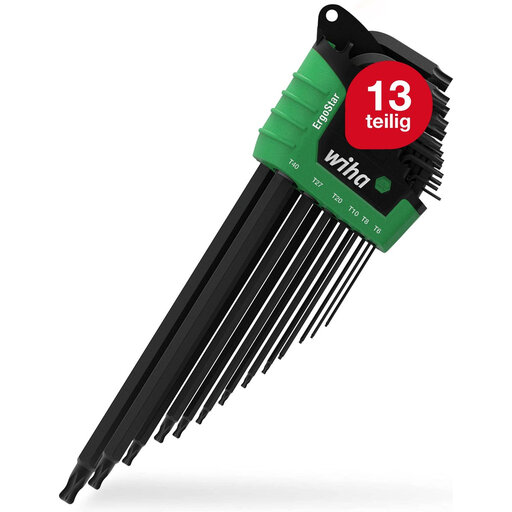
Why it suits this profile: Ideal for mechanics who regularly encounter Torx screws in hard-to-reach places and want to keep their workshop organised.
The holder keeps all 14 pieces together and the sizes are immediately visible. This makes you less likely to buy duplicate or unsuitable tools.
Chrome vanadium steel, ball ends from size T9 and use at angles of up to 25 degrees according to the product description.
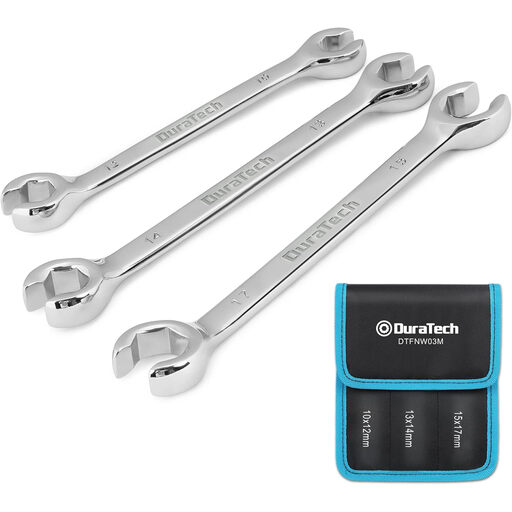
Why it suits this profile: Designed for brake lines and other pipe connections where a standard open-ended spanner is less practical.
The flare-shaped jaw partially surrounds the brake line nut, while the 15-degree offset helps with cramped connections. Choose the correct millimetre size beforehand.
Three spanners in sizes 10 x 12, 13 x 14 and 15 x 17 mm, made from heat-treated chrome vanadium steel and supplied with a storage pouch.
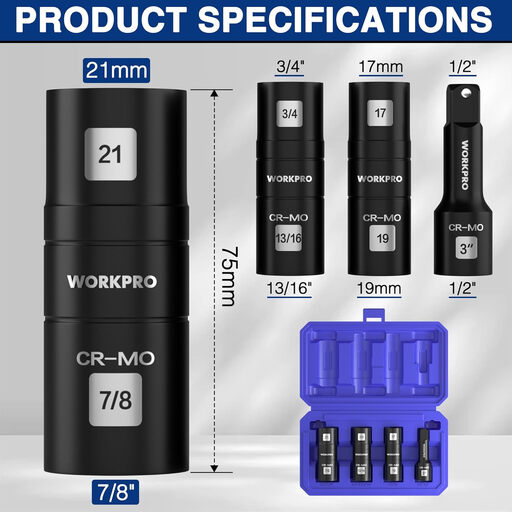
Why it suits this profile: A practical choice for wheel bolts, changing tyres and assembly work with a 1/2-inch impact wrench.
The sockets are designed for high torque and have clearly marked sizes. The set combines metric and SAE sizes, so check which size you need.
Sizes 17, 19 and 21 mm, plus 3/4, 13/16 and 7/8 inch. The reversible sockets and supplied extension bar support work in hard-to-reach places.
We have put together a complete, up-to-date list of products that fully meet these strict selection criteria and the applicable European safety regulations.
A basic set usually consists of a 3/8-inch ratchet, metric sockets, an extension bar, screwdrivers, combination spanners and a torque wrench. For changing the oil, add an oil filter wrench. For brake lines, you will need a suitable flare-nut spanner.
An impact wrench is particularly useful for quickly loosening and initially tightening bolts. For the final tightening torque, use a torque wrench according to the vehicle specification. Also check that the socket is a suitable impact version.
Clean and dry your tools after use, remove dirt from ratchet mechanisms and store everything by size in a case or pouch. The moving parts of oil filter pliers can be lightly oiled before long-term storage. Do not use excessive force when a component is stuck; instead, choose a suitable extension bar or a spanner designed for the job.
