
Vandaag of morgen in huis

Kwaliteit gegarandeerd

Welkomstaanbiedingen ontgrendelen: GRATIS bezorging | Tot 80% korting | Gratis 30 dagen JoyPlus-proefperiode
Download de app
Reading a fault code, replacing a battery or removing a wheel may seem straightforward — until the tool doesn’t fit, lacks the power you need or can’t communicate with your car. Search for car tools and diagnostic equipment and you’ll also find plenty of products making bold marketing claims. A high voltage rating, lots of reset functions or a large number of pieces doesn’t tell you enough on its own.
Focus instead on specifications you can verify, vehicle compatibility and safe use. That way, you can avoid leaving an OBD2 scanner, impact wrench or hydraulic car jack unused in the garage.
Your car may have an OBD2 socket, but that doesn’t mean every scanner can read all its systems. Some basic models only read engine management data. You’ll need a more advanced device for ABS, SRS, transmission or service resets.
Before you buy, check:
According to the product information, the XTOOL D5S supports CAN FD and FCA AutoAuth, among other features. However, users of vehicles that require AutoAuth must register for an account themselves and may have to pay for it. The manufacturer states that available functions can vary by make, model and year.
A cordless drill for car maintenance or an impact wrench with a high stated torque can be useful for wheel bolts and stubborn fastenings. However, don’t rely on one to tighten wheel bolts fully. Check the correct tightening torque in your vehicle documentation and, ideally, use a torque wrench to confirm it.
Look at the difference between:
A high Nm figure is just one factor to consider.
A hydraulic car jack or air jack is designed to lift a vehicle, not to support it while you work underneath. Use the jack on firm, level ground and check its rated capacity. Also look at the minimum and maximum lifting heights: a low sports car has different requirements from an SUV or van.
Products marked EN 1494 and CE provide verifiable information about the stated standards, but safe use still depends on the ground, the correct lifting points and the weight of the car.
Choose a car diagnostic tool to suit how you’ll use it. A basic code reader may be enough for occasional checks. If you maintain several cars, live data, freeze-frame data, automatic VIN recognition and system diagnostics are more useful.
The XTOOL D5S lists four main systems: engine, transmission, ABS and SRS. It also lists 16 reset functions, including:
Treat these as functions the device may offer, not as a guarantee that they’ll work on every car.
For a car socket set, spanner set or garage tool kit, Cr-V steel, heat treatment and corrosion protection are useful specifications to check. Also check whether the set includes metric sizes, SAE sizes or both. Metric sizes are generally the standard choice in the UK.
A compact spanner set is handy in a cramped engine bay. A longer handle gives you more leverage, but you’ll need to take care not to damage bolts or threads. For an oil filter wrench, the adjustment range, jaw grip and space around the filter matter more than handle length alone.
When comparing jacks, always check:
A jack with a suitable lifting range is more practical than a model with a higher capacity on paper alone.
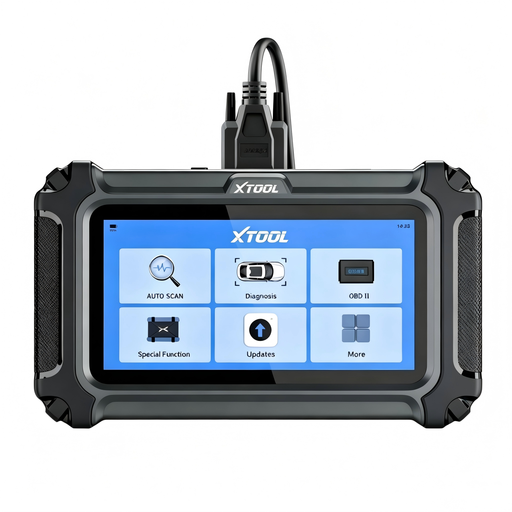
Why it suits this user: A good choice for car owners and DIY enthusiasts who want more than a basic engine fault code reader. The 5.45-inch screen and automatic VIN function make it easy to use.
The product information clearly sets out compatibility limitations and FCA AutoAuth requirements, so you can check these before buying.
Four main systems, live data, a built-in fault code library and, according to the product description, free lifetime updates.
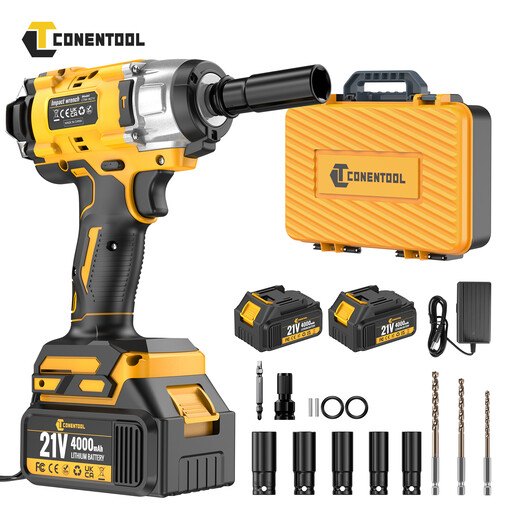
Why it suits this user: A practical option if you regularly change tyres or loosen stubborn bolts in a garage or workshop.
Three speed settings and a variable trigger give you more control than a simple on/off switch. Use a torque wrench for final tightening.
Up to 800 Nm maximum torque according to the product description, a 1/2-inch drive, LED lighting and five impact sockets included.
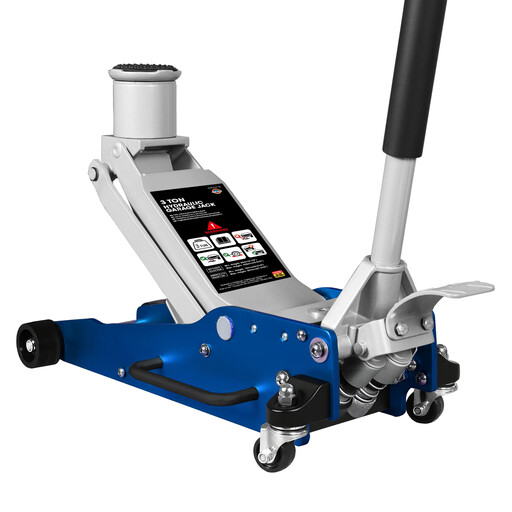
Why it suits this user: Designed for people working on different types of vehicle who need both a low entry height and extra lifting height.
The stated minimum lifting height of 85 mm and separate height extension make its working range clear before purchase. Always check your car’s support points.
3-tonne capacity, a lifting range of 85–465 mm, up to 541 mm with the extension and, according to the product information, EN 1494 and CE certified.
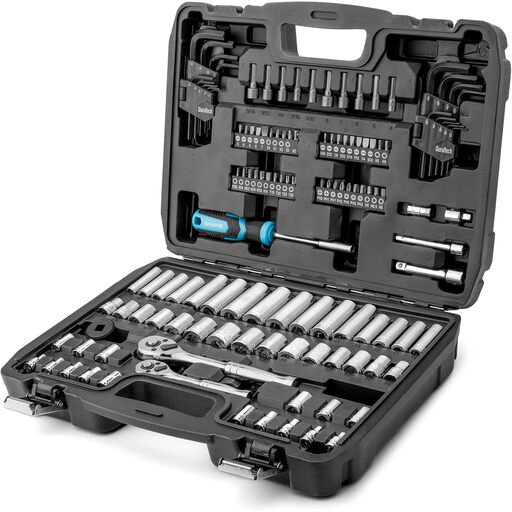
Why it suits this user: A handy choice if you don’t yet have a complete basic set of tools for simple car and motorbike jobs.
The contents are listed clearly: metric and SAE sockets, ratchets, bits, hex keys, extensions and a storage case.
121 pieces, Cr-V steel according to the product description, two ratchets and a case for tidy storage.
We’ve put together a complete, up-to-date list of products that meet these strict selection criteria and the applicable European safety regulations.
It depends on the jobs you’re doing. A scanner helps you read fault codes and live data, but it doesn’t replace mechanical tools. For basic work, useful additions include a socket set, spanner set, screwdrivers, jack, axle stands and, if needed, a torque wrench.
Its lifespan depends on the material, workload, storage and maintenance. Clean metal tools after use, lightly lubricate moving parts and store tool sets somewhere dry. With cordless tools, charging method, temperature and storage charge level all play a part. Always follow the manufacturer’s instructions.
An air jack can be a practical option if you have a suitable compressor. Check the required air pressure, lifting capacity and ground conditions beforehand. For occasional tyre changes, a hydraulic car jack is often simpler, provided its capacity and lifting height suit your vehicle. Always use suitable axle stands beneath a raised car.
