
Vandaag of morgen in huis

Kwaliteit gegarandeerd

Welkomstaanbiedingen ontgrendelen: GRATIS bezorging | Tot 80% korting | Gratis 30 dagen JoyPlus-proefperiode
Download de app
Buying a loose ratchet, socket set or torque wrench might seem straightforward. In practice, tools often disappoint because of the wrong size, an awkward head or unclear specifications. You notice this most when you're working on a car, motorbike, bicycle or machine and a bolt is difficult to reach.
The main pitfalls are:
For car maintenance, metric sizes such as 8, 10, 13, 17 and 19 mm are commonly used. When checking a socket set or ratchet set, don't just look at the number of pieces – also check the actual size distribution.
The drive size determines which sockets fit:
An adapter can connect different sizes, but that doesn't make a small ratchet suitable for heavy-duty work. Use the tool within its specified application range and avoid extensions that put too much strain on the mechanism.
Many hand tools are made from chrome-vanadium steel, often abbreviated as Cr-V. A matt or chrome-plated finish can make cleaning and limiting surface rust easier. Also check whether the manufacturer mentions a standard, such as DIN 838 for certain ring spanners or DIN 3113 for combination spanners.
A standard reference is more useful than vague words like "professional" or "extra strong". Also look for:
A 12-point ring offers more engagement positions than a 6-point version. A 6-point socket generally has more direct contact with the hex of a bolt. The right choice therefore depends on reach, accessibility and the type of fixing.
A torque wrench helps you follow a pre-set tightening torque. This is relevant for parts where the vehicle or component manufacturer specifies an Nm value. A standard ratchet is not designed to determine that torque accurately.
A digital torque wrench can display values in, for example, Nm, ft.lb, in.lb or kgf.cm. When buying, check:
According to the product description from Movecrab, the digital model with a 3/8 inch drive has a range of 4.2 to 85 Nm, a stated accuracy of ±2%, ten presets and warnings via vibration, sound and LED light. Treat this as the manufacturer's product specification and always follow the instruction manual. A torque wrench should not be used as a hammer or breaker bar.
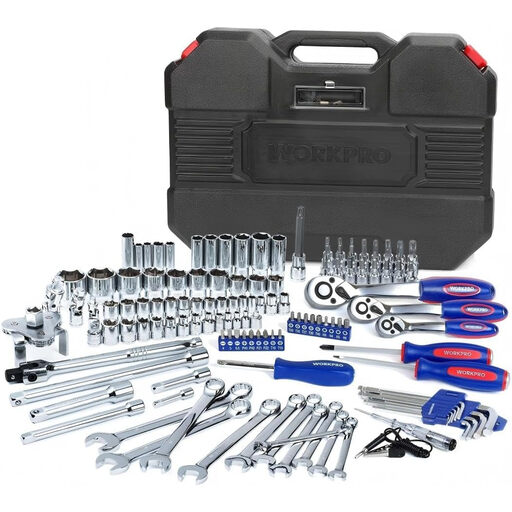
Why this fits the profile: This car tool set combines 1/4, 3/8 and 1/2 inch drives with metric and SAE sockets. That's practical for beginners who want one case for car, home and DIY work.
The size and drive distribution is clearly stated in the product information. Check before buying that the metric sockets you need are included.
123 pieces, Cr-V steel and a moulded case with designated slots for each tool.
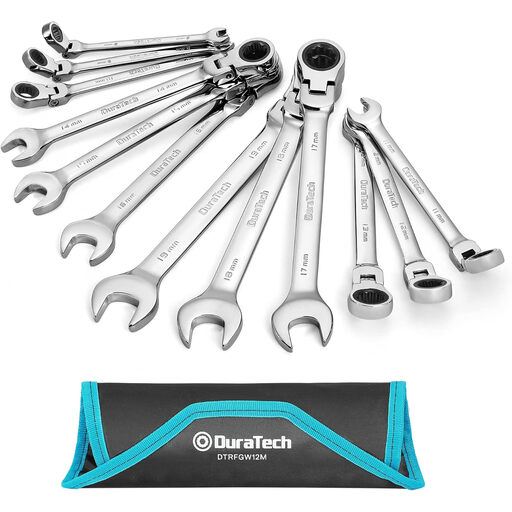
Why this fits the profile: The flexible ratchet spanner is designed for those who regularly work on cars, motorbikes or industrial parts and can't position a fixed spanner easily.
According to the product description, the head can move 180 degrees. This means the spanner isn't limited to one working angle.
12 metric sizes from 8 to 19 mm, 72 teeth and a stated working angle of 5 degrees.
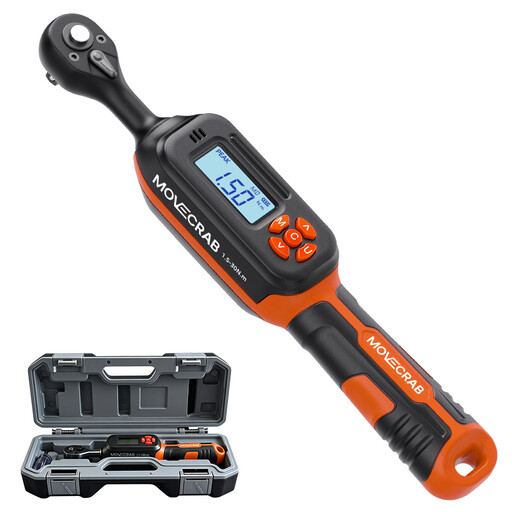
Why this fits the profile: This model suits users who want to set tightening torques for automotive, motorbike, bicycle or industrial maintenance.
The range, measurement units and warnings are clearly stated. Do check whether 4.2 to 85 Nm suits your work.
LED, sound and vibration alerts, ten presets and track and peak modes according to the product description.
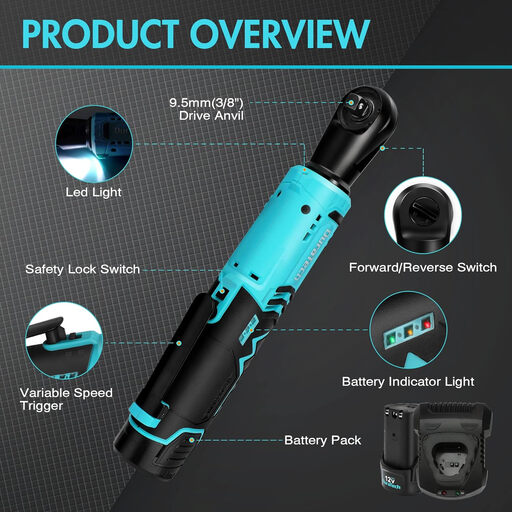
Why this fits the profile: The electric ratchet wrench is ideal for anyone who frequently loosens or tightens bolts and wants to reduce manual ratcheting during assembly work.
The 3/8 inch drive, two batteries, charger and included sockets are all specified upfront. Still use a torque wrench for final tightening.
12 V, stated maximum torque of 65 Nm, LED light and two 2.0 Ah batteries.
We've put together a full, up-to-date list of products that fully meet these strict selection criteria and current European safety regulations.
For basic maintenance, a combination of a 3/8 inch ratchet, metric socket set, extensions and a torque wrench is a practical starting point. Add a set of combination spanners or ring spanners for bolts where a socket doesn't fit well. If you often work in tight spaces, you could also choose a flexible ratchet spanner.
The lifespan depends on use, load, storage and maintenance. Clean tools after use, dry them if they get damp and store them tidily. Don't use a ratchet as a striking tool and choose larger drive sizes when the specified torque is higher. Replace damaged sockets or spanners to avoid rounding off bolts.
A mechanical torque wrench is simple to read and doesn't need batteries. A digital torque wrench can be handy when you want to use different measurement units, presets or multiple warnings. Always compare the range with the tightening torques from your vehicle or component manual.
