
Vandaag of morgen in huis

Kwaliteit gegarandeerd

Welkomstaanbiedingen ontgrendelen: GRATIS bezorging | Tot 80% korting | Gratis 30 dagen JoyPlus-proefperiode
Download de app
When you’re looking for car tools, you’ll quickly come across sets with dozens of pieces, high torque ratings and plenty of marketing claims. But a large number of accessories doesn’t automatically mean a set is right for the jobs you do. A car owner needs different tools from a garage owner or someone who mainly works on motorbikes.
The most common buying mistakes come down to three pitfalls:
A socket set is usually described by its 1/4, 3/8 or 1/2-inch drive size. This refers to the connection between the ratchet and socket, not the size of the bolt.
Also check whether the set includes metric sizes. In the Netherlands, sockets such as 10, 13, 17, 19 and 21 mm are often useful, but the right size depends on the vehicle. A combination of metric and SAE sizes can come in handy, but you should still check exactly what’s included in the set.
A 172-piece set sounds comprehensive, but check what those pieces actually are. Are most of them duplicate bits, or does the set also include deep sockets, spark plug sockets, universal joints and extensions?
Look out for these features:
A CE mark refers to the manufacturer’s declaration of conformity with applicable European regulations. It isn’t an independent quality rating and, on its own, says nothing about how long a ratchet set will last.
When choosing an electric ratchet wrench, consider its size, drive, battery and maximum torque together. A compact 12V ratchet wrench with a 3/8-inch drive is particularly useful for quickly loosening and tightening fasteners in confined spaces. A cordless impact wrench with a 1/2-inch drive is better suited to wheel bolts and heavier fasteners.
Keep these points in mind:
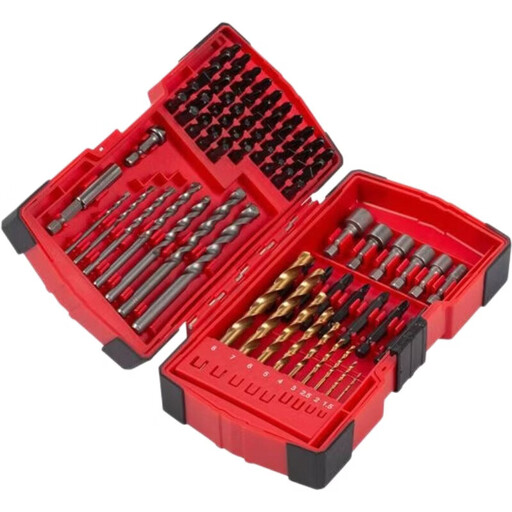
Why it suits this user: A compact starter set for small maintenance jobs, assembly and occasional repairs on cars, bicycles or motorbikes.
The contents are clearly specified: 82 pieces, including HSS drill bits for wood and metal, masonry drill bits, screwdriver bits and sockets. So you know exactly what you’re getting.
Magnetic bit holder, compact storage case and a 24-month general warranty, according to the product information.
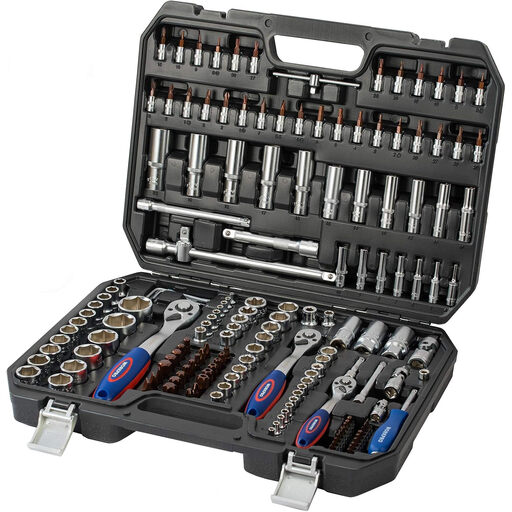
Why it suits this user: For anyone looking for one well-organised set for car, motorbike and general garage work.
The three drive sizes, deep sockets, Torx sockets, spark plug sockets, extensions and universal joints are all listed separately.
72-tooth ratchets, Cr-V sockets, S2 bits and a case with clearly marked compartments, according to the product specifications.

Why it suits this user: Designed for work in confined spaces, such as around engine components, brackets and fasteners in an engine bay.
The 3/8-inch drive and stated 3 cm head thickness give you a clearer idea of where it can be used than general claims about accessibility.
12V, maximum torque of 45 Nm, LED light, forward/reverse switch and a stated weight of 0.78 kg.
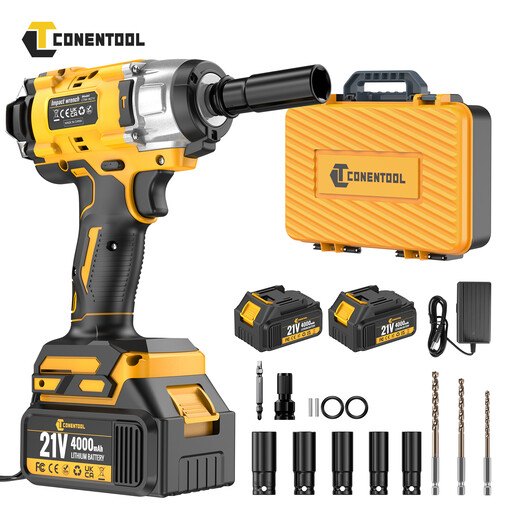
Why it suits this user: For anyone who regularly removes wheel bolts, machinery fasteners or larger fixings and needs a 1/2-inch drive.
The set includes three speed settings, variable control, five impact sockets and two batteries. This makes it easier to compare the contents and controls before buying.
21V, stated maximum torque of 800 Nm, 1/2-inch square drive, LED light and impact sockets from 17 to 24 mm.
We’ve put together a complete, up-to-date list of products that meet these strict selection criteria and applicable European safety regulations.
For basic jobs, a set with metric sockets, 1/4- and 3/8-inch ratchets, extensions, bits and a few Torx sizes is a practical starting point. If you also work on suspension or larger bolts, look for a 1/2-inch ratchet and deep sockets. Always check that the sizes are suitable for your vehicle.
An electric ratchet wrench is mainly designed for quickly loosening and tightening fasteners in confined spaces. For stubborn wheel bolts, a cordless impact wrench with suitable impact sockets is usually a better choice. Then tighten the wheel bolts with a torque wrench, following the vehicle specifications.
Clean and dry sockets and bits after use, especially if they’ve come into contact with oil or moisture. Check ratchets, adapters and batteries for damage. Store everything in the case or bag provided, and only use bits on the materials they’re designed for. This will keep your garage tools organised and help prevent unnecessary wear.
