
Vandaag of morgen in huis

Kwaliteit gegarandeerd

Welkomstaanbiedingen ontgrendelen: GRATIS bezorging | Tot 80% korting | Gratis 30 dagen JoyPlus-proefperiode
Download de app
Buying car tools seems simple until you’re choosing between a single ratchet, a complete socket set or a digital torque wrench. Many products look similar, but can differ significantly in drive size, measurement range, accessories and ease of use. The wrong choice could mean poorly fitting sockets, a flat battery halfway through a job or damaged bolts.
This buying guide helps motorists, DIY enthusiasts, motorcyclists, cycling enthusiasts and workshops distinguish marketing claims from verifiable product specifications.
A cordless impact wrench with a high stated maximum torque is useful for loosening seized wheel bolts. That doesn’t automatically mean it’s suitable for tightening them accurately. For sensitive joints, such as wheel bolts or motorbike components, a torque wrench is a better choice.
So, use an electric wrench mainly for loosening or preliminary tightening. Check the vehicle manufacturer’s specified tightening torque, then make the final check with a suitable torque wrench.
A professional assembly set may contain lots of parts, but always check:
Metric sizes are usually the most practical for cars and bicycles in the Netherlands. A set with only 1/2-inch sockets is less suitable for the smaller bolts found on a bicycle or motorbike.
A digital torque wrench can display a value in Nm, but accuracy also depends on using the right measuring technique and storing and handling the tool correctly. According to Movecrab’s product description, the model in question has a stated accuracy of ±2% and provides alerts through vibration, sound and an LED indicator. These are the manufacturer’s product specifications; they don’t guarantee that every fastener will be tightened correctly without proper preparation.
Also check that you store the wrench according to the instructions after use and don’t load it beyond its stated range.
Low tightening torques are important when working on bicycles and motorbikes. A 1/4-inch torque wrench with a range of, for example, 1.5 to 30 Nm is better suited to small fasteners than a larger wrench with a range starting at 17 Nm.
Car maintenance may require a wider range. According to the product information, the Movecrab digital torque wrench with a 1/4-inch drive has a range of 17 to 340 Nm. It’s worth checking that the torque you need doesn’t sit at the very edge of that range.
Pay attention to the unit used: Nm, ft-lb, in-lb and kgf·cm aren’t interchangeable. A display offering several units is useful, but make sure you select the right one.
The drive size determines which sockets will fit:
A cordless ratchet wrench with a 3/8-inch drive is handy in a tight engine bay. A traditional ratchet gives you more control when space is limited or you want to feel how much resistance a bolt is offering.
For metal tools, check whether the product information specifies a material such as chrome vanadium steel or chrome molybdenum steel. For impact sockets, an impact-rated design is more important than an ordinary socket, as impact loads require a different type of tool.
For cordless tools, consider the following:
A magnetic tool mat can also stop nuts and bits rolling away during maintenance. It’s particularly handy when working on a car, motorbike or bicycle at a metal workbench.
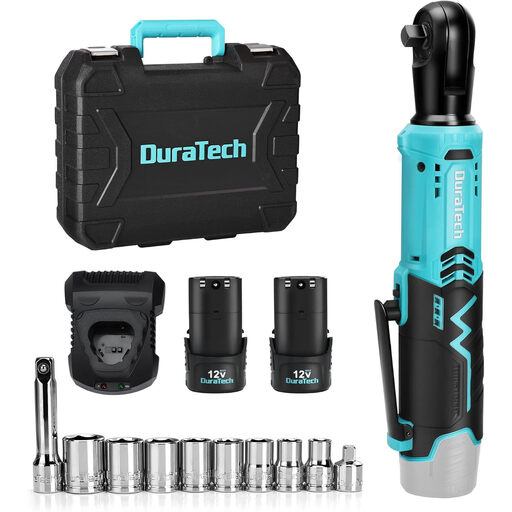
Why it suits this user: For regular car maintenance without investing in a large workshop set straight away. The set includes two batteries, a charger, sockets and a storage case.
The product contents are clearly listed: 10 sockets, two 2.0 Ah batteries, an adapter and a case. Before buying, check that the sizes suit your car.
3/8-inch drive, stated maximum torque of 65 Nm, LED lighting and two batteries.
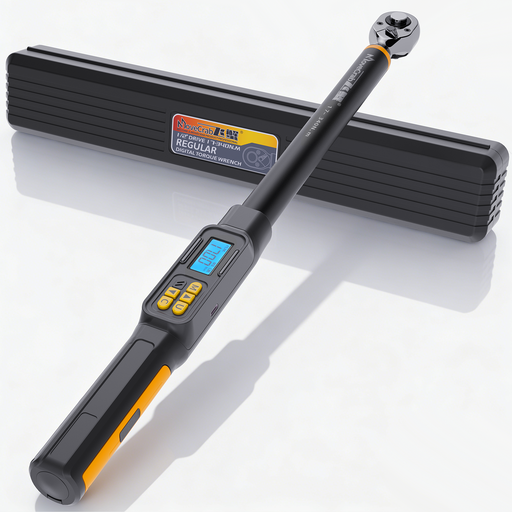
Why it suits this user: For users who want to set and read tightening torques digitally when repairing cars, motorbikes or bicycles.
The stated ±2% accuracy, 10 preset values and audible, vibration and LED alerts make the settings easy to check, according to the product description.
Track and peak modes, storage for up to 500 readings and display in four units.
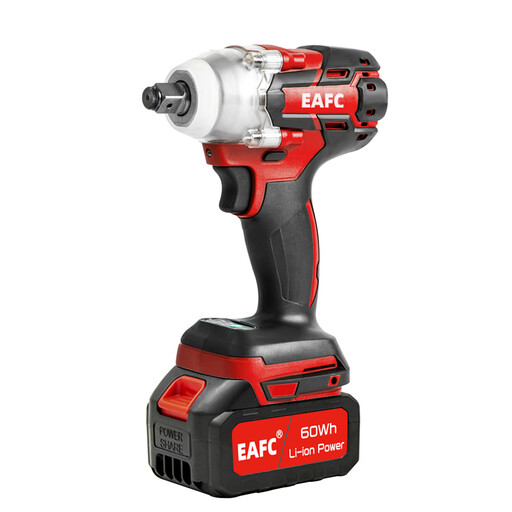
Why it suits this user: Designed for users who regularly loosen wheels or larger fasteners and value the speed of cordless tools.
The stated maximum torque of 200 Nm and the 21V battery make its intended use clearer. For final tightening, use a torque wrench.
Brushless motor according to the product description, LED lighting, forward/reverse function and a stated range for M10–M24.
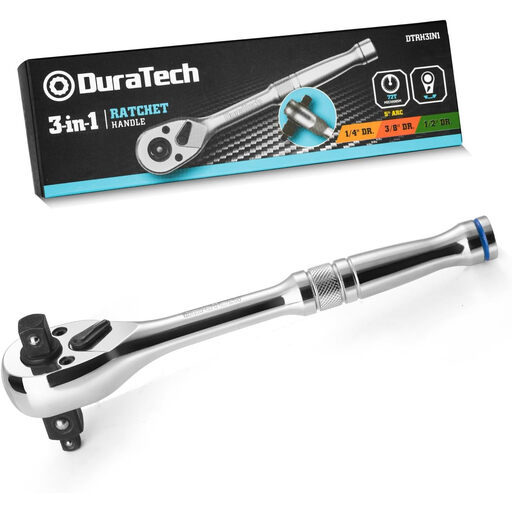
Why it suits this user: A practical choice if you want to use one handle with different drive sizes for car, motorbike and household maintenance.
The three drive sizes are clearly listed. Make sure you observe the stated maximum torque for each size before use.
72 teeth, a stated 5-degree return angle and a reversible function for working in confined spaces.
We’ve put together a complete, up-to-date list of products that meet these strict selection criteria and the applicable European safety regulations.
A 1/4-inch torque wrench is handy for smaller fasteners. A 1/2-inch model may be more suitable for wheel bolts and larger joints. Focus on the required Nm range, not just the drive size.
No. A cordless ratchet wrench is compact and designed to tighten or loosen bolts more quickly. An impact wrench uses hammering action and is generally intended for heavier loosening work. Neither is automatically a substitute for a torque wrench when it comes to accurate final tightening.
Their lifespan depends on the material, workload, moisture, cleaning and storage. Don’t overload ratchets or torque wrenches, use impact sockets with impact tools, and check moving parts regularly. For power tools, battery use, charging habits and storage temperature also play a part.
