
Vandaag of morgen in huis

Kwaliteit gegarandeerd

Welkomstaanbiedingen ontgrendelen: GRATIS bezorging | Tot 80% korting | Gratis 30 dagen JoyPlus-proefperiode
Download de app
Buying good car tools seems straightforward, until you find during a repair that a socket doesn’t fit, a ratchet doesn’t have enough clearance or a jack won’t lift high enough. For DIYers, car owners, motorcycle enthusiasts and professional garages, choosing the right tools isn’t just about the number of pieces. Fit, load capacity, reach and safe use all determine whether a purchase will work for you in practice.
A car tool set with lots of bits and sockets may look appealing, but first check which sizes are actually included. Pay attention to the drive sizes too: 1/4 inch, 3/8 inch and 1/2 inch aren’t interchangeable. A 1/4-inch drive is handy for smaller fixings, while 1/2 inch is better suited to larger bolts and wheel work.
Even an extensive set may be of limited use if it doesn’t include deep sockets, extension bars or spark plug sockets. Check the contents list rather than relying on the total piece count.
When choosing a trolley jack or hydraulic jack, people often focus on the maximum load capacity. That’s just one consideration. The minimum lifting height must fit beneath your car, and the maximum height must be sufficient for the job. Also check your vehicle’s weight and the jack’s rated capacity.
A vehicle raised on a jack must never be supported by the jack alone while you work underneath it. Use suitable axle stands at the designated support points and follow the vehicle and tool manufacturers’ instructions.
Terms such as “professional”, “heavy duty” or “fast lifting” don’t automatically tell you whether a product is right for your needs. A pneumatic jack, for example, requires a suitable compressor, the correct air pressure and a suitable surface. With power tools, battery capacity, torque and available working space all affect how comfortable they are to use.
According to the manufacturer’s product description, the LARBANKE pneumatic jack has a maximum capacity of 5 tonnes and lifts quickly. Treat this as a product specification; always check the manual, connection requirements and vehicle compatibility before use.
A good socket set or ratchet set should suit the fixings you’re likely to come across. Look out for:
For motorcycle tools, compact handles, Torx sockets, hex keys and a well-organised storage case are often more important than high torque.
For regular use, sockets made from chrome vanadium steel (Cr-V) are a common choice. S2 steel bits are often described in product listings as hard-wearing and resistant to wear. These are material specifications, not a guarantee that every part will be indestructible in all conditions.
Check that the sizes are clearly marked and that every piece has its own place in the case. This saves time in the garage and makes it less likely that a small socket will go missing.
For a trolley jack, you need at least three key details:
If a product states EN 1494 or CE, check that this information applies to the specific model and its accompanying documentation. The product pages for several TCE models list these markings. Only use a jack on a stable, level surface, and use suitable support equipment when working underneath a vehicle.
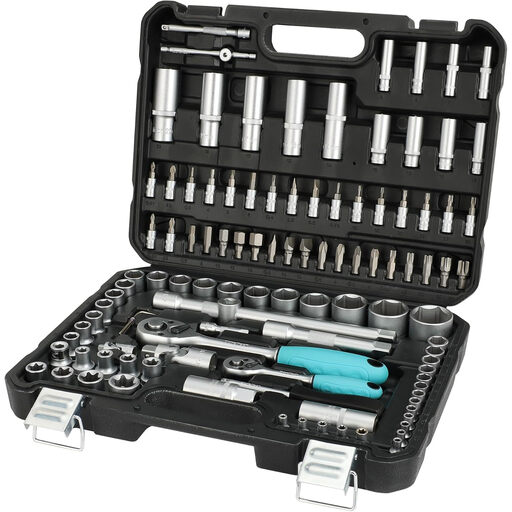
Why it suits this profile: This starter set combines 1/2- and 1/4-inch ratchets with sockets, bits, extension bars and universal joints for everyday maintenance on cars, motorcycles and around the home.
The clearly marked spaces in the case show which sizes are included, so you’re less likely to pay for a confusing assortment.
108 pieces, Cr-V sockets, S2 bits and 72-tooth ratchets with quick release.
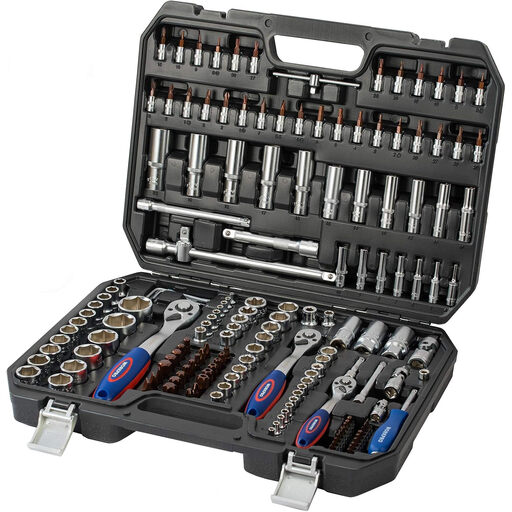
Why it suits this profile: With three drive sizes and a wide selection of tools, this set is ideal for people who regularly work on cars, motorcycles, bicycles and other machines.
The contents list gives the socket sizes for each drive, as well as the deep sockets, Torx sockets, spark plug sockets and accessories.
172 pieces, 1/4-, 3/8- and 1/2-inch ratchets, 72 teeth and a storage case with size markings.
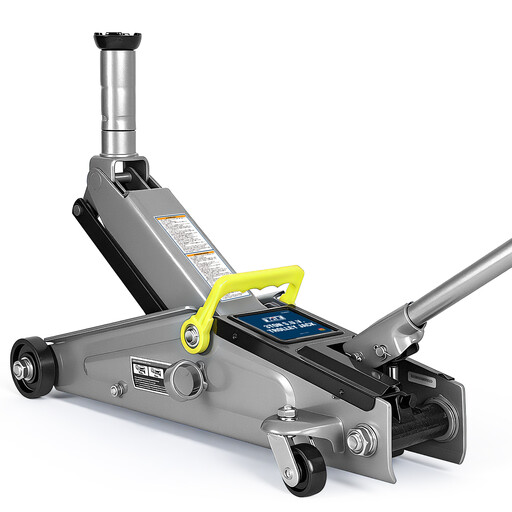
Why it suits this profile: This hydraulic trolley jack is designed for cars, SUVs and MPVs. It’s a good fit for a home garage or workshop where tyres and other maintenance jobs are carried out regularly.
The product information gives both the lifting height of 150–530 mm and the 3-tonne load capacity, as well as details of a safety valve.
Steel construction, an adjustment range of 150–530 mm and, according to the product page, CE certification.
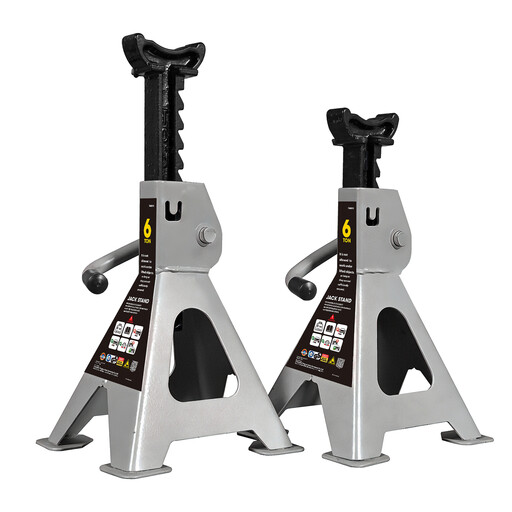
Why it suits this profile: This set of axle stands is designed for heavy vehicles, including large SUVs, 4x4s, motorhomes and light commercial vehicles.
The adjustable height of 388–580 mm and the stated capacity make it easier to match the support to the vehicle.
Welded steel construction, cast iron ratchet bars and, according to the product page, EN 1494 certification.
We’ve put together a complete, up-to-date list of products that meet these strict selection criteria and the applicable European safety requirements.
Start with a set of metric sockets, a 1/4- and 3/8-inch ratchet, extension bars, Torx bits and a few deep sockets. A 1/2-inch drive may be needed for wheel nuts or heavy-duty fixings. A torque wrench is useful when you need to follow the car manufacturer’s specified tightening torque.
That’s not recommended. A hydraulic jack is designed for lifting, not as permanent support. Put the vehicle on suitable axle stands, use level ground and check before every job that the support points and equipment are suitable for the vehicle.
Not necessarily. A pneumatic jack needs a suitable air supply and enough clearance beneath the vehicle. Check the minimum lifting height, maximum load, air connection and surface. For occasional maintenance at home, a standard hydraulic trolley jack may be more practical. In a workshop, a pneumatic model can save time if the setup is designed for it.
