
Vandaag of morgen in huis

Kwaliteit gegarandeerd

Welkomstaanbiedingen ontgrendelen: GRATIS bezorging | Tot 80% korting | Gratis 30 dagen JoyPlus-proefperiode
Download de app
A car tool set can appear complete at first glance when the case is packed with components. In practice, however, a large set can be disappointing. Some sizes may be missing, the ratchet may not fit into tight spaces, or the storage case may make it difficult to find the right piece. For maintaining cars, motorcycles, vans and machinery, the composition of the set is what matters most.
As a Joybuy Product Recommendation Officer, I therefore focus on verifiable specifications: metric sizes, drive size, materials, range, storage and the intended application of the tools.
A set with dozens of components is not automatically practical. Always check the exact size range. For many vehicle maintenance tasks in the Netherlands, metric sizes are essential—for example, 8 to 19 mm for combination wrenches and 4 to 13 mm for a compact socket set.
Also look out for missing intermediate sizes. A set containing only 10, 12 and 14 mm may seem affordable, but it is less versatile if you regularly work on different vehicles.
A 1/4-inch ratchet is useful for small fasteners and confined spaces. For general-purpose work, a 3/8-inch ratchet is more versatile. A 1/2-inch drive is better suited to larger sockets and higher loads, such as wheel bolts, provided the socket and ratchet are designed for that purpose.
A ratchet is not a substitute for a torque wrench. For fasteners with a specified tightening torque, you need a separate measuring tool.
Terms such as “professional”, “heavy duty” or “extra strong” mean little without material and size specifications. Check the stated steel type, finish, tooth count and maximum load. Cr-V steel tools are widely used for hand tools, while impact sockets are generally specified as being made from Cr-Mo steel. Never use a standard chrome-vanadium socket with an impact wrench unless it is specifically rated for that application.
A metric tool set is a logical foundation for many jobs in the Netherlands. A combination of sockets, open-ended wrenches and ring spanners covers more situations than relying on just one type of wrench.
According to the product description, a 72-tooth ratchet has a working angle of approximately 5 degrees. A 90-tooth model is specified with an angle of approximately 4 degrees. This can be particularly useful in an engine bay where there is barely enough room to move the handle. A flexible head can extend the working range further, but check that it remains firmly in position during use.
Many hand tools are specified as being made from chrome-vanadium steel. Also consider heat treatment, markings and corrosion protection. A matt or polished chrome finish can make cleaning easier, but no finish eliminates the need for maintenance. Wipe away grease and moisture, and store the tools in a dry place.
A tool set with a storage pouch or sturdy case helps prevent the sizes from becoming mixed up. Check that the compartments are clearly marked and that the case fits in your workshop, service van or boot.
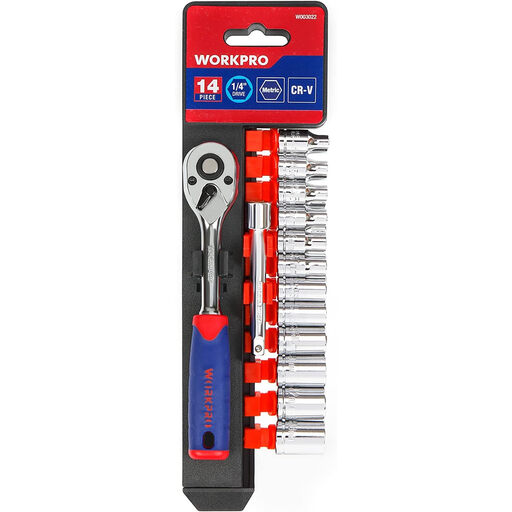
Why this profile fits: A compact foundation for DIY users and beginner mechanics who mainly carry out light maintenance work.
The sizes are clearly specified: 4 to 13 mm, including half-millimetre sizes. This makes it clear in advance what is and is not included in the set.
1/4-inch drive, 72-tooth ratchet, 76 mm extension bar and a holder for organised storage.
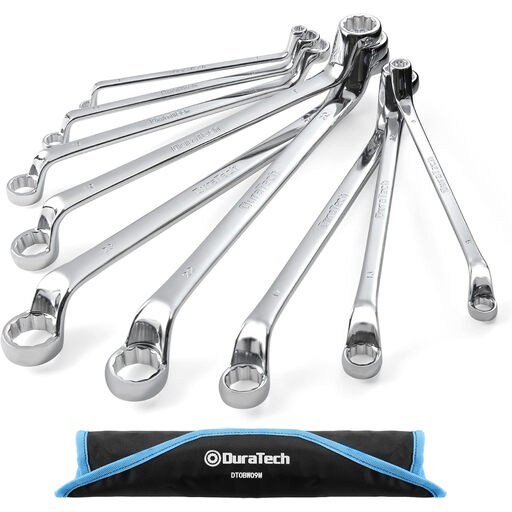
Why this profile fits: Suitable for anyone working on cars, motorcycles or vans and looking for a compact set for awkward angles.
The product description lists the exact double-ended sizes, from 6×7 to 20×22 mm. This gives you eight wrenches with multiple size options.
75-degree offset, 12-point ring and a roll-up pouch with size markings; the material is specified as Cr-V steel.
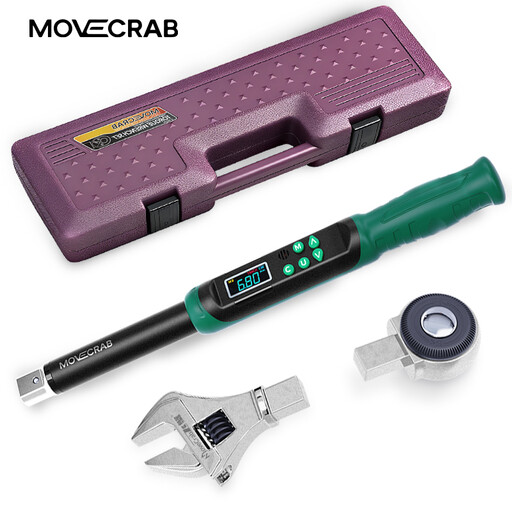
Why this profile fits: For users who need to set tightening torques during automotive and mechanical maintenance.
The range is specified as 6.8–135 Nm. Always check that this matches the requirements for your vehicle or machine.
3/8-inch head, ratchet and open-head configurations, four measurement units and accuracy specified in the product information as ±2%.
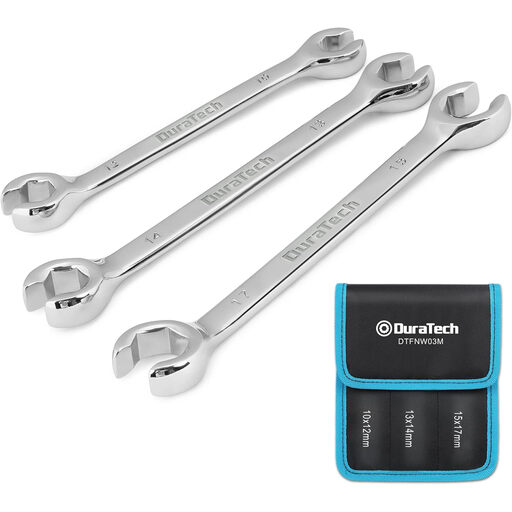
Why this profile fits: A focused addition for mechanics and hobbyists working on brake-line connections.
You are not relying on a standard open-ended wrench for a job that calls for a flare-nut profile. The three wrenches measure 10×12, 13×14 and 15×17 mm.
15-degree offset, Cr-V steel according to the product description and a roll-up storage pouch.
Browse a current selection of service wrench sets and compare them by size, drive, material and storage.
Depending on the work you carry out, these components can be valuable:
For general maintenance, a metric set with sockets and wrenches ranging from approximately 6 to 19 mm is a useful starting point. Also check your vehicle’s manual, as some tasks require larger sizes, Torx profiles or a specific drive size.
Cr-V steel is widely used for hand tools such as ratchets, sockets and ring spanners. Suitability also depends on the construction, heat treatment and permitted load. Only use impact sockets when the product is specifically rated for that purpose.
Clean the tools after use, remove moisture and store each component in its marked compartment. Regularly check ratchet mechanisms, sockets and wrenches for wear. After use, return a torque wrench to the lowest specified setting and always follow the manufacturer’s maintenance instructions.
