
Vandaag of morgen in huis

Kwaliteit gegarandeerd

Welkomstaanbiedingen ontgrendelen: GRATIS bezorging | Tot 80% korting | Gratis 30 dagen JoyPlus-proefperiode
Download de app
A car tool set can be a useful investment for maintenance, engine repairs and DIY jobs around the home. However, a large case is not automatically a smart purchase. Some sets contain lots of components you will rarely use, while lacking important sizes or suitable drives.
Pay particular attention to the contents, materials and how practical the set is in confined spaces. Below, you’ll discover the common pitfalls to watch out for and which sets suit different types of user.
A 450-piece set sounds appealing, but the total may include lots of bits, duplicate sizes or accessories with little relevance to car and engine repairs. Check the following:
For vehicles in the Netherlands and many European engines, a good metric selection is usually more important than a large number of miscellaneous accessories.
In an engine bay, you may only have a few millimetres of clearance to work with. A ratchet with a large swing arc can be awkward in these conditions. Look at the number of teeth and the required working angle. A 72-tooth ratchet with a 5-degree swing requires less movement than a coarser mechanism. A 90-tooth ratchet with a 4-degree swing may be even better suited to confined spaces, according to the product specifications.
A quick-release button is useful too. It allows you to change sockets more quickly without having to pull them off the tool.
A chrome finish can help protect against corrosion and make tools easier to clean, but it does not tell you everything about their strength. Also consider the base material and how the product is constructed. Chrome vanadium steel, often referred to as Cr-V steel, is used in many socket and ratchet sets because of its combination of hardness and wear resistance, according to the product information.
Do not use a ratchet as a striking tool, and check beforehand that a socket is suitable for the torque required. For wheel bolts or critical fasteners, a suitable torque wrench is a better choice than relying solely on a standard ratchet.
A metric tool set contains sockets and spanners measured in millimetres. This generally works well with European cars and motorbikes. SAE sizes are measured in inches and can be useful for certain American vehicles, machines or older models.
A set containing both systems gives you greater coverage, but also takes up more space. Check that the sizes are clearly marked. Unclear markings can quickly lead to using the wrong socket, which may damage a fastener.
The most common drive sizes are:
A complete set often combines several ratchets. Also look for extension bars, a 3/8 to 1/4 inch adapter and, where needed, a spark plug socket. A compact 3/8-inch socket set may be enough for simple jobs, while a larger socket set offers greater flexibility in the workshop.
A tool set with a case stops sockets and bits from getting mixed up. Check that every component has a dedicated place and that the fasteners are sturdy. For use on the go, a compact case or tool roll is often more convenient than a heavy, wide box.
A combination spanner set or ratchet spanner set with clear size markings is particularly practical if you frequently work on your car. For hard-to-reach fasteners, a flexible head, a short spanner or an S-shaped spanner can provide extra clearance.
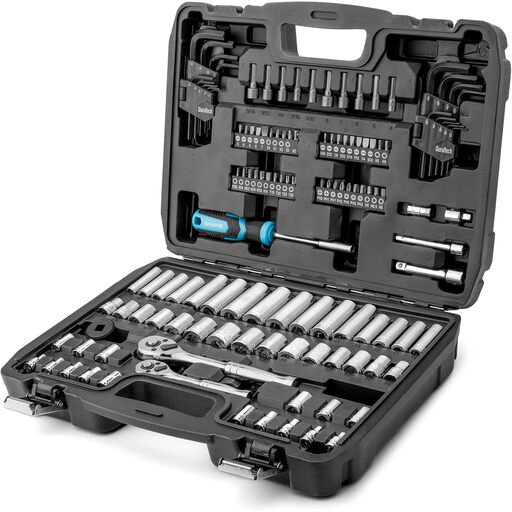
Why it suits this user profile: This set combines sockets, ratchets, bits, hex keys and a case for everyday maintenance on cars, motorbikes and around the home.
The product description lists 121 pieces, including 47 metric and SAE sockets, two ratchets and two extension bars. This makes the contents easy to verify instead of relying solely on the total piece count.
Cr-V steel according to the product description, 1/4- and 3/8-inch ratchets, visible size markings and a storage case.
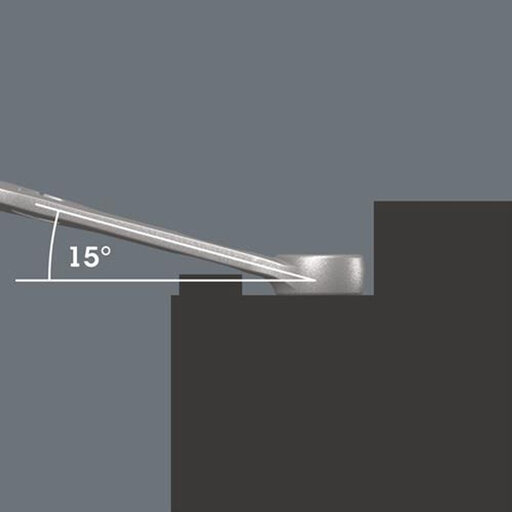
Why it suits this user profile: This compact set is designed for precise work in confined spaces, for example around engine components.
The product information specifies a 15-degree offset, double hexagon geometry and multiple contact points. It is designed for accessibility rather than a large but unfocused number of components.
Four metric spanners from 8 to 13 mm and a compact holder for storage. The stated statutory EU guarantee is at least two years.
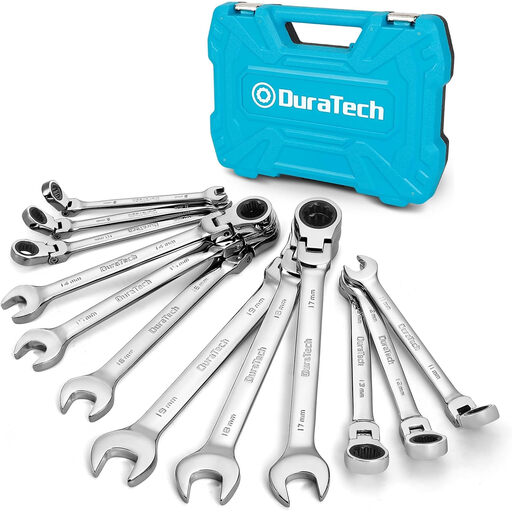
Why it suits this user profile: For mechanics and DIY enthusiasts who frequently work on hard-to-reach fasteners, the adjustable head offers extra positioning options.
The product description specifies a flexible head up to 180 degrees, a 72-tooth mechanism and a 5-degree working angle. This makes the set specifically suited to confined work areas.
12 metric sizes from 8 to 19 mm, Cr-V steel according to the product description and a storage case with size markings.
We’ve put together a complete, up-to-date list of products that fully meet these strict selection criteria and the applicable European safety regulations.
A tool set will last longer when you store the components somewhere clean and dry after use. Wipe away oil and dirt before putting the ratchet away. Regularly check that the quick-release button is working properly and that the teeth are not slipping.
Always use the correct socket size. A socket that is too large or damaged can round off the bolt. For work where a specified tightening torque applies, use a suitable torque wrench and follow the vehicle manufacturer’s specifications.
A set with around 100 to 125 pieces, 1/4- and 3/8-inch ratchets, metric sockets, bits, hex keys and extensions provides a practical starting point. Above all, check that it includes the commonly used sizes and that everything can be stored neatly.
Cr-V steel is widely used in socket sets, ratchet sets and combination spanner sets. According to the product descriptions from the brands mentioned, the material is heat-treated and designed for durability. Its actual service life also depends on the load, maintenance and correct use.
A ratchet set is often sufficient for general loosening and tightening. For wheel bolts, engine components and other fasteners with a specified torque, a torque wrench is a useful addition. This allows you to follow the stated tightening torque more accurately.
