
Vandaag of morgen in huis

Kwaliteit gegarandeerd

Welkomstaanbiedingen ontgrendelen: GRATIS bezorging | Tot 80% korting | Gratis 30 dagen JoyPlus-proefperiode
Download de app
A car tool set may seem easy to choose at first glance. However, a large case with many components is not always practical for your car, motorcycle, or workshop. A ratchet may have the wrong drive size, a socket set may be missing essential sizes, and a standard socket can become damaged when used with an impact wrench.
As a Joybuy Product Recommendation Officer, I filter product information based on verifiable specifications. Below, you’ll learn what to look for in a car tool set, which pitfalls often lead to unnecessary costs, and which type of set best suits your needs.
A 450-piece set sounds appealing, but some of those pieces may be small bits, duplicate sizes, or accessories you rarely use. Instead, check the contents by drive size:
A compact set with the right sizes can be more useful than a large case with an unclear layout.
Wheel nuts can seize because of corrosion or excessive tightening torque. A standard Cr-V socket is not automatically designed for use with an impact wrench. For this type of work, look for a wheel-nut impact socket made from Cr-Mo steel with a matching 1/2-inch drive.
Also pay attention to protective features. According to the product description, plastic inserts and an outer sleeve may help limit contact with the wheel rim and wheel nut. This is not a guarantee against damage: always check that the socket fits correctly and use the appropriate speed and tool.
A torque wrench controls tightening torque, but it cannot make an incorrect or worn socket suitable for the job. For wheel installation, you need torque-wrench sockets that fit the wheel nut precisely. Tighten the nuts by hand first, then use the torque wrench according to the vehicle manufacturer’s specifications.
Before buying, check whether the set includes metric sizes. Millimetre sizes are standard for cars in the Netherlands, while some sets also include SAE sizes in inches. A combination can be useful for older vehicles, machinery, and household appliances.
Look for the following:
A 72-tooth ratchet set operates in small increments. This is useful in a confined engine bay, but it does not mean every ratchet is suitable for extreme loads. For seized bolts, use a suitable breaker bar or impact-rated connection instead.
Cr-V, or chrome vanadium steel, is commonly used for hand tools such as ratchets, combination wrenches, and standard sockets. According to product specifications, the material is hardened and finished for everyday use.
Cr-Mo, or chrome molybdenum steel, is widely used for impact sockets. It is designed to handle the higher shock loads generated by impact tools. A black or coloured finish alone does not prove which type of steel has been used. Check the explicit material specification in the product details.
Do not use impact sockets as standard hand sockets unless the manufacturer permits it. Conversely, standard sockets are not automatically suitable for an impact wrench.
A well-organised case prevents you from wasting time searching for the right tool. Check whether:
A magnetic tool mat is also useful during a wheel change or repair. According to the product description, the mat keeps metal tools, bolts, and nuts in place. Always position it on a stable surface and check it regularly for oil, dirt, and metal particles.
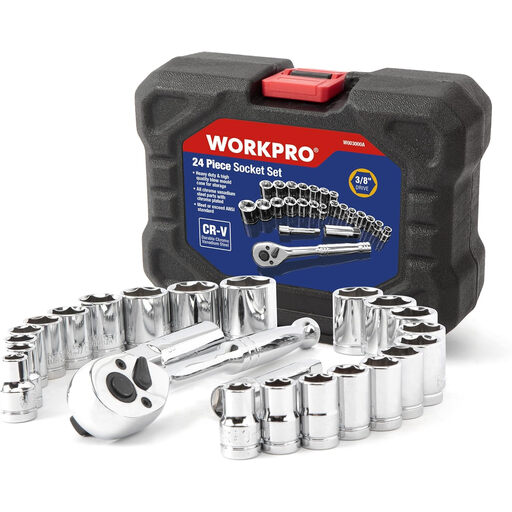
Why This Fits Their Persona: A compact choice for car owners who want to handle basic work on their car, bicycle, appliances, or household projects themselves.
The contents are clearly organised: 21 sockets, a 3/8-inch quick-release ratchet, and a compact plastic case. Check beforehand that the 9 to 19 mm metric sizes match your vehicle.
Cr-V steel sockets, metric and SAE sizes, and a 19.5 × 16 × 7.5 cm case according to the product information.
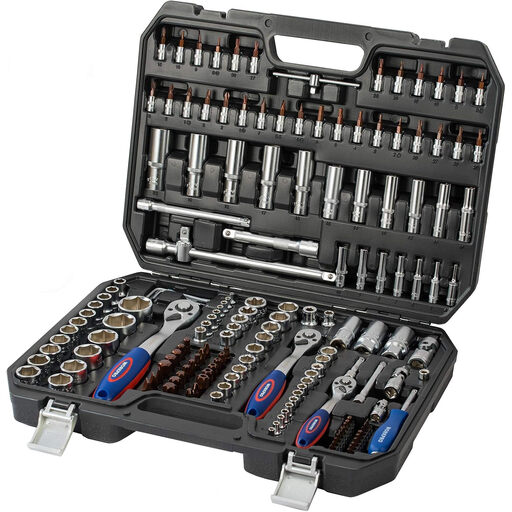
Why This Fits Their Persona: Suitable for home mechanics working on cars, motorcycles, bicycles, and household appliances.
The quantities are broken down by drive size, so you can see in advance which sockets, Torx fittings, and extensions are actually included in the case.
1/4-, 3/8-, and 1/2-inch ratchets, 72 teeth, metric sockets, and a separate Torx socket set in the same storage case.
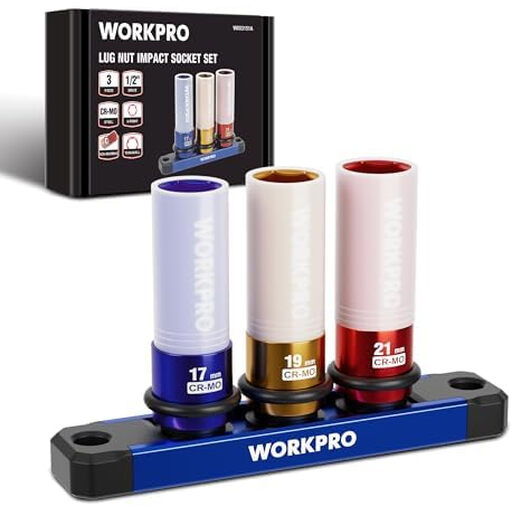
Why This Fits Their Persona: A focused set for car owners, tyre services, and garages that regularly remove and install wheel nuts.
The set includes three common metric wheel sizes and is designed for a 1/2-inch drive. Check whether your car uses different sizes.
Cr-Mo steel, internal plastic protection, and an 86 mm long design according to the product description.
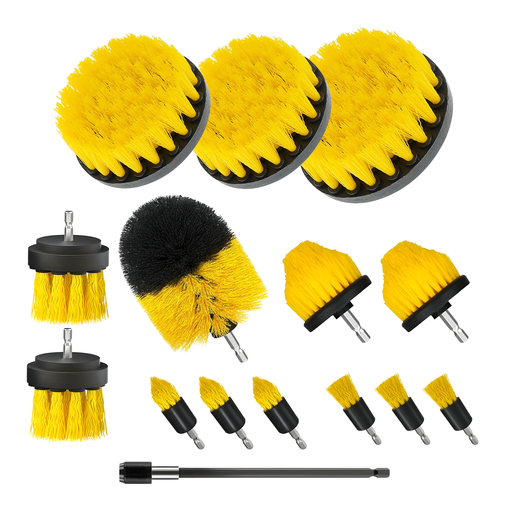
Why This Fits Their Persona: Practical for anyone who wants to clean wheels, upholstery, tiles, and hard-to-reach crevices as well as carry out repairs.
The set includes multiple sizes and a hex shank compatible with many drills. Choose the brush hardness for each surface and avoid applying prolonged pressure to paintwork or leather.
PP, stainless steel, and nylon brushes according to the product details; includes an extension for tight spaces.
A comprehensive set does not always include every specialist component. For cars with Torx or security screws, a separate Torx socket set can be a useful addition. Alongside the case, a magnetic mat, torque wrench, and wheel-nut socket set are sensible accessories.
Use a cleaning brush at low speed on delicate surfaces. According to Oxerbog’s usage information, soft brushes are intended for materials including leather, glass, and paintwork, while harder brushes are better suited to durable surfaces. This is the manufacturer’s guidance, not a universal guarantee for every material.
Browse a current selection of tool accessories by drive size, dimensions, material, and intended use.
For general tasks, 3/8 inch is often the most versatile option. A 1/2-inch drive is generally used for wheel nuts and larger fasteners. Smaller interior and engine-bay jobs are often best suited to 1/4 inch. Always check the socket size and drive format before you begin.
When using an impact wrench, impact-rated Cr-Mo steel sockets are a sensible choice based on the stated material specification. Use them only with a compatible drive and check the wheel nut for damage. A torque wrench may be required for final tightening, in accordance with the vehicle manufacturer’s specifications.
Dry sockets and ratchets after use, remove oil and dirt, and store each component in the case. Do not use a pipe extension on a ratchet unless the manufacturer permits it. Regularly inspect the ratchet mechanism, drive balls, and the fit of your wheel-nut sockets. This helps prevent a minor defect from causing more serious damage during a repair.
