
Vandaag of morgen in huis

Kwaliteit gegarandeerd

Welkomstaanbiedingen ontgrendelen: GRATIS bezorging | Tot 80% korting | Gratis 30 dagen JoyPlus-proefperiode
Download de app
A good car tool set is a smart investment. Whether you're changing your own oil, replacing brake pads, or just want to be prepared for unexpected repairs, the right tools make all the difference. But the market is flooded with sets that over-promise and under-deliver. As a Joybuy Product Recommendation Officer, I'm here to help you see through the marketing jargon and choose a set that's worth the money.
Before you make a purchase, it's important to recognize a few common pitfalls:
To avoid these problems, it's better to focus on a few technical specifications rather than marketing claims. These are the factors that determine the usability and lifespan of your tools.
The type of steel is arguably the most important factor. Most quality hand tools are made from Chrome-Vanadium steel (Cr-V). This material offers a good balance of hardness and strength, making it resistant to wear and deformation under normal use.
For heavier-duty tasks, like loosening stuck lug nuts with an impact wrench, Chrome-Molybdenum steel (Cr-Mo) is a better choice. This material is tougher and can better absorb the high, sudden forces from impact tools. An impact socket set is therefore almost always made of Cr-Mo.
The drive size (the square connector) determines what type of job a socket set is suitable for.
A professional tool chest often includes a ratchet set with all three sizes, so you're prepared for any job.
A torque wrench is indispensable for serious automotive repair tools. It allows you to tighten bolts and nuts to an exact, preset force (torque), expressed in Newton-meters (Nm). This prevents you from damaging parts or having bolts vibrate loose. Pay attention to the claimed accuracy; a deviation of ±3% or ±4% is considered acceptable for most applications.
Below are a few options selected based on their specifications and suitability for different users.
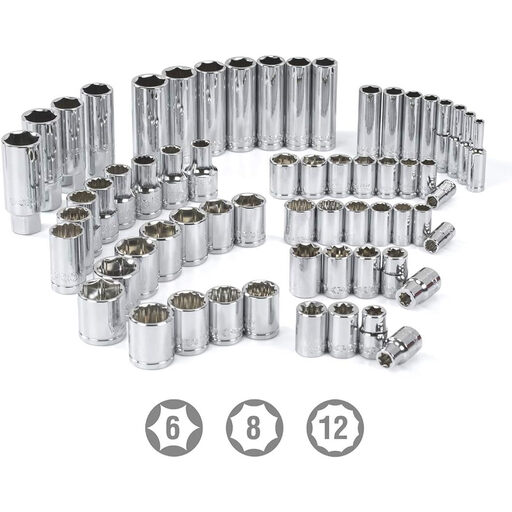
Why it's a match: For the DIYer who wants to be prepared for virtually any job on their car, motorcycle, bike, or around the house. This set provides a very broad foundation, so you won't often find yourself missing a tool.
Tackles the problem of an incomplete set by offering a very extensive range of sockets, bits, and wrenches. The case is designed with four trays to keep everything organized.
Includes ratchets and sockets in 1/4", 3/8", and 1/2" drive sizes. The parts are made of heat-treated and chrome-plated steel for corrosion resistance.
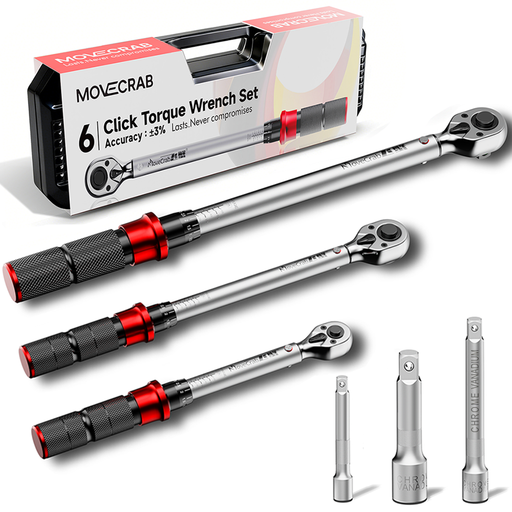
Why it's a match: Perfect for the serious mechanic working on engine blocks, cylinder heads, or suspension components. Here, precision isn't a luxury, but a necessity to prevent costly damage.
This set doesn't focus on quantity, but on the quality and precision of its torque wrenches. It prevents the common mistake of over-tightening critical bolts.
Three torque wrenches (1/4", 3/8", 1/2") with a combined range of 5 to 220 N.m. According to the manufacturer, they have an accuracy of ±3% and each wrench comes with a calibration certificate.
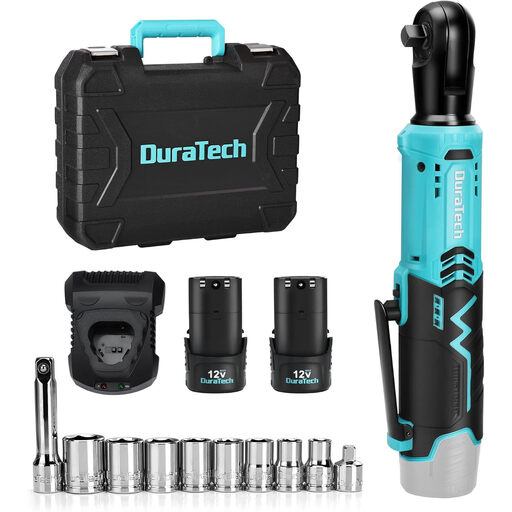
Why it's a match: For the mechanic or serious hobbyist for whom time is money. This set significantly speeds up loosening and tightening bolts, especially in hard-to-reach places where you have a limited swing arc.
Tackles the frustration of slow and tedious manual ratcheting. The slim head is designed to get into places where a standard ratchet won't fit, increasing efficiency.
Cordless and powerful with a 12V motor that delivers a claimed 65 Nm of torque. Comes with two 2.0 Ah batteries and a fast charger, so you won't have any downtime.
This is just a selection. We've put together a complete overview of tools that meet strict criteria for material and functionality.
For most cars on the road in Europe and Asia, you will need a metric set (mm). However, if you work on American cars, classic cars, or certain types of machinery, you may also encounter SAE sizes (inches). A comprehensive professional tool chest often includes both systems.
A standard socket set is typically made of Cr-V steel and intended for use with hand tools like a ratchet. An impact socket set is made from tougher Cr-Mo steel and has thicker walls. These are specifically designed to withstand the high, sudden forces of an impact wrench without cracking. Never use a standard socket on an impact wrench.
The correct tightening torque for specific bolts (like lug nuts, brake calipers, or engine components) is always specified by the car manufacturer. You can find these specifications in your car's service manual or look them up online. Using a torque wrench to adhere to these values is essential for ensuring the safety and reliability of your vehicle.
