
Vandaag of morgen in huis

Kwaliteit gegarandeerd

Welkomstaanbiedingen ontgrendelen: GRATIS bezorging | Tot 80% korting | Gratis 30 dagen JoyPlus-proefperiode
Download de app
A car tool kit can look complete at first glance when the packaging lists a large number of parts. In practice, though, a kit can disappoint. Some accessories are rarely used, while essential sizes or a suitable ratchet may be missing. A torque wrench is sometimes bought without checking whether its measurement range is suitable for the job.
This buying guide will help you choose a car tool kit for maintaining cars, motorbikes, bicycles and other equipment. You’ll find out what to look for, which specifications make a practical difference and which type of kit best suits your needs.
A kit with 100 or more pieces isn’t automatically more useful. First, check which parts are included:
Even a large socket set can be inconvenient if it’s missing the sizes you use most often.
A 1/4-inch ratchet is suitable for smaller fasteners and working with bits. A 3/8-inch ratchet is versatile for many car and motorbike maintenance jobs. A 1/2-inch ratchet is more practical for larger bolts. An adapter can help, but it won’t always replace a ratchet with the right drive size.
Pay attention to the handle length, too. A longer ratchet can give you more leverage, but don’t use an extra pipe to increase the force further if the manufacturer advises against it.
For wheel bolts, engine parts and other fasteners with a specified tightening torque, use a car torque wrench or digital torque adapter. A ratchet won’t reliably show how much force you’re applying. When choosing a torque wrench, check its range, drive size and stated accuracy.
Many automotive tools use chrome vanadium steel (Cr-V) for sockets and ratchets. It’s a common material for mechanical tools. Bits are sometimes made from S2 steel; according to manufacturers’ product information, it’s designed to offer greater hardness and wear resistance.
Also look for:
According to product descriptions, a 72-tooth ratchet has a small swing arc, around 5 degrees on some models. This is useful when you have limited room to move, for example around an engine block.
Choose the range to suit the work you’ll be doing. A small torque wrench is suitable for light-duty fasteners, while a 1/2-inch model can cover a wider range. A set with several wrenches helps you avoid using a scale that’s too high or too low.
Always check:
A digital adapter can extend the capabilities of an existing ratchet. Check that it’s compatible with your 1/4-, 3/8- or 1/2-inch tools.
Use only sockets and bits that fit the fastener. Damaged sockets can slip. Only work on electrical systems when the car has been safely switched off, and never use tools on a live circuit. Always follow the jump starter’s instructions and check the polarity.
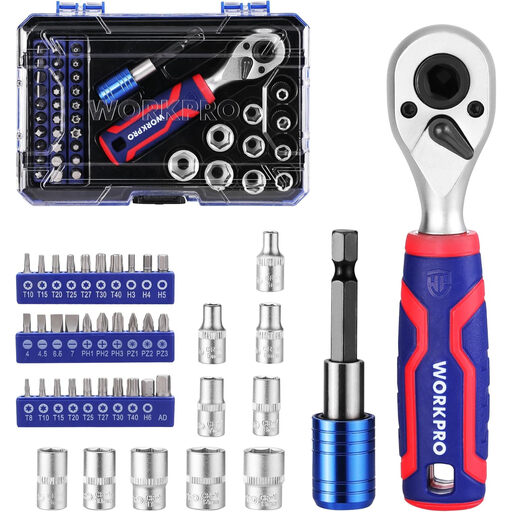
Why it suits this type of user: A compact ratchet set for DIY beginners who want to tackle basic jobs on their car or bicycle, or around the home, without carrying a large case.
The product information describes a 2-in-1 design with socket and bit functions, so you don’t need to buy several separate handles straight away.
42 pieces, 1/4-inch drive, 72 teeth and a storage case included.
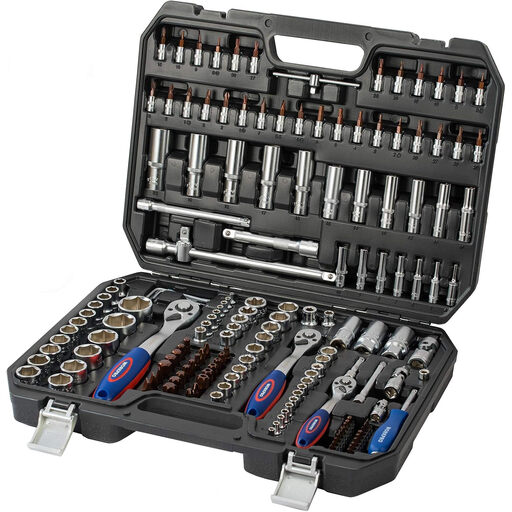
Why it suits this type of user: Ideal if you want one comprehensive tool kit for the garage, car, motorbike, bicycle and general maintenance.
The set combines 1/4-, 3/8- and 1/2-inch ratchets with metric sockets, deep sockets, Torx, spark plug sockets, bits and extension bars.
172 pieces, Cr-V sockets, S2 bits, 72-tooth ratchets and a case with size markings.
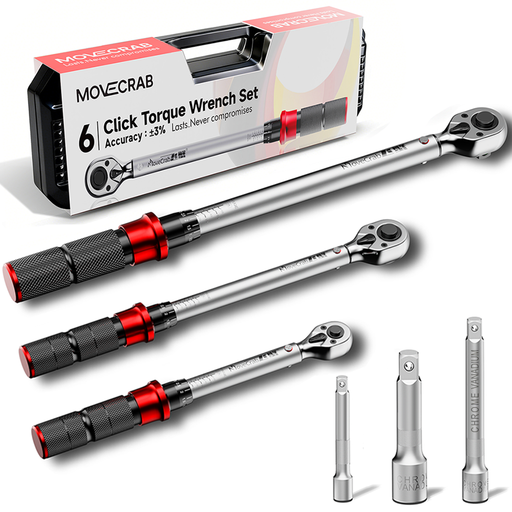
Why it suits this type of user: A practical choice for hobby mechanics, cyclists, motorcyclists and garages working with different tightening torques.
The stated range runs from 5 to 220 Nm, and the set includes three wrenches with different drive sizes and extension bars.
1/4-, 3/8- and 1/2-inch extension bars; the product information states a tolerance of ±3%.
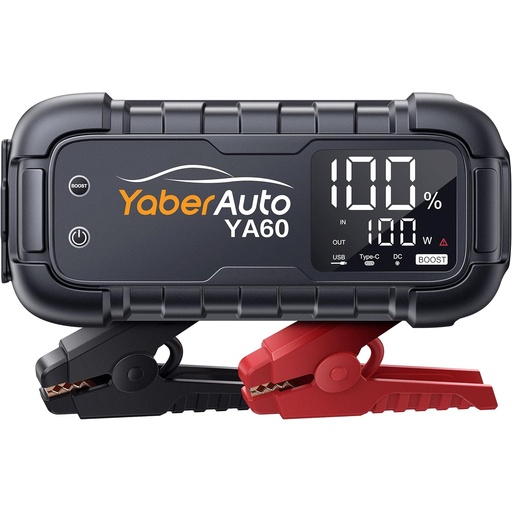
Why it suits this type of user: A handy option if, alongside your car maintenance tools, you want to keep a portable solution in the car for a flat 12V battery.
The product information lists smart safety features, but correct connection and charging the unit beforehand are still essential.
According to the product description, 8000A peak current, suitable for 12V petrol engines and diesel engines up to 12.0 litres, plus USB-C and DC output.
We’ve put together a complete, up-to-date list of products that meet these strict selection criteria and the applicable European safety regulations.
For general maintenance, a set with 1/4-, 3/8- and 1/2-inch drives is versatile. Check that it includes metric sizes, deep sockets, Torx, extension bars and a sturdy case. A compact ratchet set may be enough for occasional maintenance; a more comprehensive set is more practical for a garage.
For wheel bolts, it’s best to follow the tightening torque specified by the car manufacturer. A torque wrench helps you set it accurately. Use a suitable socket first and tighten the bolts in a diagonal pattern. Always check your car’s manual and the torque wrench instructions.
Wipe sockets and ratchets clean after use and dry them before putting them away. Store the case in a dry place. After using a mechanical torque wrench, reset it to the recommended minimum setting. Recharge a jump starter periodically according to the product instructions, even if you don’t use it often.
