
Vandaag of morgen in huis

Kwaliteit gegarandeerd

Welkomstaanbiedingen ontgrendelen: GRATIS bezorging | Tot 80% korting | Gratis 30 dagen JoyPlus-proefperiode
Download de app
A warning light on your dashboard indicating low tire pressure, or worse, a flat tire on the side of the road. These are situations every driver prefers to avoid. The search for a working air pump at a gas station can be inconvenient and time-consuming. Having your own tire inflator in the car provides a solution. It not only offers peace of mind but also ensures you always drive with the correct tire pressure, which is safer and saves fuel.
This article will help you choose a suitable tire inflator for your car. We will discuss the most important factors to consider and highlight several popular choices, so you can find a model that fits your needs and your vehicle.
The market for tire inflators is diverse. To make the right choice, it's wise to consider a few key features.
The way the inflator is powered determines its flexibility.
Standard tire inflators are designed to top up air. For emergencies, a tire repair kit is worth considering. Such a kit includes not only a compressor but also a sealant that allows you to temporarily seal a small puncture in the tire. This enables you to drive to the nearest garage for a permanent repair.
Modern inflators offer features that significantly simplify their use. A digital tire inflator has a screen where you can accurately read the current and desired pressure (in PSI, BAR, or kPA). Many models have an automatic shut-off function: you set the desired pressure, and the inflator stops automatically when it's reached. This prevents you from over-inflating a tire.
Based on functionality and specifications, we have compiled a list of interesting options for you.
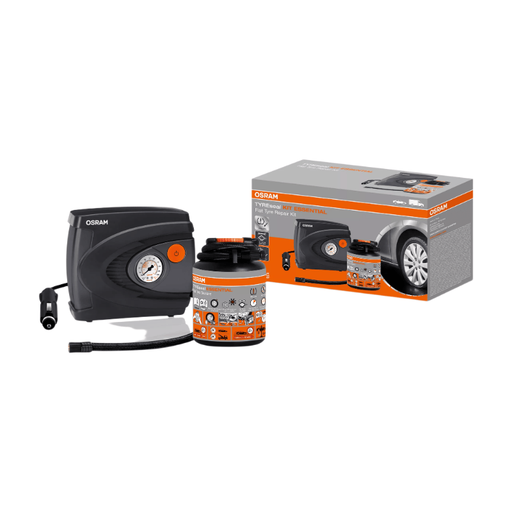
Why It Stands Out This is more than just a tire inflator; it's a complete emergency solution. The combination of an analog compressor and a bottle of tire sealant makes this a practical tire repair kit for emergencies. Everything is neatly stored in a compact case.
Pros
Who Is It For? For the driver who wants to be prepared for a flat tire and wants a complete, reliable emergency kit in the car for maximum peace of mind on the road.

Why It Stands Out This portable air compressor excels in versatility. Thanks to its dual power mode, you can use it cordlessly with the 6000mAh battery, or via the car's 12V socket if the battery is dead. The power bank function is a handy extra.
Pros
Who Is It For? For the user seeking a compact, multifunctional, and technologically advanced solution that is useful not only for the car but for other purposes as well.
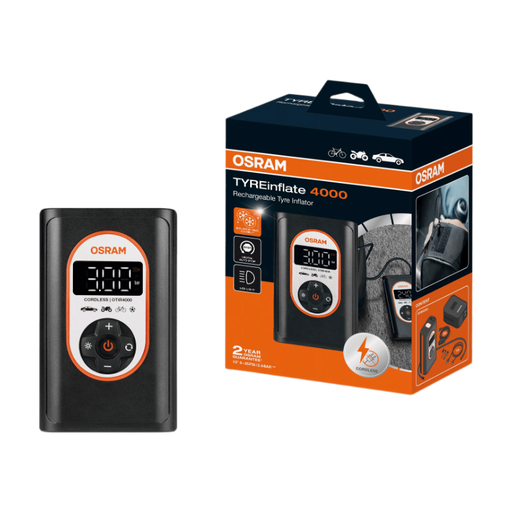
Why It Stands Out The OSRAM TYREinflate 4000 is a premium rechargeable tire inflator that focuses on user-friendliness. Its cordless design, fast operation, and smart features like pressure memory make checking and topping up tires a simple task. According to OSRAM, a tire can be inflated in about 3.5 minutes.
Pros
Who Is It For? For the daily driver or family looking for a durable, fast, and very user-friendly inflator for regular maintenance of tire pressure on multiple vehicles.
The models mentioned above offer a good balance between functionality and ease of use. However, are you specifically looking for a model that receives continuous power from the car?
Then check out our selection of DC-powered tire inflators for more powerful 12V options.
1. How often should I check my car tires? It is recommended to check your tire pressure at least once a month, and always before a long trip. Correct tire pressure ensures better road handling, a shorter braking distance, and lower fuel consumption.
2. Can I use a portable car tire inflator for my bicycle? Yes, most modern portable compressors, like the 6000mAh pump and the OSRAM TYREinflate 4000, come with various nozzles (adapters). These allow you to inflate bicycle tires (both Presta and Schrader valves), motorcycle tires, balls, and other inflatable toys.
3. Is a tire repair kit a permanent solution for a flat tire? No, a tire repair kit with sealant is intended as a temporary emergency solution. It allows you to drive safely to a garage. Always have the tire inspected and permanently repaired or replaced by a professional afterward. Do not drive faster than the recommended speed (usually 80 km/h or 50 mph) after using a sealant.
