
Vandaag of morgen in huis

Kwaliteit gegarandeerd

Welkomstaanbiedingen ontgrendelen: GRATIS bezorging | Tot 80% korting | Gratis 30 dagen JoyPlus-proefperiode
Download de app
Buying a loose ratchet wrench and only discovering later that the sockets do not fit is a common experience when purchasing car repair tools. Even a large car tool set can disappoint if important sizes are missing, the case is poorly organised or a cordless impact wrench does not deliver enough power for your vehicle.
So do not focus only on the number of pieces or a low price. For car maintenance, the right drive size, choice of material, accuracy and intended use are far more important. Below, you can find out which pitfalls to avoid and which automotive tools are right for your needs.
A car tool set containing dozens or hundreds of pieces may seem appealing. However, the number of pieces says little without clear information about what is included. Check whether the set contains the metric sizes you need, which drive sizes are included and whether extension bars, adapters and Allen keys are supplied.
For Dutch passenger cars, metric sockets are generally the most practical choice. A set containing both metric and SAE sizes can offer extra versatility, but it also takes up more space.
A cordless drill or impact wrench is useful for quickly loosening or tightening bolts. That does not mean you should tighten every bolt fully using power tools. For wheel bolts, engine components and other critical connections, you need a torque wrench to set the specified tightening torque.
An electric wrench offering, for example, 200 N.m is suitable for jobs where quickly loosening fasteners is important. Final assembly should be carried out according to the vehicle specifications and, where necessary, completed using a calibrated torque wrench.
A car diagnostic tool or OBD2 scanner is only useful if it is compatible with the make, model, year and protocols supported by the vehicle. A basic OBD2 scanner often mainly reads emissions-related engine fault codes. Functions such as ABS diagnostics, live data, service resets or active tests cannot be taken for granted.
Also check whether software updates are paid for, whether an app is required and which functions may vary between vehicles. Treat manufacturers’ claims about broad coverage as product information, not as a guarantee that the device will work with your car.
A ratchet wrench with a 1/4-inch drive is suitable for smaller fasteners and confined spaces. A 3/8-inch ratchet is versatile for many jobs on passenger cars. For larger bolts and higher torque, a 1/2-inch drive may be more practical.
When choosing a socket set, look for:
According to DURATECH’s product description, a 90-tooth ratchet has a 4-degree return angle. This can be useful in a cramped engine bay. Actual usability also depends on the handle length and the amount of available working space.
Many hand tools for car repairs are made from chrome vanadium steel, often referred to as Cr-V. Heat treatment can contribute to hardness and wear resistance, while a chrome-plated finish helps protect the surface against corrosion. Also look at the shape of the jaws and the fit of the socket. Using the wrong size increases the risk of damaging bolt heads.
A standard open-ended spanner is not always suitable for brake lines. A brake pipe spanner or flare-nut spanner largely encloses the nut while leaving room for the pipe. According to the product information, the DURATECH 3-piece set contains sizes 10×12, 13×14 and 15×17 mm, together with a storage pouch.
When choosing cordless tools, check the battery voltage, capacity, charging time and the number of batteries included. A higher voltage does not automatically mean that a tool is suitable for every car repair. For example, a compact electric screwdriver is designed for light fastening jobs, whereas an impact wrench for wheel and chassis work requires more torque.
Also look for:
Do not use power tools as a substitute for manual control when a specific tightening torque is required.
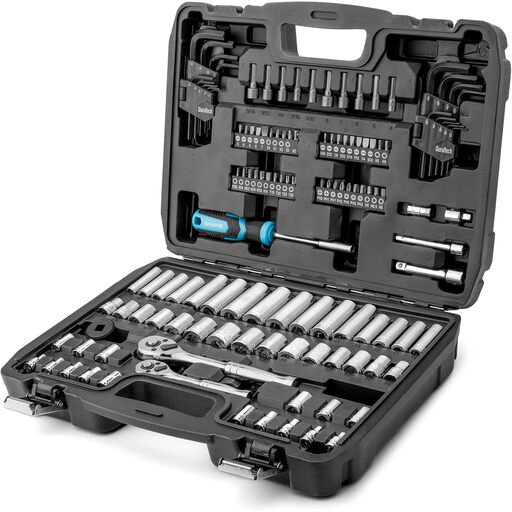
Why it suits this profile: This set provides a broad foundation for tyre work, simple assembly and DIY car maintenance, without having to collect individual pieces straight away.
The contents are clearly specified: 121 pieces, including metric and SAE sockets, 1/4- and 3/8-inch ratchets, bits and Allen keys.
Chrome vanadium steel, clear size markings and a storage case with dedicated slots.
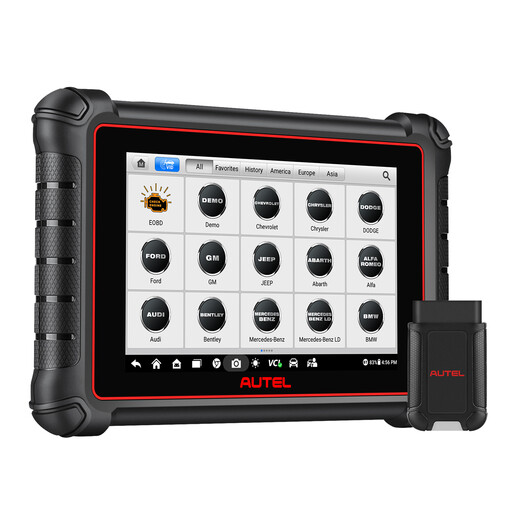
Why it suits this profile: Designed for workshops and users who want to view live data and vehicle systems in addition to reading fault codes.
The product information explicitly lists the CAN FD and DoIP protocols, along with the limitation that AutoVIN does not work with every car.
8-inch touchscreen, Bluetooth connection, full-system diagnostics according to the product description and support for live data.
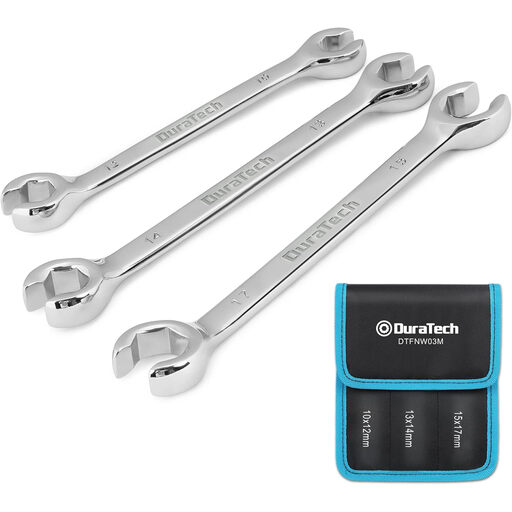
Why it suits this profile: A focused choice for brake lines and pipe connections where a standard open-ended spanner is less suitable.
The flare-shaped jaw is designed for brake-line nuts, while the 15-degree offset helps when access is restricted.
Three metric spanners, each with two sizes, plus a storage pouch with size markings.
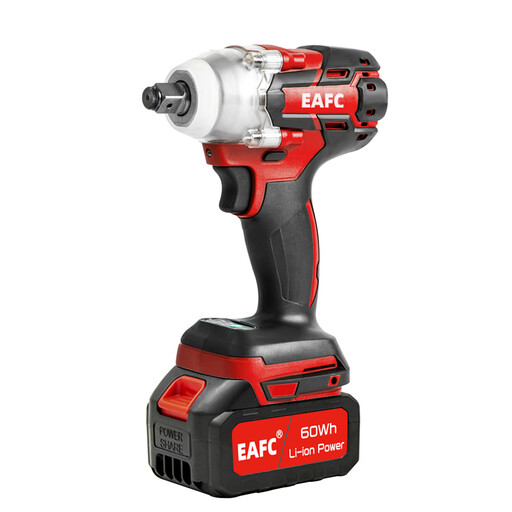
Why it suits this profile: Handy for garage work, tyre changes and jobs where you do not want to work with a mains cable.
The specifications state that it has a cordless design, a 21V lithium-ion battery, adjustable speed and a forward/reverse switch.
Stated maximum torque of 200 N.m, LED lighting, rubberised handle and a battery included.
We have put together a complete, up-to-date list of products that fully meet these strict selection criteria and the applicable European safety regulations.
Use this quick check before placing your order:
A practical basic kit consists of a socket set, 1/4- and 3/8-inch ratchet wrench, screwdriver set, combination pliers, Allen keys and a torque wrench. For tyre work, an impact wrench can save time, but always check bolts manually using the correct tightening torque.
That depends on the job. A basic device may be enough for reading simple engine faults. If you want to access ABS, airbags, the transmission, live data or service functions, you will need a more advanced car diagnostic tool. Check vehicle compatibility and update costs in advance.
Wipe tools clean after use, remove moisture and oil, and store each piece in the correct place in the case. Do not use damaged sockets or spanners, and do not operate a screwdriver or cordless drill above its specified torque. This helps reduce wear and keeps your automotive tools organised and ready to use.
