
Vandaag of morgen in huis

Kwaliteit gegarandeerd

Welkomstaanbiedingen ontgrendelen: GRATIS bezorging | Tot 80% korting | Gratis 30 dagen JoyPlus-proefperiode
Download de app
On the road in your car, camper, or boat and craving an ice-cold drink or a fresh meal? A quality car refrigerator makes all the difference. But the market is flooded with models that overpromise and underdeliver. Before you invest in a portable fridge, it's crucial to know what to look for. Many models seem practical at first glance but have hidden drawbacks that only become apparent after purchase.
Here are the three most common pitfalls that can cost you money and disrupt your travel plans.
To avoid buyer's remorse, there are a few technical specifications you must check. These determine whether an electric cooler is car-friendly and practical for your needs.
The technology determines how cold the cooler can truly get.
A good portable refrigerator offers flexible power options.
The stated litres don't tell the whole story. Pay attention to the internal dimensions and layout. A model with removable baskets, a separate freezer and fridge zone (dual zone), or a rectangular shape is often more efficient to pack. For daily use or short trips, 20 litres may suffice, but for a family holiday in the camper, a capacity of 40 litres or more is a logical choice.
Below are a few models that suit different user profiles, selected based on their specifications and practical features.
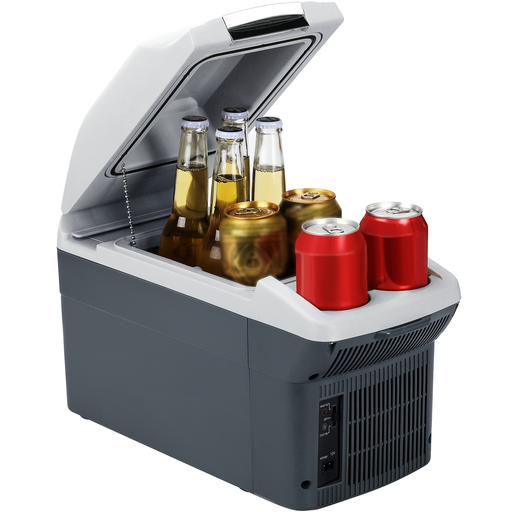
Why This Fits Their Persona: Ideal for those who want to keep their lunch and drinks cool during their commute or on a day out. Its compact size fits easily on a car seat, and the dual cup holder is a handy extra for the road.
This is a thermoelectric model, but its small size and intended short-term use limit the risk of draining the battery. It's a deliberate choice for a specific, light-duty application without overspending.
Compact and lightweight design. Offers both a cooling and a warming function. Operates directly via the 12V socket.

Why This Fits Their Persona: With 49 litres of capacity, two independently controlled zones, and a powerful compressor, this is a fully-fledged fridge and freezer solution for families with an RV or for long journeys. The wheels and retractable handle make it portable despite its size.
This is a compressor cooler that can genuinely freeze. It runs on 12V, 24V, and 230V and includes battery protection, thereby avoiding all three pitfalls. The dual zones ensure efficient use of space.
Large capacity (49L), two independently controlled temperature zones (cool and freeze simultaneously), and app control. A popular model from Alpicool fridge.

Why This Fits Their Persona: For those who want compressor performance but don't have space for a large model. This 22L cooler is perfect for weekend trips, smaller cars, or as an extra freezer in the camper. It offers serious cooling power in a compact footprint.
This model combines an efficient compressor with a compact design. Support for both 12V/24V DC and 100-240V AC and the built-in battery protection make it a reliable and flexible choice.
Powerful compressor that can freeze down to -18°C. Compact and portable size (22L). Universal power support.
We have compiled a complete, real-time list of products that fully satisfy these strict selection criteria and UK safety regulations.
Power consumption varies by model and setting but is typically between 45 and 60 watts. Crucially, a compressor does not run constantly. It only cycles on to maintain the set temperature, just like a home refrigerator. In ECO mode, consumption is even lower. This makes them significantly more efficient than thermoelectric models, which draw power continuously.
Yes, it is safe as long as the cooler is equipped with a battery protection system. This feature is specifically designed to prevent your vehicle's battery from being completely drained. By setting the protection to the 'High' or 'Medium' level, you can be sure there will be enough power left to start the engine the next morning.
A thermoelectric cooler produces a constant, low hum from its fan. A compressor cooler is silent most of the time. You will hear the compressor kick in occasionally, which produces a soft, humming sound, similar to a modern home refrigerator. The noise level of most compressor models is below 45 dB, which is generally considered quiet and is not disruptive in a camper or truck cabin.
