
Vandaag of morgen in huis

Kwaliteit gegarandeerd

Welkomstaanbiedingen ontgrendelen: GRATIS bezorging | Tot 80% korting | Gratis 30 dagen JoyPlus-proefperiode
Download de app
You have a long drive ahead, the sun is beating down on the asphalt, and you reach for a bottle of water. It's lukewarm. Or, after a day at the campsite, you open the cooler to find the cheese has started to sweat. Sound familiar? A good car refrigerator is indispensable for travellers, campers, and on-the-go professionals. But the market is flooded with models that over-promise and under-deliver.
Before you invest, it's wise to understand the most common pitfalls. Many buyers fall into them, resulting in unnecessary expense and frustration.
electric cooler without smart battery protection can completely drain your car battery.This guide will help you avoid these problems and find a model that suits your needs, without the marketing jargon.
Focus on the specifications that truly matter. Don't be distracted by flashy features you'll never use. These are the three most important considerations.
This is the most critical choice you'll make. It determines whether you have a simple cooler or a true portable refrigerator.
compressor cooler can reach temperatures as low as -20°C, even when it's 30°C outside. This is the only technology that can actually freeze. Ideal for a camping fridge or RV cooler where you need to keep food fresh for extended periods. They are more energy-efficient once they reach the target temperature.A car refrigerator must be reliable without leaving your car stranded.
12v 220v cooler offers extra flexibility, as you can also plug it into a standard wall outlet at the campsite or at home using an adapter.The stated capacity in litres doesn't tell the whole story.
cooler with a freezer function and a separate refrigerator compartment. With these "dual zone" models, you can set the temperature for both sections independently. Perfect for keeping ice cream frozen while your drinks stay chilled.We've matched several popular models to specific user profiles, helping you make a choice that aligns with your lifestyle.
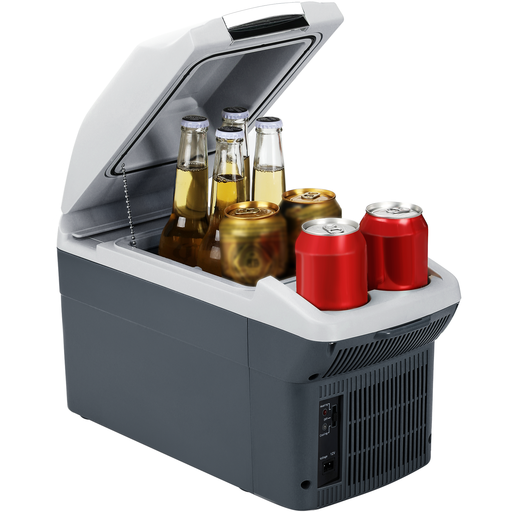
Why This Fits Their Persona: Perfect for those seeking a simple, compact solution to keep drinks and lunch cool during a car ride or day out. Its size is ideal for the passenger seat or back seat.
This model is a thermoelectric cooler and is presented as such. It doesn't promise freezing performance, so you know exactly what you're getting: an effective cooler for short trips.
Compact and lightweight design. Features convenient built-in cup holders and a shoulder strap for easy transport. It can also heat.
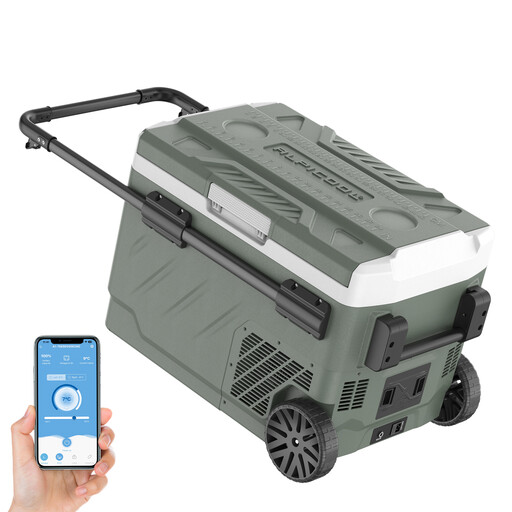
Why This Fits Their Persona: Ideal for RV and boat owners who need a reliable cooling and freezing solution for multi-day trips. The 40-litre capacity is spacious enough for a small family.
This is a compressor cooler that truly cools and freezes (-20°C to 20°C), regardless of the outside temperature. The 3-stage battery protection prevents a dead battery.
Dual-zone temperature control via the display or an app. Equipped with wheels and a retractable handle for easy transport at the campsite.
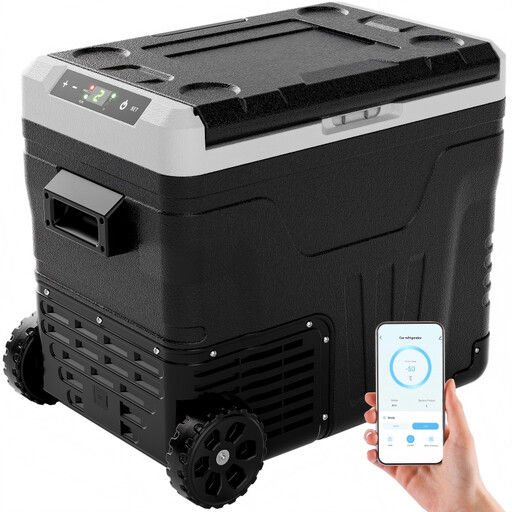
Why This Fits Their Persona: Truck drivers or long-haul travellers who are on the road for days or weeks need a large, robust, and efficient refrigerator. The 50-litre capacity offers ample space for meals and drinks.
The large, efficiently designed interior maximises the 50L capacity. The reliable compressor and 3-stage battery protection are designed for continuous use without draining the vehicle's battery.
Very spacious capacity with two compartments and a removable divider. Operates on both 12V/24V DC and 220V AC and can be controlled remotely via an app.
We have compiled a complete, up-to-date list of products that meet these strict selection criteria and current safety regulations.
Yes, an electric cooler without protection certainly can. That's why you should always choose a model with built-in, adjustable battery protection (often indicated as L/M/H). This feature automatically shuts off the cooler when the battery voltage drops below a safe level, ensuring you always have enough power left to start your car.
A compressor cooler works like a real refrigerator and can cool and freeze (down to -20°C) regardless of the outside temperature. A thermoelectric cooler only cools to a certain number of degrees (approx. 18-22°C) below the ambient temperature and therefore cannot freeze. For serious cooling or summer use, a compressor model is the recommended choice.
The usable capacity can vary. As a rule of thumb, a 30-litre portable refrigerator can hold about 35-40 standard 330ml cans. Larger 1.5-litre bottles often only fit if laid down. When making your choice, don't just look at the number of litres, but also at the internal dimensions and whether there is a recess for standing bottles, for example.
