
Vandaag of morgen in huis

Kwaliteit gegarandeerd

Welkomstaanbiedingen ontgrendelen: GRATIS bezorging | Tot 80% korting | Gratis 30 dagen JoyPlus-proefperiode
Download de app
Tired of seeing those fine scratches and swirl marks on your car's paint in the sunlight? A clean car is one thing, but achieving a flawless, mirror-like shine is the ultimate goal. A good car polisher is not a luxury, but an essential tool. However, the sheer number of options can be overwhelming. That's why we're here to guide you with practical tips and a selection of popular models, helping you make an informed choice.
Before you decide, it's helpful to understand a few key specifications. This will help you find the car polisher that's right for the job.
The choice between a cordless polisher and a corded model depends on your workspace and personal preference.
For most DIYers and car detailing enthusiasts, a random orbital polisher, also known as a dual action polisher, is the recommended choice. This machine not only rotates but also makes an oscillating (off-centre) movement. This mimics the motion of your hand, but much faster and more consistently. The major advantage is that heat is distributed more evenly, significantly reducing the risk of burning through the paint. This makes it a safe and effective option for beginners and advanced users alike.
Not every polishing job is the same. For large surfaces like a hood or roof, a standard-sized machine (often with a 125 mm or 150 mm backing plate) is suitable. For bumpers, mirrors, pillars, and other intricate areas, a mini polisher is indispensable. Also, consider what's included. A complete polisher kit with various pads (foam, wool), a microfibre cloth, and a storage bag provides everything you need to get started right away.
Based on product specifications and features, we've highlighted some compelling options for you.
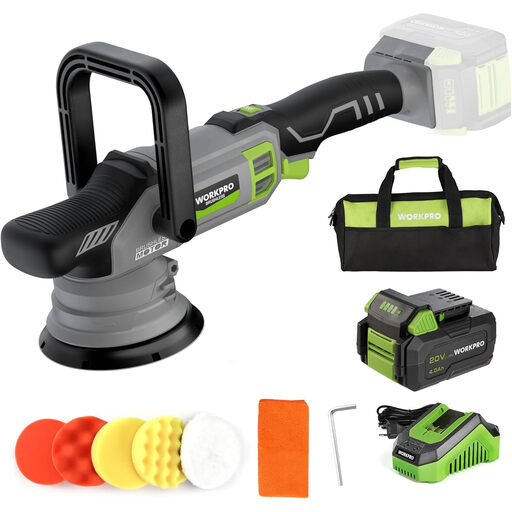
Why It Stands Out This machine combines the power of a brushless motor with the convenience of a cordless design. Its dual action movement ensures an efficient and safe polishing experience, while the seven speed settings give you complete control over the process.
Advantages
Who It's For? The DIY enthusiast looking for a reliable, all-round cordless polisher for regular maintenance and polishing larger surfaces.
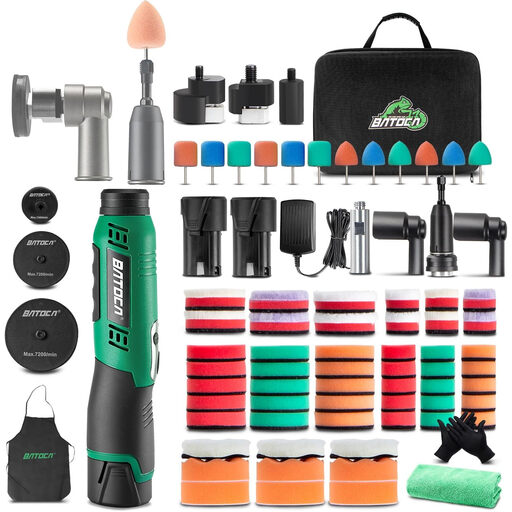
Why It Stands Out The BATOCA S6 is specifically designed for precision work. Thanks to its compact size and the included small backing plates (25 mm, 50 mm, 75 mm), you can effortlessly reach spots that larger machines can't. A unique feature is its switchable system between random orbital (DA) and rotary (RO).
Advantages
Who It's For? The serious car detailing enthusiast or (semi-)professional who needs a specialised mini polisher to perfectly finish every detail of the vehicle.
View the BATOCA S6 Mini Polisher
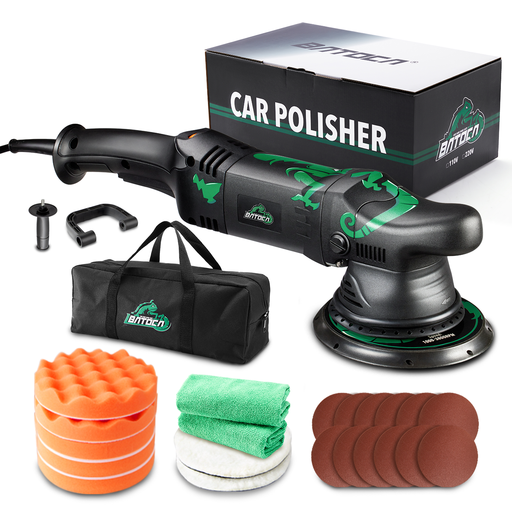
Why It Stands Out This model from BATOCA is a corded workhorse. The 1100W motor delivers consistent power for the most demanding jobs. The machine is designed with comfort in mind, featuring both a D-handle and a side handle for optimal control during prolonged use.
Advantages
Who It's For? For the user who wants the reliability of uninterrupted power for tackling larger vehicles or paint with significant oxidation and scratches.
View the BATOCA 5-inch Polisher
These recommendations are a great starting point, but perhaps you have something slightly different in mind. Every job and budget is unique. For a wider selection of models with different specifications and price ranges, you can browse our entire collection.
A rotary polisher spins on a fixed axis, which generates a lot of heat and is very effective for fast correction, but it's also risky for beginners (risk of paint burn). A random orbital polisher (dual action) rotates and oscillates simultaneously. This distributes heat, is much safer to use, and provides an excellent result for removing light to moderate imperfections.
Absolutely. A dual action polisher is ideal for beginners. The best approach is to start on a low speed setting with a soft polishing pad and a mild polishing compound. First, practise on an inconspicuous area, like a section of the trunk, to get a feel for the machine.
That depends on the task:
