
Vandaag of morgen in huis

Kwaliteit gegarandeerd

Welkomstaanbiedingen ontgrendelen: GRATIS bezorging | Tot 80% korting | Gratis 30 dagen JoyPlus-proefperiode
Download de app
A flat battery, soft tyre or awkward phone mount usually causes trouble at the worst possible time. When choosing car and motorbike accessories, a high current, pressure rating or range can seem like the deciding factor. But one impressive number rarely tells the whole story. The connector, battery type, vehicle compatibility and UK road-use rules all affect whether a product will work for you in practice.
A car jump starter rated at 4,000 or 8,000 amps sounds powerful. Check which 12V engines it is designed for, too, and whether the manufacturer distinguishes between petrol and diesel engines. A device suitable for a large diesel engine could be unnecessarily heavy-duty for a compact city car.
The same applies to a car tyre inflator. A maximum pressure of 150 PSI is a technical limit, but it doesn’t tell you how quickly it will inflate a tyre, how long it can run continuously or how accurate its pressure gauge is.
A 12V battery charger for lead-acid batteries isn’t automatically suitable for a LiFePO4 battery. AGM, EFB, GEL, flooded lead-acid and lithium batteries need different charging settings. So, check:
A 6-amp motorbike battery charger may suit a smaller motorbike battery, while a 15A car battery charger may charge more quickly but won’t necessarily be the most suitable choice for every small battery.
An electric quad or electric vehicle may seem technically suitable for short journeys, but using it on public roads depends on its vehicle classification, registration, insurance and the required driving licence. Always check the vehicle documentation and the latest information from the RDW and the Dutch government.
Similarly, “anti-theft” on a motorbike phone mount doesn’t guarantee that your phone can’t be stolen. Treat it as a feature of the mount’s design, not as an absolute security measure.
If you need breakdown assistance, first check that the jump starter is suitable for your vehicle. Look at the combination of:
A portable jump starter with a compressor and power bank function is handy if you want several features in one device. Just check that the cables are long enough, the clamps connect securely and the device still has enough charge after being stored.
For a motorhome or LiFePO4 battery, capacity and charging technology matter more than weight alone. According to the product specifications, the Foursun 12V 100Ah LiFePO4 battery has a built-in BMS, a nominal energy capacity of 1,280 Wh and an IP67 rating. Always check the manual and charging requirements before connecting batteries in series or parallel.
A motorbike accessory needs to fit your vehicle. For a phone mount, measure:
According to the product description, the Oxerbog mount is designed for phones measuring around 4.7 to 7 inches, with a thickness of less than 12 mm including the case. The description also notes compatibility restrictions for some larger phone models when used with a protective case.
According to the vehicle documentation provided, the Chunlai CL-30ZR-60 is classified as an L6e-A light quadricycle, with EU type approval under Regulation (EU) No 168/2013. The product specifications state that it has a 1.0 kW motor, a 60V 20Ah lithium battery and a maximum design speed of 25 km/h.
That doesn’t mean you can use it on public roads without taking further steps. According to the product information, in the Netherlands you need RDW registration, a number plate, third-party liability insurance and an appropriate driving licence, among other things. Check the final vehicle classification on the registration certificate, too.
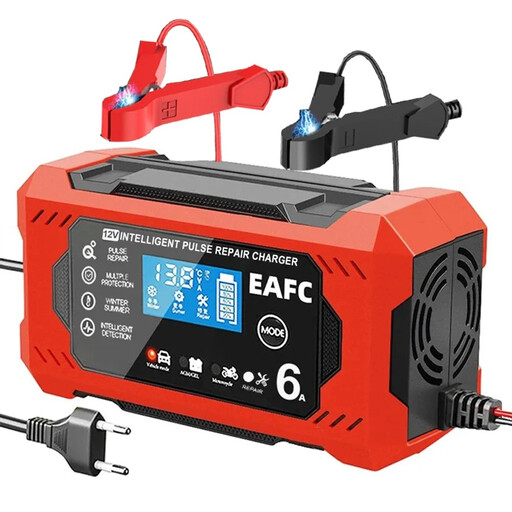
Why it suits this type of user: This charger is designed for drivers and motorcyclists with standard 12V lead-acid batteries. Its stated battery capacity range is 4 to 100Ah.
The product specifications explicitly list AGM, GEL, SLA, flooded and EFB batteries. Even so, check the battery label before connecting it.
6A charging current, an LCD display, and protection against overheating, short circuits and reverse polarity.
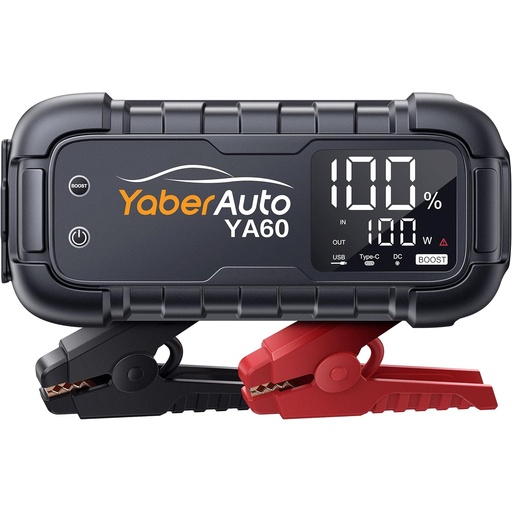
Why it suits this type of user: For drivers, motorhome owners and outdoor enthusiasts who want to charge devices and inflate tyres as well as start their vehicle.
As well as the peak current, the product specifications state that it is for 12V applications, has 10 safety features and comes with clear charging and connection instructions.
8000A peak current, 65W USB-C, 150W DC output, a compressor and 600-lumen LED lighting, according to the product information.
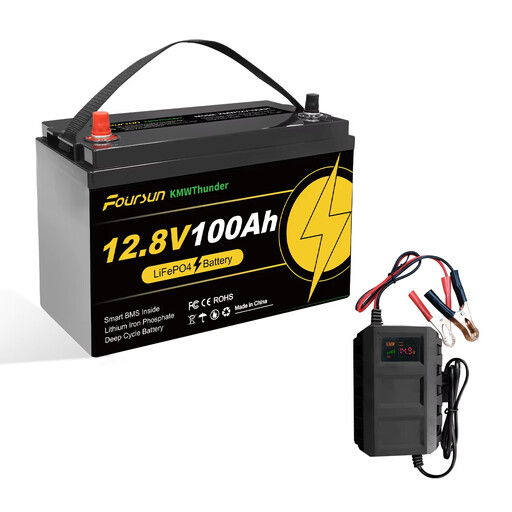
Why it suits this type of user: This battery is designed for uses such as motorhomes, boats, solar storage, golf carts and off-grid applications.
The specifications list a BMS and low-temperature protection. Be sure to use a charger suitable for LiFePO4 and check the connection method.
12V, 100Ah, 1,280 Wh, IP67 and a stated service life of more than 4,500 cycles, according to the product description.
We’ve put together a complete, up-to-date list of products that meet these strict selection criteria and the applicable European safety regulations.
The right choice depends on how you plan to use it. For everyday riding, a motorbike phone mount or compact jump starter may be enough. For a motorhome, a LiFePO4 battery, suitable battery charger and fuses are more important. If you’re considering an electric mobility scooter or electric quad, you’ll also need to think about vehicle class, brakes, lights, charging time and the availability of spare parts.
A children’s electric car isn’t a replacement for a road vehicle. Check the recommended age, maximum load, remote control, speed and whether it is intended for use on private land. According to the product title, the two-seater mentioned has a 12V system, dual motors, a remote control, a speed of 3 to 8 km/h and a stated load capacity of 50 kg. Check the latest manual and safety information before use.
Choose a model for 12V vehicles that suits your car’s engine type and capacity. Don’t look at peak current alone. Check the charge level, cable length, safety features and storage temperature, too. Recharge the device according to the manual, even if you rarely use it.
Only if the charger is suitable for the motorbike battery’s type and capacity. A 12V charger with a low charging current is often more practical for smaller batteries. Check the Ah rating and select the right mode for AGM, GEL, EFB or another battery type.
Running costs depend on charging consumption, battery capacity, charging losses and service life. A LiFePO4 battery needs a suitable charger and correct installation. So, compare more than just the purchase price: check the capacity in Wh, the BMS, the stated number of cycles and the available warranty and service information.
