
Vandaag of morgen in huis

Kwaliteit gegarandeerd

Welkomstaanbiedingen ontgrendelen: GRATIS bezorging | Tot 80% korting | Gratis 30 dagen JoyPlus-proefperiode
Download de app
Looking to replace your car LED lighting for brighter light, a more modern look or fewer bulb changes? A plug-and-play kit may seem like the easy option. But most problems don’t arise when you place your order; they come afterwards: the fitting turns out to be wrong, the bulb won’t fit behind the dust cover or the dashboard displays an error message.
This guide helps you compare LED car headlights using specifications you can check. You’ll also find out which options suit a beginner, a frequent driver or someone who mainly wants to update their interior lighting.
Brands sometimes claim big improvements over halogen. According to manufacturers’ own product information, some bulbs are described as “300% brighter” or “600% brighter”, for example. These claims depend on the measurement method used, the headlight housing, the alignment and the light distribution.
A high lumen rating doesn’t automatically mean you’ll see better on the road. Check these points too:
A poorly shaped beam can dazzle oncoming drivers, even if the bulb itself seems powerful.
H4, H7, H11, HB3 9005, H1 and HIR2 9012 fittings aren’t interchangeable. Check the original bulb number in your handbook, on the old bulb or using your vehicle details. For D3S and D3R bulbs, you should also check whether your car originally uses HID lighting.
A product described as having a “universal fit” won’t necessarily suit every headlight. The connection, space behind the bulb and retaining ring all matter.
CANbus LED bulbs can help prevent error messages, flickering or a bulb being switched off. However, manufacturers often note that some sensitive vehicles may still need a decoder or resistor. This is particularly common with certain European models that have a strict monitoring system.
So check the following in advance:
Start by choosing the right fitting. H4 LED bulbs usually combine main beam and dipped beam in one bulb. H7 LED bulbs are often used for dipped beam, main beam or fog lights, depending on the vehicle. H11 LED bulbs are commonly used in fog lights and dipped-beam systems.
Other commonly used types include:
A value of around 6000K for LED car bulbs gives a cool white light. 6500K looks even bluer. This can create a modern look, but colour temperature alone doesn’t tell you anything about the effective light output.
Always check whether the bulb and its intended use are permitted on public roads. A product may fit technically, but still not be approved for every headlight function or vehicle combination.
LEDs don’t convert all electrical energy into light; heat needs to be dissipated. Look for an aluminium housing, cooling fan or copper heat pipe. Manufacturers sometimes state a lifespan of 50,000 or 60,000 hours. This is a product specification, not a guarantee that the bulb will last that long in all UK driving and temperature conditions.
A fan can provide effective cooling, but it also makes the bulb a little more complex and may produce noise. Also check that there’s enough room for the dust cover.
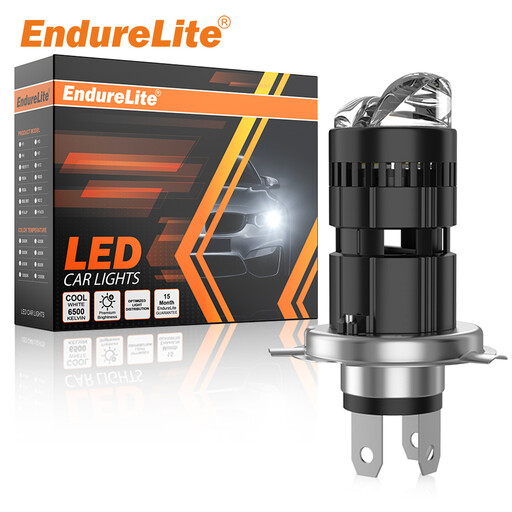
Why it suits this type of driver: This H4 kit is designed for cars that use the same fitting for main beam and dipped beam. Its stated 6000K colour temperature, IP68 housing and integrated cooling make the specifications easy to understand for a first upgrade.
The product clearly states that it has an H4 fitting and a plug-and-play installation. Make sure your vehicle uses an H4 bulb and that there’s enough room inside the headlight unit.
H4 for main and dipped beam, integrated fan, aluminium housing and a stated lifespan of 50,000 hours.
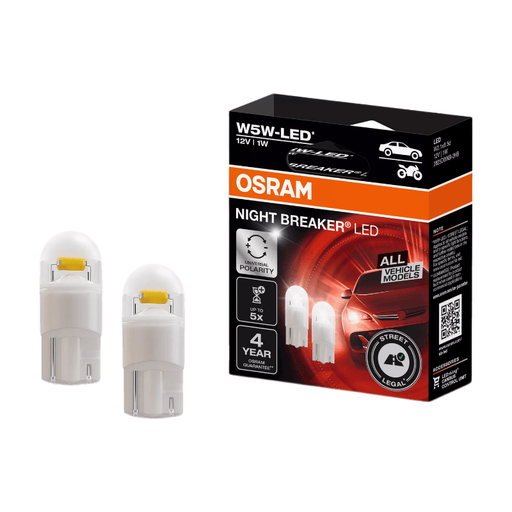
Why it suits this type of driver: This W5W bulb is designed for parking lights, position lights, number plate lights and interior lighting. The product information states 5700K, 50 lumens, 12V and universal polarity.
Its intended use is clearly defined. Don’t use this bulb behind red or amber glass, and check that the fitting is actually W5W or T10.
Plug-and-play, universal polarity, 12V and suitable for several smaller lighting functions.
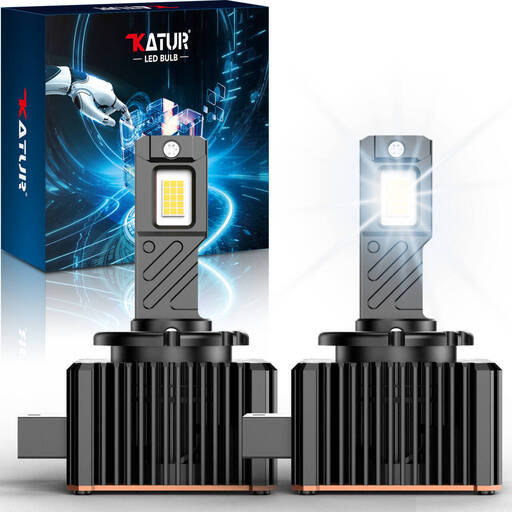
Why it suits this type of driver: This kit is specifically designed for a headlight unit that originally uses a D3S or D3R HID bulb. Its 1:1 shape, built-in fan and 6500K colour temperature make it a focused replacement option.
The product information explicitly states that the bulb is intended only for an HID assembly. This helps you avoid buying the wrong bulb for a halogen or original LED unit.
Designed specifically for D3S/D3R, 1:1 installation, aluminium housing and integrated cooling.

Why it suits this type of driver: For anyone looking for RGB ambient lighting in their car rather than headlight bulbs. The 12V kit includes several strips and lights, with control via a Bluetooth app, static colours and a music mode.
The kit is intended for interior use and runs on 12V. Check the available space beforehand, route the cables safely and avoid sharply bending the acrylic strips.
App control, multiple mounting points, 12V connection and adjustable RGB effects.
We’ve put together a complete, up-to-date list of products that meet these strict selection criteria and the applicable European safety requirements.
Don’t use blue or coloured LED bulbs as replacements for main lighting without first checking the regulations and vehicle application. LED interior lighting in your car comes with different practical considerations: keep loose cables away from the pedals, steering wheel and seat rails.
This depends on the bulb, headlight unit, vehicle and intended use. A technical fit doesn’t automatically mean a retrofit bulb is permitted on public roads. Check the product documentation and any approval for your vehicle and the intended function.
Manufacturers often state a lifespan of 50,000 to 60,000 hours. Actual lifespan depends on factors such as heat dissipation, voltage, vibration, moisture and length of use. Good cooling is therefore just as important as the stated number of hours.
LEDs can use less power than traditional bulbs for the same lighting function. Exact power consumption varies by model. Check the wattage and bear in mind that CANbus systems may sometimes display an error message when power consumption is lower.
