
Vandaag of morgen in huis

Kwaliteit gegarandeerd

Welkomstaanbiedingen ontgrendelen: GRATIS bezorging | Tot 80% korting | Gratis 30 dagen JoyPlus-proefperiode
Download de app
If you're looking to buy car LED lighting, you'll quickly come across terms like "300% brighter", "Canbus error-free" and "plug-and-play". These descriptions sound appealing, but they don't always tell you whether a bulb will suit your car, fitting and intended use. The right choice starts not with the highest lumen count, but with compatibility, installation and where you plan to use the lighting.
A bulb with fitting H8, H9, H11, 9005 or HB3 may physically fit, but the light distribution, connector, space behind the headlight and vehicle software all vary from model to model. Always check your owner's manual, the existing bulb and, if necessary, the vehicle compatibility list.
Manufacturers sometimes quote impressive light outputs. According to the product description of ENdureLite, certain models deliver 20,000 or 25,000 lumens and up to 300% more light than halogen. These are product specifications and manufacturer claims, not a guaranteed result for every car. The reflector, lens, alignment and positioning all influence how the light reaches the road.
A Canbus LED bulb can help reduce dashboard warnings, flickering or radio interference. However, vehicles respond differently to a lower power draw. After installation, check that no error message appears and that the bulb doesn't flicker. An additional resistor or decoder may be needed, but these aren't supplied with every product.
Start by identifying the exact fitting:
Don't use a coloured T10 bulb as your main lighting. According to the product information for the blue KATUR variant, it's designed for decorative purposes and not for main lighting.
Most interior and replacement bulbs for passenger cars operate on 12 volts. Some T10/W5W models are specified for 12–24 volts, but that doesn't automatically mean every fitting or housing is suitable. An RGB set for the car interior typically runs on 12 volts. According to the product description, the Dreamcolor sets are not intended for 24V vehicles without suitable voltage reduction.
LEDs generally use less energy than comparable halogen bulbs, but they still generate heat. When it comes to headlights, look for:
A high stated lifespan, such as 50,000 or 60,000 hours, is a manufacturer specification. Actual lifespan depends on temperature, voltage, vibration and operating conditions.
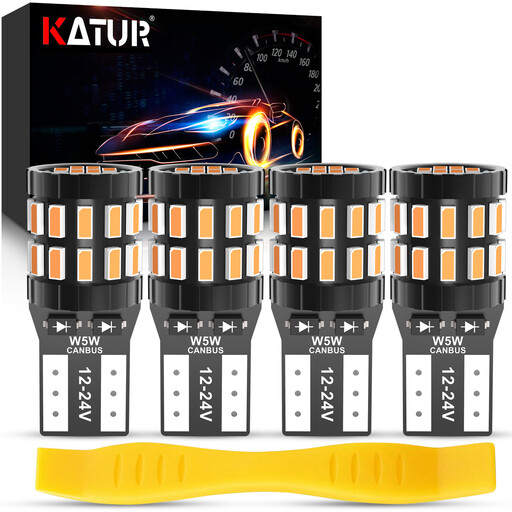
Why this suits the profile: This set of four is suitable for small interior and exterior fittings, such as map reading lights, number plate lights and door lights.
The fitting list mentions multiple T10/W5W equivalents. Still check the original bulb and test after installation for flickering or an error message.
30 SMD chips per bulb, 12–24V specification, 450 lumens according to the product description and Canbus design.
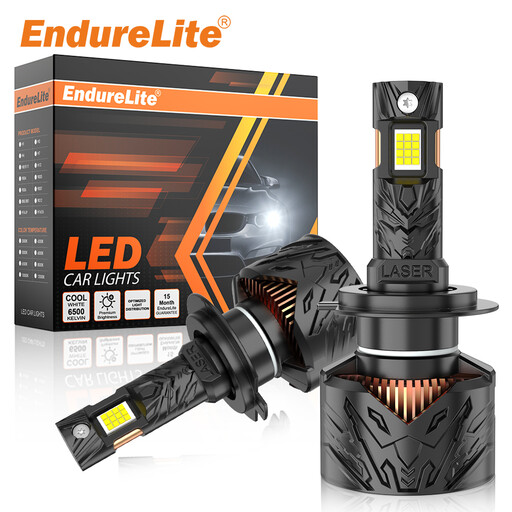
Why this suits the profile: For drivers who have a 9005/HB3 fitting and want a replacement bulb with cooling and a compact design.
The product description mentions a 1:1 beam pattern, IP68 and CANbus-ready design. Check for yourself whether the beam pattern remains correct in your headlight housing.
6000K white light, aluminium housing, built-in fan and plug-and-play connection according to the product specifications.
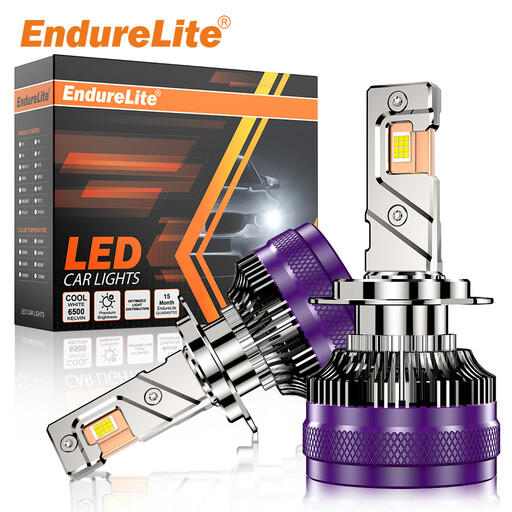
Why this suits the profile: A targeted choice for anyone wanting to replace a specific H8, H9 or H11 fitting without a major conversion.
According to the product description, the bulb uses a compact 1:1 design and built-in cooling. Check the space, fitting and permitted application before installation.
6000K white light, IP68 rating, 50,000-hour stated lifespan and CANbus-ready design.

Why this suits the profile: For anyone wanting to customise the dashboard, doors and footwells with RGB lighting, Bluetooth control and sound synchronisation.
The set states 12V operation, multiple controllers and flexible strips. Test the lighting before final installation and avoid sharp bends in the fibre.
App for iOS and Android, RGB Smart IC, dual-zone control and a set including dashboard, footwell and door lighting.
We've put together a full, up-to-date list of products that fully meet these strict selection criteria and comply with current European safety regulations.
Switch off the lighting and let an old bulb cool down before removing it. When handling headlights, it's best to wear gloves and avoid touching the LED chips. After installation, check the beam pattern, connector and any error messages.
For RGB ambient car lighting, position strips and cables away from pedals, airbags and moving parts. Only use the specified voltage. Ambient lighting must not distract the driver and should not replace the normal vehicle lighting. For headlights, also check the current approval and MOT requirements for your vehicle and light function.
No, you can't say that in general terms. The fitting alone isn't enough. Check the vehicle documentation, the light function, the beam pattern and any type approval. If in doubt, it's wise to have installation carried out by a garage.
The stated lifespan varies by model. In the product information for the bulbs mentioned, values range from 50,000 to 60,000 hours. These are manufacturer specifications; heat, moisture, vibration and charging voltage all affect the actual lifespan.
The power consumption is often lower than that of a comparable halogen bulb. The exact consumption is stated per product, for example 2.5 or 3 watts for some T10/W5W bulbs. Always check that your car correctly recognises the lower load and that no Canbus warning appears.
