
Vandaag of morgen in huis

Kwaliteit gegarandeerd

Welkomstaanbiedingen ontgrendelen: GRATIS bezorging | Tot 80% korting | Gratis 30 dagen JoyPlus-proefperiode
Download de app
Switching from halogen to LED sounds simple: remove the bulb and fit the new one. In practice, car LED lighting can often cause problems. The bulb may not fit mechanically, the dashboard may display an error message or the beam may dazzle oncoming drivers. An interior lighting kit can also disappoint if the cables are too short or the light strip has to be bent too sharply.
As a Joybuy Product Recommendation Officer, I therefore focus mainly on verifiable information: fitting, voltage, application, cooling, Canbus support and installation requirements. This allows you to compare products on more than just a high lumen figure.
An H7 bulb will not fit an H4 socket. Always check the original bulb number in the handbook or on the old bulb first. This applies to LED car headlights, as well as smaller bulbs such as T10, W5W and 194.
You may come across the following headlight types:
Also check the space behind the headlight. A built-in fan or larger cooling housing may touch the cover.
Canbus LED bulbs contain electronics that try to imitate the power consumption of a traditional bulb. This can help to reduce dashboard warnings, flickering or radio interference. However, it is not a guarantee for every vehicle.
According to the brands’ own specifications, their bulbs work with a large proportion of vehicles without displaying an error message. At the same time, some product descriptions state that sensitive models, including certain European vehicles, may still require an additional Canbus decoder. So check:
Brands sometimes advertise claims such as “300%” or “600% brighter”. According to the relevant brands’ own specifications, these are comparisons with standard halogen bulbs under their own measurement or product conditions. Treat such figures as product specifications rather than a guarantee of better visibility in every headlight.
More important factors include the position of the LED chip, light distribution and headlight adjustment. A wrongly positioned chip can cause dark areas or stray light. After installation, readjust the headlights and check that oncoming drivers are not being dazzled.
Always start with the fitting. For smaller applications, T10 W5W LED bulbs are widely used for interior, number plate, sidelights and parking lights. Also pay attention to the bulb’s length and diameter. A long aluminium housing may not fit inside a compact light fitting.
For a Volkswagen Golf 7, the bulbs and rear light units depend on the vehicle version. A complete set such as the TYPY LED rear lights for Volkswagen Golf 7 is, according to the product description, intended for the MK7 and MK7.5 hatchback generations. The description also states that the Estate/Variant, Alltrack, three-door version and certain other versions are not suitable without further checks.
Most car LED bulbs operate at 12 volts, while some T10/W5W models are suitable for 12–24 volts. Use a bulb within the specified voltage range. Excessive voltage can damage components, while insufficient voltage can result in weaker light or unstable operation.
LEDs generally use less energy than halogen bulbs, but they still convert energy into heat. Therefore, look for:
A long lifespan, such as 50,000 or 60,000 hours, is a statement made by the brand and not a guaranteed service life in every car.
A colour temperature of around 6000K to 6500K produces a cool white appearance. For interior lighting, you can instead choose RGB, blue, red or amber. Coloured lighting is not automatically suitable for headlights, indicators or rear lights.
Before installation, check whether the bulb and the complete light fitting are approved for the chosen function on public roads. According to OSRAM, the OSRAM NIGHT BREAKER LED W5W is specified as a road-legal W5W replacement for specific 12V applications, such as parking, position, number plate and interior lighting. This does not mean that every W5W LED bulb has the same approval.
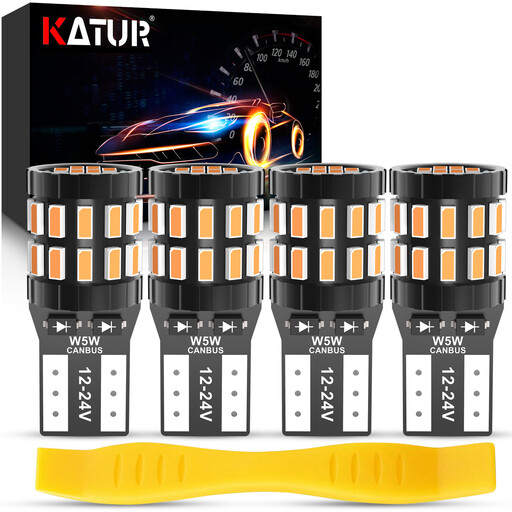
Why it suits this profile: This set of four is intended for smaller lighting functions, such as interior, map-reading, door and number plate lighting. The 12–24V specification makes it suitable for a range of vehicles.
The fitting list includes T10, W5W, 194, 501 and 168. Nevertheless, check the original bulb and test for flickering or a dashboard warning after installation.
Four bulbs, 30 SMD LEDs per bulb according to the product description, aluminium housing and Canbus support.
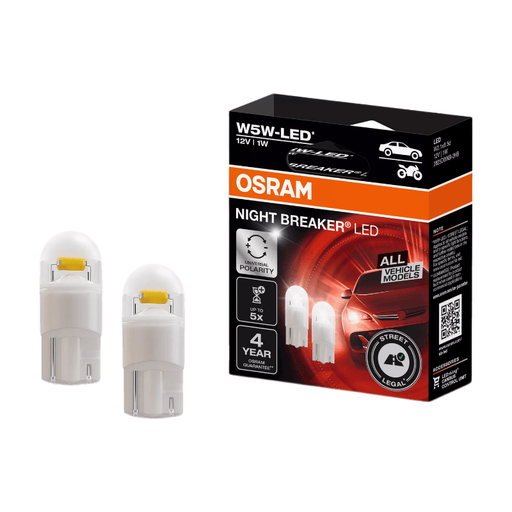
Why it suits this profile: Suitable for anyone looking for a branded product with a clearly defined application and a neutral white light colour of 5700K.
The product information limits use to specific W5W functions and warns that Canbus decoders may still be required for some vehicles.
12V, 1 watt, up to 50 lumens according to OSRAM, universal polarity and a set of two.

Why it suits this profile: A targeted choice for Golf hatchback owners who want to replace the complete rear light units rather than individual bulbs.
The vehicle application is clearly specified. Check the body style, connectors and seals; professional installation is recommended.
Set of two complete units with functions for rear light, brake light, indicator, reversing light and daytime running light according to the product description.
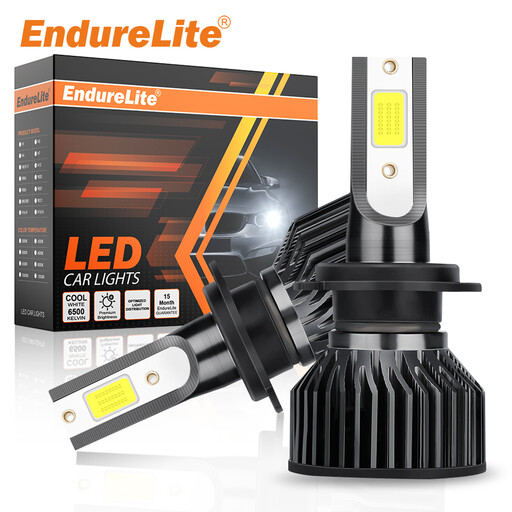
Why it suits this profile: For drivers with H7 headlights looking for a compact plug-and-play bulb with cooling and Canbus support.
According to ENdureLite, the 1:1 chip position is designed to approximate the original light distribution. Nevertheless, check the beam and adjust the headlight.
6000K, IP68 according to the product specification, aluminium housing, built-in fan and a set of two H7 bulbs.
We have put together a complete, up-to-date list of products that fully meet these strict selection criteria and the applicable European safety regulations.
With plug-and-play models, you usually do not need to modify the wiring. Switch off the lights, allow the old bulb to cool and check the position of the LED chips. Then test the dipped beam, high beam and any error messages. If space is limited, you are fitting complete rear light units or additional Canbus decoders are required, installation by a garage is the wiser option.
Brands often state a lifespan of 50,000 to 60,000 hours. This is a product specification under certain conditions. Actual lifespan depends on heat, vibrations, moisture, usage time and the quality of the electrical installation. Good heat dissipation is therefore at least as important as the stated number of hours.
According to the product specification, LED bulbs can use less power than traditional halogen bulbs. The difference depends on the specific model and function. With Canbus systems, additional electronics may be required to compensate for the lower power consumption. Always check that everything works correctly and that there are no dashboard warnings after installation.
