
Vandaag of morgen in huis

Kwaliteit gegarandeerd

Welkomstaanbiedingen ontgrendelen: GRATIS bezorging | Tot 80% korting | Gratis 30 dagen JoyPlus-proefperiode
Download de app
Want to replace halogen or HID lighting with car LED headlamps? A kit with a high lumen output, 6000K light and a plug-and-play design can seem appealing at first glance. However, a high figure on the packaging does not automatically mean that the bulb will fit your car or produce a usable beam pattern.
The main pitfalls usually come down to three points:
So check the original bulb number and your car’s handbook first. Only then should you look at colour temperature, cooling and ease of installation.
The original bulb number is the starting point. Common variants include:
Compare the number on the old bulb with the product specification. If in doubt, your vehicle handbook and the original bulb number are more reliable than a general online compatibility tool.
An LED chip should be positioned as close as possible to the original filament. A 1:1 design can help replicate the existing beam pattern more closely, but the result still depends on the headlamp unit and its adjustment.
Pay particular attention to:
After installation, check that the beam is correctly aligned. Have the headlamps adjusted if necessary. Also check that the retrofit is permitted and complies with the relevant regulations for your vehicle and intended use.
LED bulbs generate heat around the chip. An aluminium housing, cooling fan or other heat-dissipation system can therefore be an important part of the design. According to the named brands’ own product descriptions, several models have an IP68 rating and an integrated fan. These are product specifications, not a guarantee of a particular service life in every car.
Also check:
CANbus LED bulbs are designed to reduce the likelihood of error messages or flickering. However, Bullvision’s product information explicitly states that vehicles such as Volkswagen, Mercedes-Benz and BMW, or similar models, may require an additional CANbus decoder. Check this before buying, particularly if your car has advanced onboard electronics.
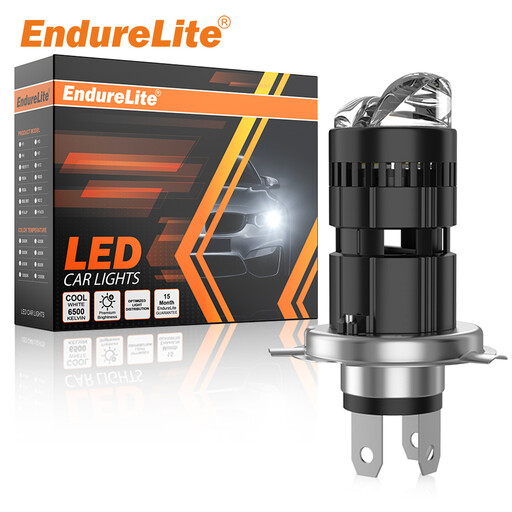
Why it suits this profile: This H4 kit is aimed at DIY users who want to replace the dipped and main beam in one fitting. The product information states that it offers plug-and-play installation and comes with one bulb.
The fitting and intended use are clearly stated. However, check that your car actually uses H4 and that one bulb per headlamp is sufficient.
6000K according to the product specification, integrated fan, IP68 rating and integrated CANbus technology.
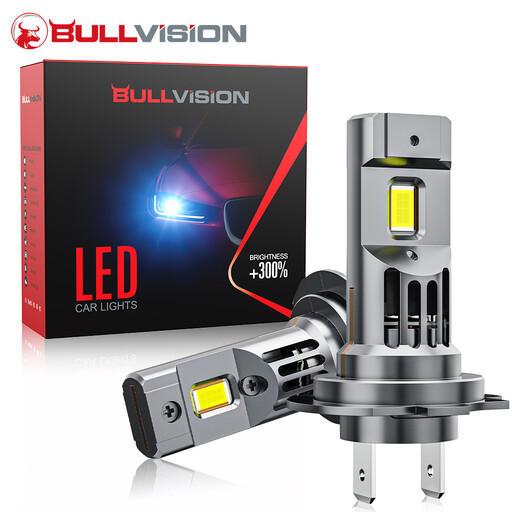
Why it suits this profile: A useful option for motorists who want to match their fitting against several available variants first. According to the product information, this version has a compact 1:1 form and wireless installation.
The product page lists the required fitting variants and warns that certain vehicles may require an additional CANbus decoder.
6000K, IP68 rating, integrated CANbus-ready driver and a stated service life of more than 50,000 hours.
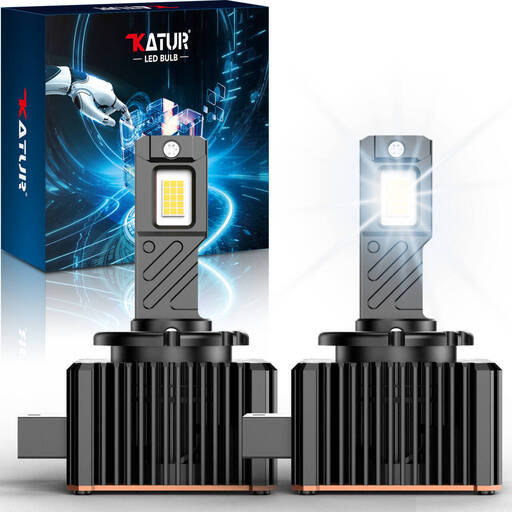
Why it suits this profile: This kit is aimed at anyone who wants to replace an existing HID headlamp with a D3S or D3R fitting without modifying the wiring.
The product description explicitly states that this bulb is intended solely as a replacement for HID, not for halogen or existing LED units.
6500K according to the product information, integrated fan, plug-and-play design and a stated service life of up to 60,000 hours.
We have put together a complete, up-to-date list of products that fully meet these strict selection criteria and the applicable European safety regulations.
With plug-and-play LED headlamps, you usually replace the old bulb without additional wiring. Switch off the lights, allow the bulb to cool and check the installation instructions. If possible, wear gloves and avoid touching the LED chip.
After installation, check:
A waterproof LED car bulb with an IP68 rating is better protected against dust and water according to the product specification, but the seal on the complete headlamp remains equally important.
Brands often state 30,000 to 60,000 hours or more for these models. These are manufacturer-provided product specifications. Actual service life can be affected by heat, vibration, moisture, voltage fluctuations and fan usage.
Only if the fitting, available space and headlamp unit are suitable. Also check the regulations for use on public roads. An H7 LED car bulb, for example, is not automatically suitable for every headlamp that uses an H7 halogen bulb.
LEDs can use less power than some halogen bulbs for comparable lighting applications, but always compare the stated wattage of the old and new bulbs. A higher stated light output can also result in greater heat generation and a more substantial cooling system.
