
Vandaag of morgen in huis

Kwaliteit gegarandeerd

Welkomstaanbiedingen ontgrendelen: GRATIS bezorging | Tot 80% korting | Gratis 30 dagen JoyPlus-proefperiode
Download de app
Want to replace halogen lighting with car LED bulbs? A set offering lots of lumens, a 6000K colour temperature and a long lifespan may seem appealing at first. However, a high figure on the packaging does not tell you everything. A bulb may not physically fit your headlight, trigger a warning message or produce an incorrect beam pattern.
Use this practical checklist to avoid the most common mistakes and compare LED car headlights, fog lights and small vehicle bulbs based on verifiable specifications.
H1, H4, H7, H11, H15, HIR2/9012 and 9005/HB3 are not interchangeable codes. They refer to different bases, connections and applications. A bulb with the same colour temperature will not automatically fit your car.
Check the following before buying:
Also note the difference between H4 LED bulbs for main and dipped beam and H7 LED bulbs, which usually operate a single lighting function.
Canbus LED bulbs have an integrated circuit that can help reduce error messages and flickering. According to the manufacturers’ own specifications, some models are suitable for a wide range of vehicles. This is not a guarantee for your specific model.
Sensitive systems, for example in certain Volkswagen, Mercedes-Benz and BMW models, may still require an additional decoder. Therefore, check vehicle compatibility and test the bulbs after fitting:
A stated lumen value describes the light output of the light source, but does not automatically indicate the beam pattern on the road. The position of the LED chip, the reflector and the headlight housing all help determine whether the light is distributed correctly.
6000K LED bulbs produce a cool white appearance. This may look more modern than warm halogen light, but colour temperature is not a direct measure of visibility distance. Also check whether a retrofit bulb is permitted under the regulations applying to your headlight and vehicle. If in doubt, follow the vehicle documentation, bulb marking and manufacturer’s information.
Use the correct code for the correct position:
A product with a plug-and-play connection is only easy to fit when the fitting, connector and available installation space all match.
LEDs generate heat. Therefore, look at the material and how heat is dissipated. Aluminium housings, cooling fins and fans are common features of LED car headlights. Check that there is enough room behind the bulb for a fan and that it will not touch a protective cover.
An IP65 or IP68 rating provides information about protection against dust and water according to the product specifications. It does not mean that every bulb is suitable for every headlight housing. An enclosed fitting, for example, may retain additional heat.
A 1:1 design attempts to replicate the position of the original filament. According to the manufacturers’ own specifications, this can help create a more focused beam pattern. Always check the headlight alignment after fitting. A bright bulb with an incorrectly adjusted beam can dazzle oncoming drivers.
Small bulbs usually consume less power than halogen bulbs. With LED car interior lighting and number plate lights, polarity is also important: if the bulb does not work, turn it around if the product instructions allow this.
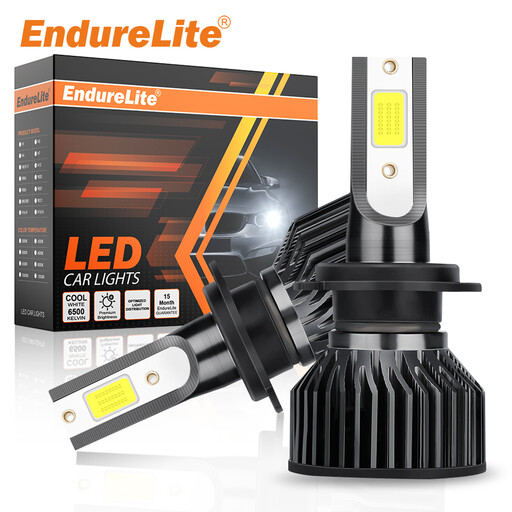
Why this suits the profile: An H7 set with a plug-and-play connection is practical for anyone who wants to replace their bulbs independently without extra wiring. However, check first that your car uses H7 bulbs.
The product description states that it has a compact design, integrated cooling and Canbus readiness. Actual performance still depends on the vehicle.
6000K colour temperature, two bulbs per set and a stated lifespan of 50,000 hours according to the product page.

Why this suits the profile: This set is aimed at drivers who value an aluminium housing, water resistance and integrated cooling.
The product page mentions a 1:1 beam pattern, IP68 housing and an integrated fan. Check that D1S/R is in fact the fitting used by your original bulb.
6000K cool white, 110W per set according to the product specifications and a Canbus-ready design.
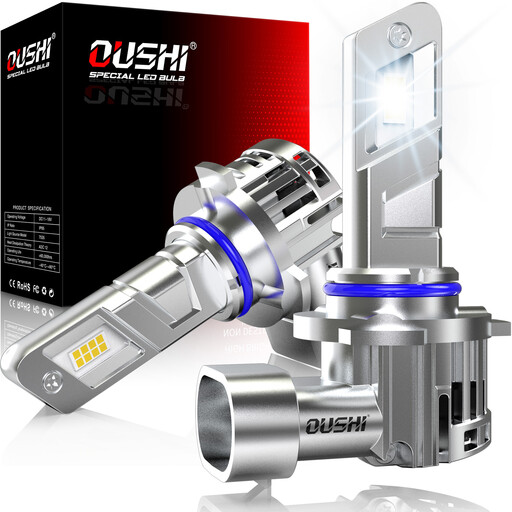
Why this suits the profile: Ideal if you are specifically looking for an HIR2/9012 replacement, for example for a car whose handbook or old bulb displays this code.
According to OUSHI’s own specifications, the bulb has a 1:1 design, Canbus system and fan cooling. A decoder may still be needed for sensitive vehicles.
HIR2/9012 fitting, plug-and-play connection and 6500K colour temperature according to the product information.
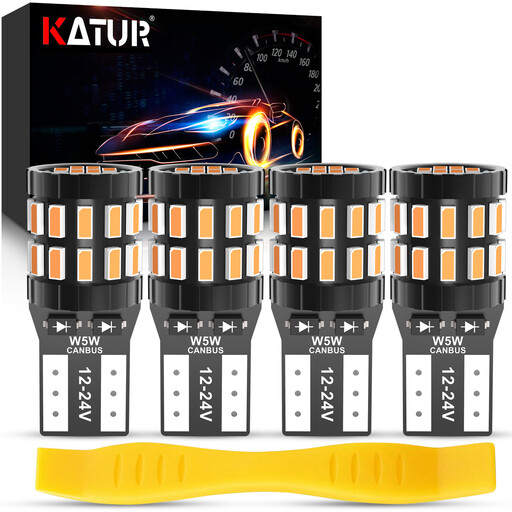
Why this suits the profile: This four-piece set is intended for T10/W5W applications such as parking lights, number plate lights, reading lights and door lights.
The product description states T10/W5W compatibility, 12–24V and a Canbus design. Check the size and turn the bulb around if the polarity is incorrect.
Four bulbs per pack, 450 lm per bulb according to the product specifications and suitable for interior and exterior lighting.
We have put together a complete, up-to-date list of products that fully meet these strict selection criteria and the applicable European safety regulations.
Switch off the lights and allow the old bulb to cool before you begin. LEDs and heat sinks can become hot, so wear gloves if necessary. Fit the bulb without touching the LED chips, then check the beam pattern.
With LED fog lights, correct alignment is particularly important because these lights need to illuminate a low and wide area. Only use coloured T10 bulbs where the colour is appropriate for the vehicle function and complies with local regulations. After installation, also check the headlight seal and the space around any cooling fan.
According to the product specifications, LED bulbs often use less power for a comparable application. Actual consumption depends on wattage, vehicle voltage and usage time. Therefore, compare the stated wattage rather than looking at the lumen value alone.
Manufacturers quote a theoretical lifespan of 50,000 to 60,000 hours for various models. According to the manufacturers’ own specifications, this depends on cooling and normal operating conditions. Heat, moisture, vibration and the quality of the headlight housing can all affect service life.
No, not always. An integrated Canbus circuit can help prevent error messages, but vehicles respond differently. Check the dashboard and lighting after fitting. If the bulbs flicker or a warning appears, a suitable decoder may be required.
