
Vandaag of morgen in huis

Kwaliteit gegarandeerd

Welkomstaanbiedingen ontgrendelen: GRATIS bezorging | Tot 80% korting | Gratis 30 dagen JoyPlus-proefperiode
Download de app
Switching from halogen to car LED bulbs may seem straightforward: check the fitting, install the bulb and you’re done. In practice, problems often arise because of an incorrect connection, insufficient space inside the headlamp or a beam pattern that does not properly match the original bulb. A high lumen rating also does not automatically mean that the lighting is suitable for your car or legal for use on public roads.
In this buying guide, you’ll discover what to look for when choosing LED car bulbs for headlamps, fog lights, parking lights, interior lighting and number plate lights.
H1, H4, H7, H8, H9, H11, HIR2 9012, 9005 HB3 and 9006 HB4 are different fitting types. A bulb may fit physically but still not be suitable for your car’s reflector or lighting function. Always check the existing bulb, the vehicle handbook or your vehicle details before ordering.
The same applies to W5W and T10 bulbs. These are often used for parking lights, interior lighting and number plate lights, but not every W5W bulb is suitable behind red or yellow glass.
According to the product information provided by various brands, LED bulbs may deliver, for example, 300% or 500% more light than halogen bulbs. This is a manufacturer’s claim and does not guarantee the same improvement in your headlamp. The reflector, beam distribution, cooling and alignment all affect the result.
A good beam pattern is more important than simply having a high number on the packaging. An incorrectly positioned LED chip can cause dark areas or glare.
CANbus LED bulbs are designed to reduce error messages, flickering and radio interference. However, sensitive systems in vehicles from BMW, Mercedes-Benz, Volkswagen and other VAG models may still require an additional decoder or resistor. Always check after installation whether a dashboard warning appears.
Start by choosing the correct fitting:
A universal fit does not mean that every car is automatically compatible. Also check the available space behind the bulb and the size of the dust cap.
6000K white LED lighting produces a cool white appearance. Many motorists choose this colour for headlamps and fog lights because of its modern look. For interior or marker lighting, amber, red or blue may be preferred, but the permitted colour depends on the lamp’s position and function.
Do not use coloured bulbs for main lighting without checking first. Consult your vehicle documentation and the applicable Dutch traffic regulations.
LEDs produce heat at the rear. Products with an aluminium housing, cooling fins or a fan are designed to help dissipate this heat. According to the product description, some models feature IP68 water resistance, while others are rated IP67. These classifications provide information about protection against dust and water, but they do not mean that installation in every housing will be trouble-free.
When installing plug-and-play car lighting, pay attention to:
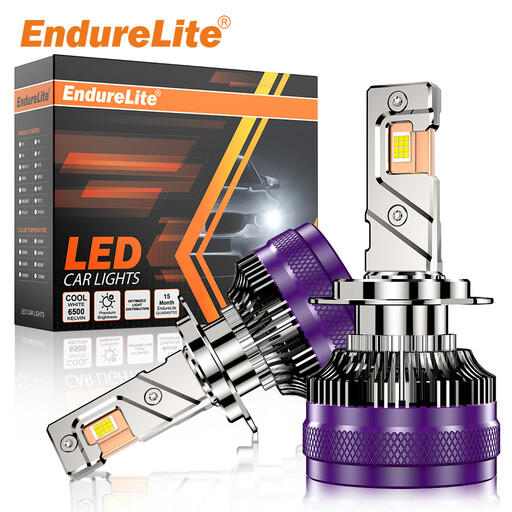
Why it suits this profile: A practical choice for anyone looking for a suitable fog light or headlamp fitting with straightforward installation. The product information specifies 6000K, plug-and-play installation and a 1:1 design.
The fitting is clearly listed as H8/H9/H11. The manufacturer also states that it is CANbus-ready, but you still need to check compatibility with your car.
6000K white light, IP68 according to the product description and a built-in cooling fan.
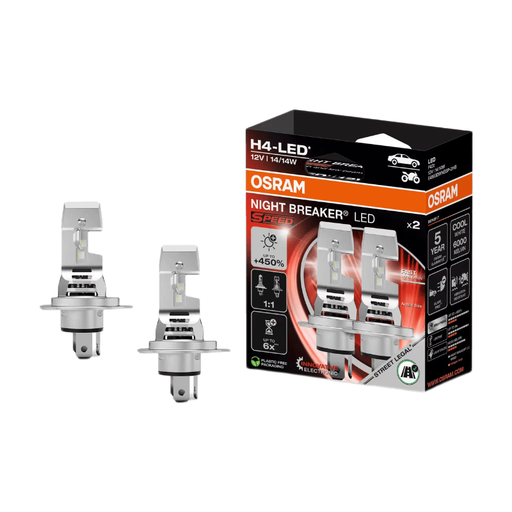
Why it suits this profile: For motorists who value road use and clear documentation. According to OSRAM, this model is approved only for vehicles, lighting functions and countries listed on the official compatibility list.
The manufacturer explicitly instructs customers to check the official compatibility list and approval number before purchasing.
H4 1:1 design, 6000K and, according to OSRAM, up to 60% lower energy consumption than halogen.
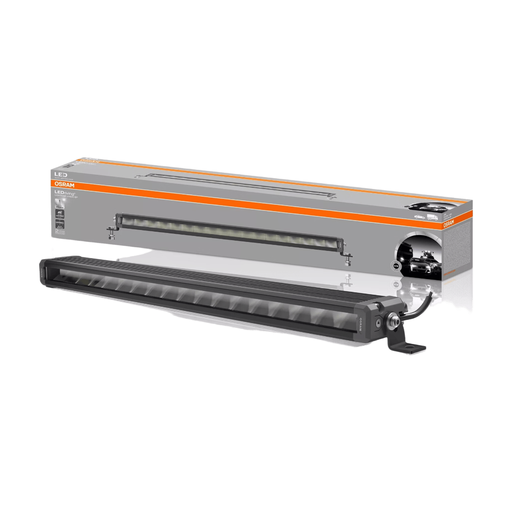
Why it suits this profile: Designed for trucks, motorhomes, quad bikes, off-road vehicles and other vehicles with space for external driving lights.
The product information specifies 12/24V support, IP67 and ECE R112/R10. For road use, OSRAM states that two units and correct installation are required.
Spot beam, with a range of up to 415 metres and 2800 lumens according to the product information.
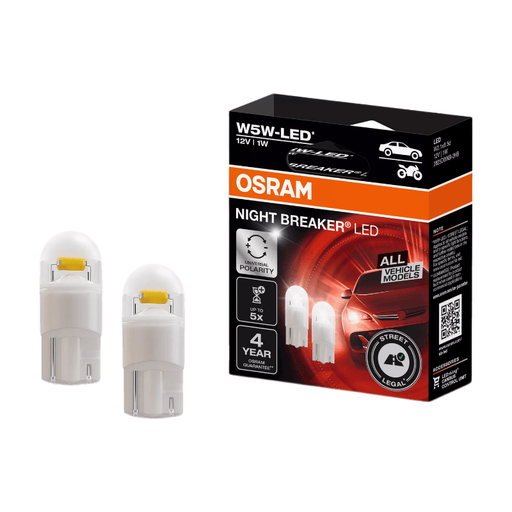
Why it suits this profile: For anyone who wants to replace smaller lights with a white LED bulb without converting the headlamps.
The application is limited to W5W parking, position, number plate and interior lighting, among other uses. Check the fitting and do not use the bulb behind red or yellow glass.
According to OSRAM, 5700K, 50 lumens, plug-and-play installation with universal polarity and up to 80% lower energy consumption than traditional bulbs.
We’ve put together a complete, up-to-date list of products that fully meet these strict selection criteria and the applicable European safety regulations.
Switch off the lighting and allow the bulb housing to cool down. When working on headlamps, it is advisable to disconnect the vehicle battery in accordance with the manufacturer’s instructions. Do not touch the LED chips and fit the bulb securely into the fitting.
Then check:
For road use, pay particular attention to legal approval. An aftermarket H4 or H7 bulb is not automatically permitted simply because it fits the socket. For officially approved models, check the compatibility list, lighting function and applicable Dutch regulations.
This depends on the product, lighting function, vehicle and applicable approval. Universal LED headlamps are not automatically legal for road use. For approved OSRAM models, check the official vehicle compatibility list and follow the installation instructions.
Manufacturers often state a service life of 50,000 or 60,000 hours. This is a quoted product specification, not a guarantee for every usage scenario. Heat, moisture, vibration, voltage and daily use all affect the actual service life.
LEDs generally use less electrical power for comparable applications. According to OSRAM’s own information, certain models use up to 60% or 80% less energy than traditional bulbs. Always check the stated wattage and your vehicle’s electrical compatibility.
