
Vandaag of morgen in huis

Kwaliteit gegarandeerd

Welkomstaanbiedingen ontgrendelen: GRATIS bezorging | Tot 80% korting | Gratis 30 dagen JoyPlus-proefperiode
Download de app
Looking to replace or upgrade your car’s lights? You’ll soon come across car LED bulbs, halogen headlights and bulbs for xenon-white car lighting. The choice may seem straightforward, but the wrong fitting, not enough space in the headlight housing or a missing CANbus solution can lead to warning messages, flickering or a poor beam pattern.
This buying guide will help you compare your options more effectively. You’ll find out which specifications matter, which marketing claims to treat with caution and which type of bulb is right for different situations.
Brands sometimes quote very high lumen ratings or make claims such as “300% brighter”. According to the relevant brand’s product description, this refers to a comparison with a standard bulb under certain conditions. Actual light output also depends on the reflector, projector lens, alignment and condition of the headlight.
So a bulb with a high stated lumen output won’t automatically give you a better beam pattern. Focus on precise LED chip positioning, effective heat dissipation and correct alignment after fitting.
A plug-and-play car bulb may be mechanically easy to fit, but some cars monitor the bulb’s power consumption. This can trigger a warning message after fitting. Vehicles with a sensitive CANbus system may need an additional decoder or resistor.
So check more than just the fitting: make sure the bulb is compatible with your vehicle too. For example, some H4 and H11 LED bulbs are listed as requiring additional CANbus support in certain Volkswagen, Mercedes-Benz and BMW models.
An H7 LED bulb may fit an H7 socket, but that doesn’t automatically mean the bulb and headlight combination is approved for your car. For headlights, check your vehicle documents, the manufacturer’s information and any relevant ECE or national approvals.
Different rules may apply to parking, interior and number plate lights. For example, according to the product information, the OSRAM NIGHT BREAKER LED W5W is offered for 12V parking lights, sidelights, number plate lights and interior lights. However, check that your car actually uses a W5W or T10 fitting.
Always start by checking the original bulb. Common types include:
Compare the number on the old bulb with your car’s manual. A bulb that looks as though it should fit may still have a different base, connection type or lighting function.
A colour temperature of around 6000K to 6500K gives a cool, white light. This is often described as xenon-white car lighting. However, a higher colour temperature doesn’t automatically mean more usable light. In rain, fog or on wet roads, very cool light may look different from warmer halogen light.
Pay attention to the chip position too. If an LED isn’t positioned where the filament was in the original halogen bulb, it can create a scattered beam pattern or more glare. You may need to check and realign the headlights after fitting.
LEDs generally use less energy than halogen bulbs, but they still produce heat at the back of the light source. An aluminium housing, cooling fins or a fan are therefore useful specifications to consider.
A built-in CANbus driver can reduce the chance of warning messages, but manufacturers sometimes claim compatibility with a very high proportion of vehicles. According to the product descriptions from various brands, you still need to check compatibility for your specific vehicle. After fitting, test the dipped beam, main beam and fog lights, and check the dashboard for warning messages.
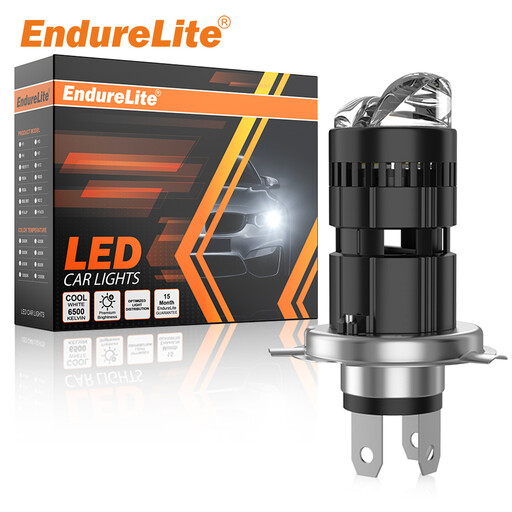
Why it suits this type of user: This H4 bulb combines main and dipped beams in a single fitting and, according to the product description, is designed for straightforward installation without an additional driver.
The 1:1 design and built-in CANbus driver reduce the need for separate wiring, but you should still check the H4 fitting and your vehicle type.
6000K cool white light, IP68 water resistance according to the product information, and a fan for heat dissipation.
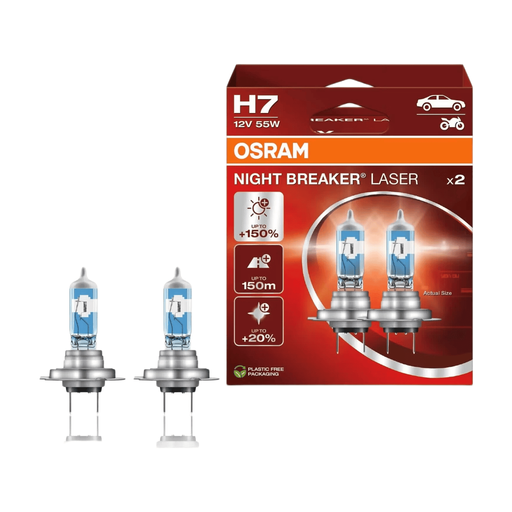
Why it suits this type of user: If you’d rather stick with halogen, this H7 set is a direct replacement for a 12V headlight, without converting to LED.
The H7 specification and vehicle-specific compatibility checks make it clear that this bulb shouldn’t be treated as a universal solution.
55W halogen, 4200K according to the product information, and a pack containing two H7 bulbs.
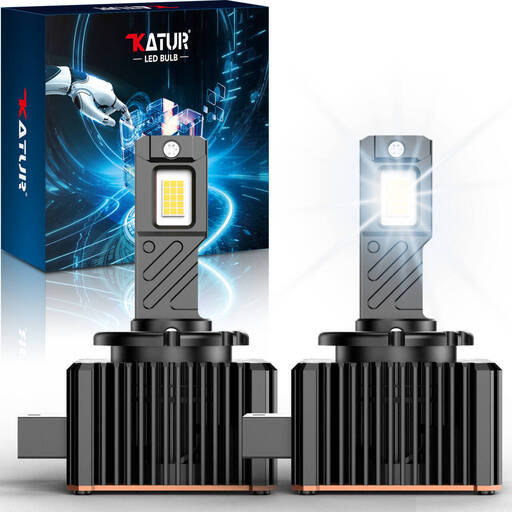
Why it suits this type of user: This bulb is designed for cars with an existing HID headlight unit, making it suitable for a specific replacement situation.
The product information clearly states that D3S/D3R bulbs are only for HID units, not halogen or existing LED headlights.
6500K white light, an integrated fan and a 1:1 design according to the product description.
We’ve put together a complete, up-to-date list of products that meet these strict selection criteria and current European safety regulations.
LEDs often use less power to provide comparable lighting, but actual consumption varies by bulb. Check the stated wattage and allow for the additional power used by a fan or CANbus module.
Product descriptions sometimes quote 50,000 or 60,000 hours. These are manufacturer-stated figures, not a guarantee that the bulbs will last that long in every car. Temperature, vibration, moisture, hours of use and the quality of the headlight housing all affect their lifespan.
Not always. In some cars, a built-in CANbus driver works without an additional component; other vehicles may still display a warning. Check your manual, the original bulb number and the vehicle-specific information before buying.
