
Vandaag of morgen in huis

Kwaliteit gegarandeerd

Welkomstaanbiedingen ontgrendelen: GRATIS bezorging | Tot 80% korting | Gratis 30 dagen JoyPlus-proefperiode
Download de app
A set of car LED bulbs can seem easy to choose. But problems often only appear after fitting: the bulb doesn’t fit properly, the dashboard displays a warning or the beam pattern dazzles oncoming traffic. Claims such as “300% brighter”, “99% compatible” and “plug-and-play” don’t always tell you whether a bulb is right for your car.
The main pitfalls are:
First, check the old bulb, your car’s manual or the original fitting. Common types include:
A “universal” bulb usually means that the product can be used in several vehicles. It doesn’t mean that every car has the same fitting.
For headlights, brightness and colour aren’t the only things that matter. The position of the LED chip should match that of the halogen filament as closely as possible. Otherwise, the bulb may create dark patches or distribute the light incorrectly.
A colour temperature of around 6000K to 6500K gives a cool white appearance. This can look modern, but a higher Kelvin value doesn’t automatically mean better performance. Also check whether the bulb is intended for dipped beam, main beam or fog lights.
LEDs waste less energy as light, but they can still generate heat. That’s why many models use an aluminium housing, cooling fins or a fan. Check that there’s enough room behind the headlight for these. A bulb with a built-in fan may also be audible.
In a car with CANbus, an LED bulb may use less power than the original halogen bulb. The system can interpret this as a failed bulb. Possible consequences include:
Product descriptions such as “CANbus ready” or “compatible with 99% of vehicles” are manufacturer claims. According to the relevant brands’ own product information, these models are designed to help reduce warning messages. However, sensitive systems in vehicles including BMW, Mercedes-Benz and Volkswagen may still need additional components.
With plug-and-play LED car bulbs, check more than just the connector: make sure there’s enough space, the seal fits properly and no warning messages appear after installation.
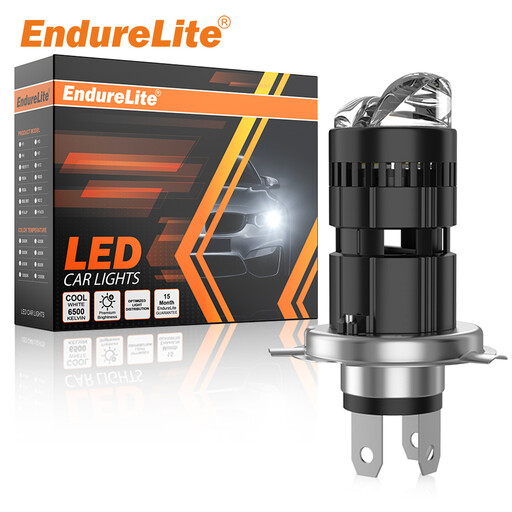
Why it suits this profile: A practical option if you want to replace an H4 bulb, which combines dipped beam and main beam in one fitting. The product information specifies a 1:1 design, 6000K and an integrated driver.
The fitting is clearly listed as H4. Still, check the original bulb and bear in mind that vehicles with sensitive systems may need CANbus decoding.
Described as plug-and-play; aluminium housing, IP68 rating and built-in fan, according to the manufacturer.
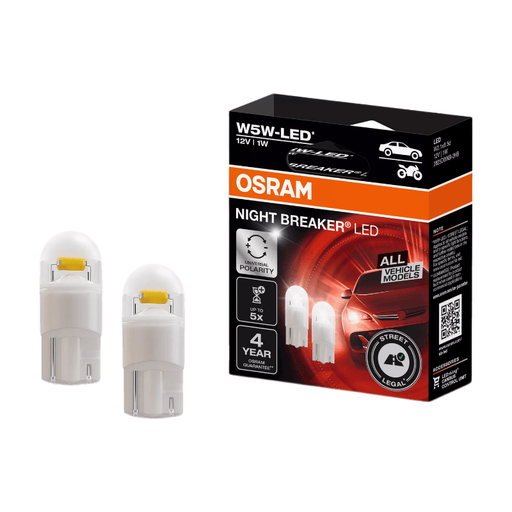
Why it suits this profile: A good choice for drivers looking for a W5W/T10 bulb for parking lights, position lights, number plate lights or interior lighting.
The product information clearly lists the approved uses and warns against using the bulb behind red or yellow glass.
OSRAM states that the bulb has a colour temperature of up to 5700K, produces 50 lumens and has universal polarity; the pack contains two bulbs.
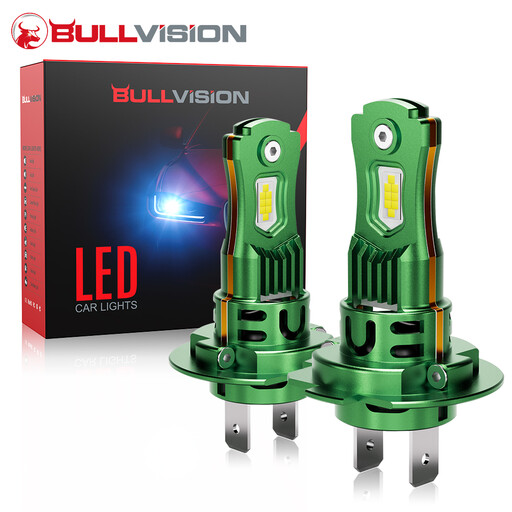
Why it suits this profile: A targeted choice for drivers looking for LED fog lights or a compatible H8, H9 or H11 replacement.
The fitting and 12V application are clearly stated. The manufacturer warns that some Volkswagen, Mercedes-Benz and BMW systems may need a CANbus decoder.
Cool white 6000K, described as plug-and-play, with an aluminium housing and IP68 water resistance, according to the manufacturer.
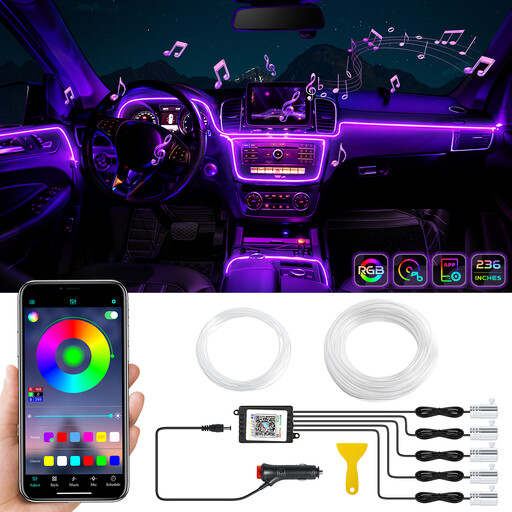
Why it suits this profile: For anyone looking to customise their car’s interior with RGB lighting, app control and music-responsive effects.
The kit is designed for interior use, not headlights. The product information specifies a 10–16V range and gives guidance on neatly concealing the wiring.
Bluetooth app, multiple colour modes, sound synchronisation and an optical fibre strip measuring approximately 6 metres, according to the product details.
We’ve put together a complete, up-to-date list of products that meet these strict selection criteria and the applicable European safety requirements.
For LED car tail lights and complete rear light units, the connection, seal and vehicle-specific fit must also be exactly right. A universal W5W bulb isn’t intended for rear lights behind red glass if the product information rules this out.
No. It depends on the bulb, headlight unit, vehicle and specific application. A bulb suitable for parking or interior lighting isn’t automatically approved for use as an LED dipped beam or LED main beam. Check the official product information and the regulations that apply to your vehicle.
Brands quote a theoretical lifespan of, for example, 50,000 or 60,000 hours for various models. This is a stated product specification, not a guarantee that the bulb will last that long in every car. Heat, moisture, vibration, charging voltage and the quality of the connection all affect its lifespan.
Their stated power consumption is often lower, but always check the specifications for the fitting you’ve chosen. In some cars, the lower power consumption can trigger a CANbus warning. According to the manufacturer, a CANbus LED bulb may help reduce this, but check after fitting whether a decoder is needed.
