
Vandaag of morgen in huis

Kwaliteit gegarandeerd

Welkomstaanbiedingen ontgrendelen: GRATIS bezorging | Tot 80% korting | Gratis 30 dagen JoyPlus-proefperiode
Download de app
Want to buy car LED bulbs because you are looking for brighter, whiter or more modern light? Then the lumen count alone, or a claim such as “600% brighter”, is not a reliable basis for your decision. The right bulb depends on the fitting, headlamp housing, vehicle electronics and legal approval.
Many poor purchases happen because a bulb appears to fit physically but does not work properly in the car. This could mean a warning light on the dashboard, flickering, a poor beam pattern or a bulb that is not approved for use on public roads. These checks will help reduce the risk.
H7, H4, H8, H9, H11, H15 and HB3 are different fittings. An H7 LED bulb will therefore not automatically fit an H4 housing. D1S, D2S, D3S and D4S also refer to different systems for xenon or HID lighting.
So check:
Brands sometimes quote extremely high light outputs. According to information provided by the relevant brands, certain LED bulbs can deliver up to 30,000 lumens per set, for example. However, this does not guarantee a good beam pattern in every headlamp. The position of the LED chip, the reflector and the headlamp adjustment all help determine how the light falls on the road.
An incorrect beam pattern can dazzle oncoming drivers, while the driver may not necessarily see any better. Always check the beam after fitting and have the headlamps adjusted if necessary.
A plug-and-play car lighting solution usually requires no wiring modifications. However, modern cars may display a warning when the power consumption differs from that of a halogen bulb. CANbus error-free LED bulbs are described in this way because, according to the product description, they can work with many vehicle systems, but sensitivity varies between makes and models.
Some cars require a CANbus decoder, resistor or additional adapter. Check this in advance, particularly for BMW, Mercedes-Benz, Volkswagen, Volvo and Fiat models.
The fitting is the first thing to check. Common combinations include:
An LED replacement for a xenon bulb is not automatically suitable for a halogen headlamp. First check which system was fitted at the factory.
A colour temperature of 6000K white light gives a cool, modern appearance. 6500K looks even bluer. Halogen bulbs are generally lower and produce warmer white or yellowish light. However, a higher Kelvin value does not automatically mean greater light output or better visibility in the rain.
For anyone mainly looking for an LED look, 6000K can be appealing. If you drive frequently in rain, fog or on dark rural roads, focus primarily on the beam pattern, adjustment and approved application.
LEDs produce heat at the rear. Some models use LED bulbs with a cooling fan, while others have a fanless aluminium housing. A fan can dissipate heat, but it also requires space and contains a moving part. Check that the bulb fits with the headlamp dust cover in place.
Lifespan claims, such as 50,000 or 60,000 hours, come from brand product information and should not be regarded as a guaranteed service life in every car. Driving habits, temperature, vibrations and electrical load all play a part.
Also pay attention to the law. A bulb that fits physically is not automatically approved for use on public roads. Check the ECE marking, the vehicle compatibility list and information from the manufacturer or RDW. For some retrofit LED bulbs, approval may be limited to specific vehicles or functions. Xenon bulbs for cars and halogen headlamps also have different technical requirements from LED replacements.
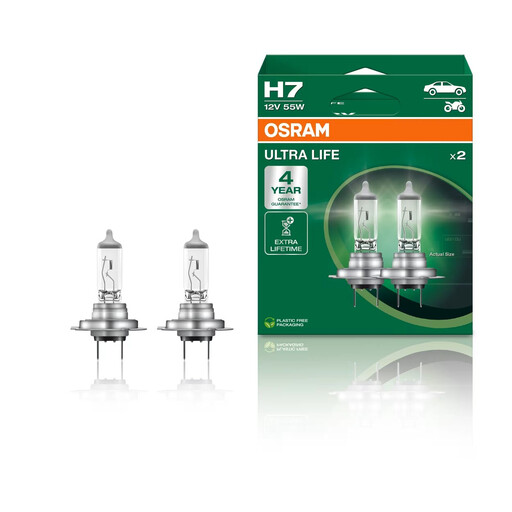
Why it suits this profile: A practical choice for motorists who want to replace their standard H7 lighting without switching to LED.
The 55W H7 bulb uses the existing halogen fitting and, according to the product information, requires no decoder or electrical modification in a standard H7 system.
H7 fitting, set of two bulbs and, according to OSRAM, up to four times the lifespan of standard halogen bulbs.
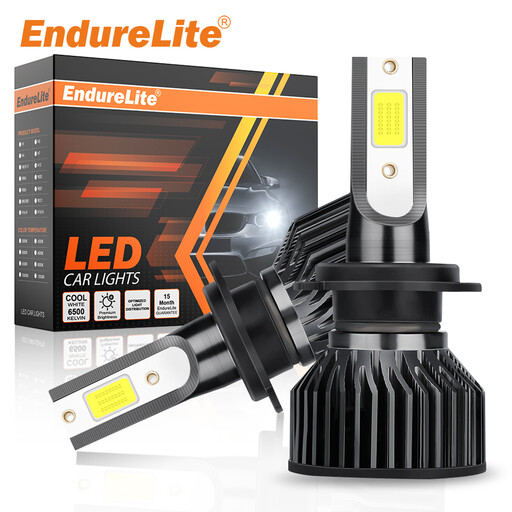
Why it suits this profile: Suitable for anyone looking for a cool LED appearance and direct installation in a car with an H7 fitting.
The product description states that it has a 1:1 design, built-in CANbus support and a cooling fan. Vehicle compatibility must still be checked.
6000K white light, plug-and-play connection, IP68 water resistance according to the product information, and a set of two.
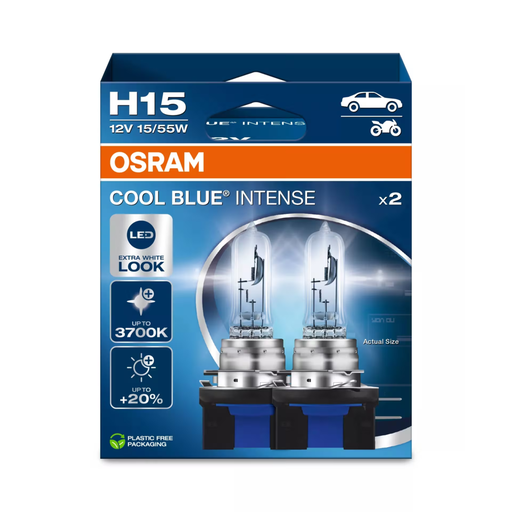
Why it suits this profile: A targeted option for cars that specifically use an H15 bulb for daytime running lights and main beam.
The bulb is not universally compatible. Checking the official OSRAM compatibility list helps prevent buying the wrong H15 application.
55W halogen bulb, up to 3700K according to OSRAM and up to 20% more brightness than standard bulbs according to the brand’s product information.
We have put together a complete, up-to-date list of products that fully meet these strict selection criteria and the applicable European safety regulations.
Only replace halogen or LED bulbs once the headlamp has cooled completely. Do not touch the glass of a halogen or xenon bulb with your bare fingers. Position the bulb precisely in the recess and check that the locking mechanism is securely fastened.
After fitting, test:
It is best to replace bulbs in pairs. This helps keep the light colour and brightness more evenly matched on the left and right.
No. Approval depends on the type of bulb, the headlamp, the vehicle and the specific authorisation. Check the manufacturer’s latest information, the E-marking and the applicable UK or European regulations before fitting retrofit LEDs.
Product descriptions from some brands state 50,000 to 60,000 hours. These are quoted figures under specific conditions, not a fixed guarantee for every car. Heat, vibrations, moisture and the quality of the electrical installation affect the actual lifespan.
LEDs can use less energy for comparable lighting, but consumption varies by model. A CANbus system may also require additional electronics to recognise the lower power consumption correctly. Therefore, check not only the wattage, but also vehicle compatibility and any decoder requirements.
