
Vandaag of morgen in huis

Kwaliteit gegarandeerd

Welkomstaanbiedingen ontgrendelen: GRATIS bezorging | Tot 80% korting | Gratis 30 dagen JoyPlus-proefperiode
Download de app
Upgrading your car with LED ambient lighting can give the interior a completely new, modern look. But the market is flooded with options, and not every kit delivers on its promise. Before you invest in a set of car interior lighting, it's crucial to know what to look for. Many car enthusiasts fall into the same traps, leading to disappointment and wasted money.
As a Joybuy Product Recommendation Officer, I'm here to help you see through the marketing jargon. Here are the three most common mistakes when choosing car LED ambient lighting and how to avoid them.
Many cheaper kits use traditional fiber optic ambient lighting illuminated by only one or two LEDs at the ends. The result? The light is bright at the source but quickly fades along the length of the strip. This creates an uneven, cheap-looking glow with obvious hotspots instead of the smooth, consistent line of light you see in modern premium cars.
The promise of "plug-and-play" is tempting, but the reality is often different. Some kits require each strip to be wired individually to a central controller. This results in a huge amount of cable that you have to hide behind the dashboard and door panels, turning a neat installation into a frustrating and time-consuming job.
Most modern kits are controlled with a car lighting app. This is a great feature, provided the app works well. Unfortunately, many of these apps are unstable, constantly lose their Bluetooth connection, or respond slowly. A glitchy app makes features like music sync mode or dynamic Dreamcolor car lighting effects practically unusable.
To avoid the pitfalls above, focus on a few key specifications. These determine the quality and usability of your ambient car lighting kit.
The technology of the light strip itself is crucial.
A good kit offers flexible control. Check if the kit has a stable app (look up the app's name, like "LotusLamp X" or "Magic Lantern," and check reviews if possible). An extra physical button is a practical addition for quickly changing colors or turning off the lights without needing your phone.
Also, look at the controller structure. Kits with a main controller and multiple sub-controllers (e.g., one for each door) significantly simplify the wiring. This means you don't have to run every strip back to a single central point.
The term "X-in-1" refers to the number of individual light elements in the box. For example, a simple "6-in-1" kit might include strips for the dashboard and center console. A comprehensive "18-in-1" kit will also include car footwell lighting, lights for door pockets, and door handles. Decide in advance which parts of your interior you want to illuminate and choose a kit that matches. Most RGB LED strips for cars can be cut to size for a perfect fit.
Below are some recommendations, tailored to different needs and project sizes.
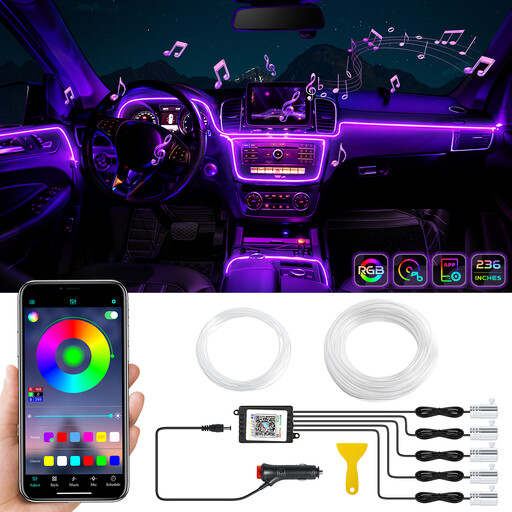
Why This Fits Their Persona: Ideal for those taking their first step into car interior lighting. This 6-in-1 kit offers an affordable solution to light up key areas like the dashboard without an overwhelming installation.
This kit addresses the pitfall of uneven lighting by providing clear tips. The manufacturer suggests connecting an LED to both ends of a long fiber optic strip for better brightness, which is a smart workaround for a budget-friendly kit.
Simple plug-and-play installation via the 12V power outlet. The "Lotus Lantern" app provides control over colors and dynamic modes, including music sync.
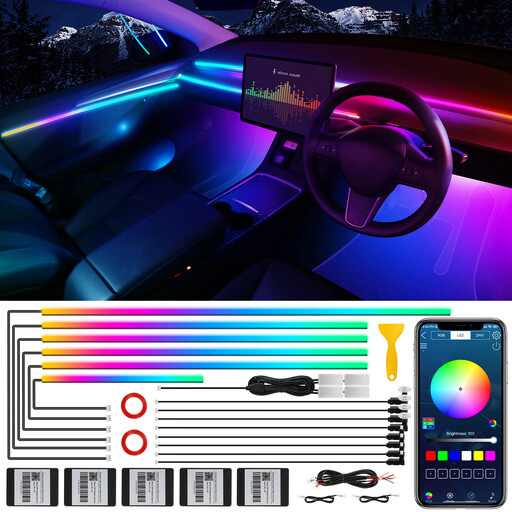
Why This Fits Their Persona: For the user who wants a complete upgrade without going over the top. This 10-in-1 kit illuminates the dashboard, doors, and footwells, creating a balanced yet impressive ambiance.
This kit uses acrylic strips. According to the manufacturer, this provides brighter and more uniform light than standard fiber optics, avoiding the "hotspot" pitfall. The modular design with sub-controllers prevents a tangle of wires.
The dual-zone control is a major plus: you can set the dashboard lights and footwell lights to different colors or modes simultaneously. The kit also includes a physical touch button for quick adjustments.

Why This Fits Their Persona: For the perfectionist who wants to transform the entire interior. This 18-in-1 kit covers everything: dashboard, doors, door handles, storage pockets, and footwells for a complete, integrated look.
This comprehensive kit is designed with a main controller and four sub-controllers. This modular system makes installing the many components manageable and prevents cable chaos. The acrylic strips ensure high-quality, uniform light throughout the car.
Maximum coverage for a complete makeover. The "LotusLamp X" app offers advanced features, including the ability to customize startup animations for a unique, personal touch.
We have curated a complete, up-to-date list of products that fully meet these strict selection criteria and regulations.
Yes, interior ambient lighting is generally permitted. The main condition is that the lighting must not distract or blind the driver. Additionally, the light should not shine directly outwards in a way that could hinder other road users or be confused with official signals (like blue emergency lights). Keep the lighting subtle while driving and always check your local regulations.
Most DIY kits offer two connection options. The simplest is the plug for the 12V cigarette lighter (or power outlet). For a more permanent and seamless installation, you can wire the kit to the car's fuse box. This requires a bit more work but ensures no cables are visible. Always follow the manufacturer's installation instructions carefully and consult a professional if you are unsure.
The LEDs themselves have a very long lifespan, often exceeding 20,000 operating hours. However, the durability of the entire kit depends on the quality of the controller, wiring, and installation. A properly installed kit from a reputable brand can typically last for several years without issues.
