
Vandaag of morgen in huis

Kwaliteit gegarandeerd

Welkomstaanbiedingen ontgrendelen: GRATIS bezorging | Tot 80% korting | Gratis 30 dagen JoyPlus-proefperiode
Download de app
A flat 12V battery always seems to happen at the worst possible time: on a cold morning, by the side of the motorway or just before setting off in your campervan. A car jump starter can be a practical emergency solution. However, not every portable car battery booster is suitable for every vehicle. A high amp rating on the packaging doesn’t tell you everything.
Pay close attention to vehicle compatibility, safety features and maintenance. That way, you can avoid buying a device that isn’t suitable for your petrol or diesel engine, runs flat after a few months or doesn’t come with enough accessories.
Manufacturers often list the maximum peak current, for example 1,500A, 4,000A or even 8,000A. This is a peak figure and doesn’t automatically tell you how suitable the jump starter is for your vehicle. Check the following too:
A jump starter may have different limits for petrol and diesel cars. Diesel engines generally need more power to start, so don’t check compatibility with petrol engines alone.
Jumper cables with a safety system can offer protection against reverse polarity, short circuits, overheating and overloading, among other things. The exact features vary by model. According to the product information from various brands, these systems offer eight to ten safety features.
That doesn’t mean there’s no risk if you connect the cables incorrectly. Always use the smart cables supplied and follow the instructions. Don’t use a booster with a damaged, leaking or frozen battery.
A jump starter with a compressor and power bank can be useful, but extra features make the device bigger, heavier and sometimes more expensive. A built-in compressor is handy for topping up a tyre, but it isn’t designed to repair a puncture. A torch can help if you break down in the dark, but it’s no substitute for a warning triangle or high-visibility vest.
So, decide first what you need the device for. A compact model is often enough for occasional use in a car. For a campervan, boat, SUV or lorry, a larger car battery booster may make more sense.
Compare both the peak current and the stated engine capacity. For example, according to the product information, a model with 1,200A may be intended for petrol engines up to 4.0 litres and diesel engines up to 2.0 litres. Other models specify 3,000A for petrol engines up to 9.0 litres and diesel engines up to 7.0 litres.
Use these figures to narrow down your options, not as a guarantee. Actual performance depends on factors including the condition of the battery, the temperature, the jump starter’s charge level and the vehicle.
Capacity is usually given in mAh. This is useful for the power bank function, but it doesn’t tell you directly how many starting attempts are possible. Also check:
A portable power bank for your car needs to be recharged regularly while in storage. Some models recommend recharging every three to six months; check the product instructions for guidance.
If you choose a jump starter with a compressor, check both the maximum pressure and the airflow. A rating of 150 PSI doesn’t mean every tyre will inflate quickly. Airflow, the hose and the automatic shut-off are just as relevant.
Also consider the weight. A compact booster weighing around 330 grams fits easily in a glove compartment. A model with a compressor and a larger battery may weigh around 0.9 kilograms or more. Check that you have room for it in your car and that the cables are long enough to reach the battery comfortably.
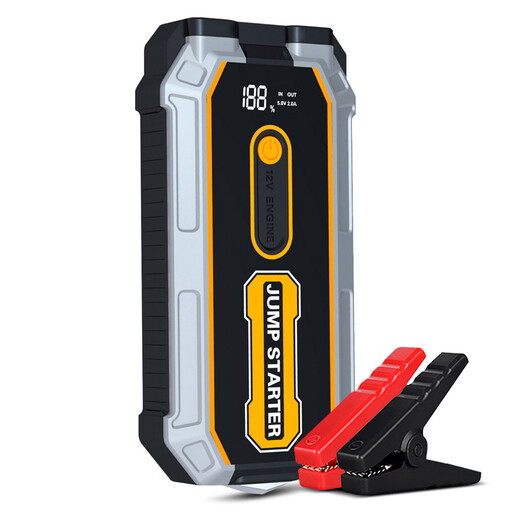
Why it suits this user: This compact model is aimed at drivers looking for a straightforward jump starter for a 12V petrol or diesel vehicle.
The product information lists an LCD indicator, so you can check the charge level instead of setting off with an unknown battery level.
1200A peak current, stated capacity of 12.800mAh, USB output, three lighting modes and a weight of around 330 grams.
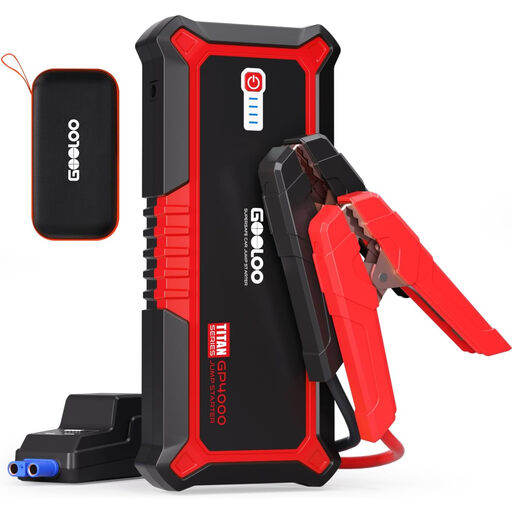
Why it suits this user: A good fit for drivers of larger vehicles, campervans and pick-ups who want more starting power and several charging options.
The stated compatibility covers 12V vehicles, all petrol engines and diesel engines up to 10.0 litres. Always check this against your vehicle details.
4000A peak current, USB and USB-C connections, metal clamps, built-in lighting and a stated operating temperature range of -20°C to 60°C.
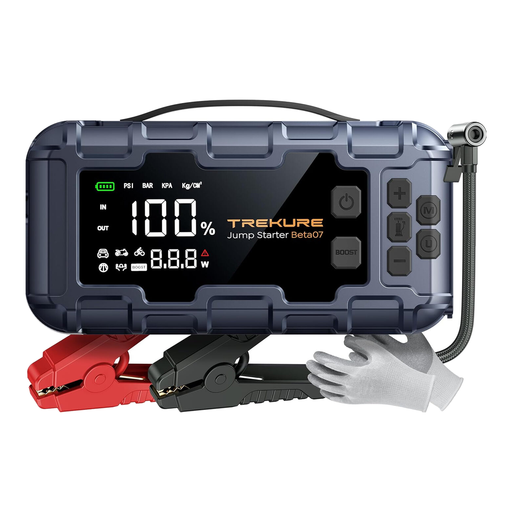
Why it suits this user: A good option for SUV, campervan and boat owners who want to top up tyres and other inflatables on the go, as well as jump-start their vehicle.
According to the product information, the compressor has an automatic shut-off and five preset pressure modes. Allow the device to cool down between uses.
6000A peak current, compressor with a maximum pressure of 160 PSI, 45W USB-C, 600-lumen light and a 3.3-inch display.
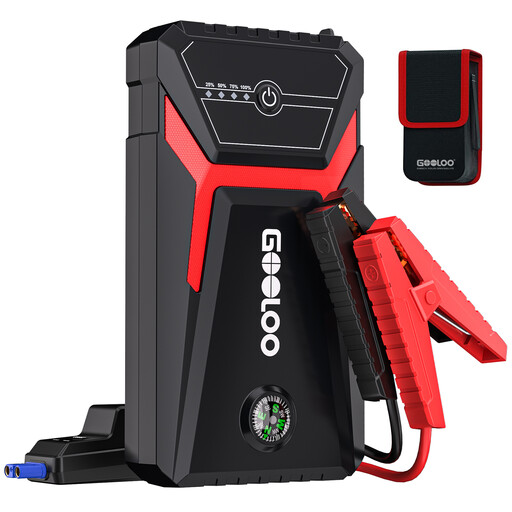
Why it suits this user: Its size and weight make this model a good choice if you want to keep a portable car battery booster in your car or luggage.
According to the product information, the smart cable supplied has several safety features, including protection against reverse polarity and short circuits.
1500A peak current, supports 6.0-litre petrol and 4.0-litre diesel engines, two USB outputs and 400-lumen lighting.
We’ve put together a complete, up-to-date list of products that meet these strict selection criteria and current European safety regulations.
Don’t use a compressor for longer than the stated maximum operating time. For example, the product information for the UTRAI JS-9 specifies a maximum of ten minutes of continuous use, followed by a cool-down period.
No. Check that your car has a 12V system and compare the stated engine capacity for petrol and diesel engines. Don’t try to jump-start a damaged, leaking or frozen battery.
It varies by model. As a general maintenance guideline, product manuals often recommend recharging every three to six months. Store the booster in a cool, dry place and check its charge level before a long journey.
It depends on how you’ll use it. A compressor can be handy if you drive frequently, go camping or travel to remote areas. If you mainly make short trips around town, a compact model without a compressor may be enough. Always compare the weight, charging time, accessories and operating time as well as the price.
