
Vandaag of morgen in huis

Kwaliteit gegarandeerd

Welkomstaanbiedingen ontgrendelen: GRATIS bezorging | Tot 80% korting | Gratis 30 dagen JoyPlus-proefperiode
Download de app
A flat battery often strikes at the worst possible moment: on a cold morning, during a camping trip or on a dark country road. With a car jump starter, you can start a 12V vehicle yourself in certain situations, without relying on another car and a set of jump leads.
However, not every portable jump starter is suitable for every car. Manufacturers use high peak current figures as a selling point, but battery capacity, engine size and connection safety are just as important. Extra features such as a compressor or power bank may sound appealing, but they can also make a jump starter heavier, larger and more expensive.
A figure such as 2.000A or 3.000A doesn’t tell you everything about how useful a jump starter will be in everyday use. Check the stated starting current, the engine sizes it supports, and whether it’s suitable for both petrol and diesel engines. A compact car battery booster with a lower peak current may be enough for a small petrol car, while a diesel SUV needs more reserve power.
A jump starter with a power bank is often advertised with a high mAh rating. That capacity isn’t used solely to start the engine. Some of the energy is available for USB devices, and some may be lost during conversion and through the cables. So check both the stated capacity and how often the manufacturer recommends charging it.
A jump starter with a compressor is handy if you have a soft tyre, but a built-in pump takes time and energy to use. A power bank, LCD screen and LED light are useful extras, but they don’t replace checking your battery or tyre pressure. Choose a car jump starter that meets your needs first, then consider which extra features you’re likely to use.
Before you buy, check:
A car emergency starter isn’t intended for a damaged, leaking or frozen battery. If you’re unsure, roadside assistance is a safer option. Don’t use a jump starter with an electric vehicle if the product information only mentions 12V petrol and diesel vehicles.
A 12V jump starter should be charged and ready to use in your car. Check:
Lithium batteries can lose capacity if exposed to heat for long periods. So don’t leave your car battery booster in direct sunlight or in an extremely hot car for months at a time. Check the charge level before a long journey and recharge the device regularly, as instructed in the manual.
For a jump starter with a compressor, check the maximum pressure, airflow, hose length and automatic shut-off. A high psi rating doesn’t necessarily mean a tyre will inflate quickly. Also check whether the pump is suitable for car tyres and whether the device needs to cool down between uses.
An LED light with steady, flashing or SOS modes is useful if you break down in the dark. A separate magnetic warning light can help make you more visible. When using one on public roads, check the relevant road rules; an additional warning light isn’t suitable for every situation.
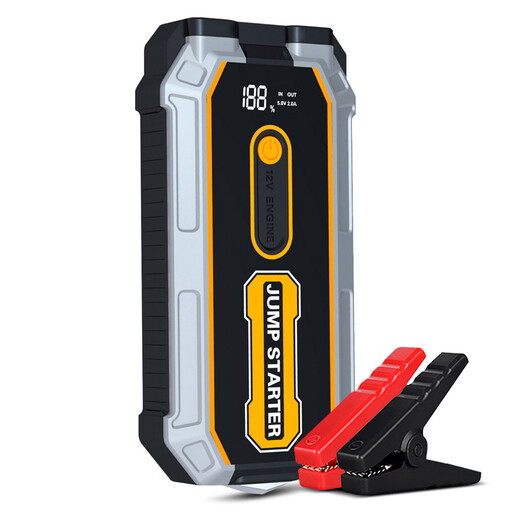
Why it suits this profile: This compact unit weighs around 330 grams and is designed for 12V petrol and diesel vehicles, including cars, SUVs and motorbikes. The LCD indicator shows the charge level before you set off.
As well as a 1200A peak current, the product description lists a 600A starting current, a capacity of 12800mAh and a charging time of around four hours. This gives you several useful specifications to compare.
12V support, 10W USB output, LCD screen and LED lighting with steady, strobe and SOS modes.
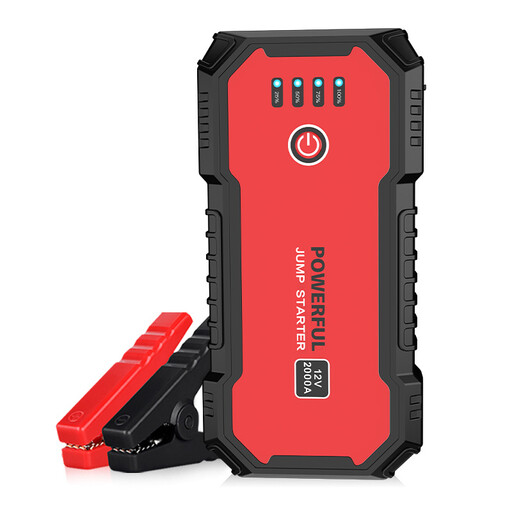
Why it suits this profile: Ideal for SUV, van or motorbike drivers who want extra charging options. With a stated peak current of 1500A and a 20.000mAh battery, it offers more reserve power than the smaller version.
The listed specifications name the vehicle categories as well as the nominal capacity of 10.000mAh. This gives you more context than a high marketing figure alone.
QC3.0 output up to 18W, USB-C input, LED emergency lighting and a stated charging time of around three hours with fast charging.

Why it suits this profile: A good fit if you want to combine a car battery booster with a portable compressor. According to the product description, it has a 150 psi pump, four presets and a large digital display.
The description lists safety features including reverse connection, overload and overheat protection. The manufacturer also recommends allowing the compressor to cool down between uses.
26800mAh according to the product name, two USB outputs, USB-C input/output, 150 psi compressor and LCD screen.
We’ve put together a complete, up-to-date list of products that meet these strict selection criteria and the applicable European safety regulations.
A jump starter is an alternative to jump leads, but it isn’t a permanent fix for a battery that keeps going flat. If the problem happens again, have the charging system and battery checked.
First connect the cable unit to the jump starter, then attach the red clamp to the positive terminal. Attach the black clamp to the negative terminal or a suitable earth point, as instructed in the manual. Wait for the correct indicator, then start the car within the time specified. The exact procedure varies by model.
That depends on the battery, storage conditions and maintenance. Recharge the device regularly, even if you haven’t used it. Store it somewhere cool and dry, and check the charge level before a long journey. Using the power bank or compressor can drain the battery more quickly.
It depends on how you’ll use it. For campers, SUV owners and drivers who regularly cover long distances, having one device for jump starting, inflating tyres and USB charging can be practical. If you simply want to be prepared for a flat battery, a simpler model could be cheaper and lighter.
