
Vandaag of morgen in huis

Kwaliteit gegarandeerd

Welkomstaanbiedingen ontgrendelen: GRATIS bezorging | Tot 80% korting | Gratis 30 dagen JoyPlus-proefperiode
Download de app
A flat car battery often happens at the worst possible time: in a car park, on the motorway or just before setting off in your motorhome. With a car jump starter, you can try to start a 12V vehicle yourself, without needing a second car and jump leads. However, not every model is suitable for every vehicle or situation.
Many unsuitable purchases result from three recurring pitfalls:
So do not just check the marketing copy. Pay particular attention to the technical specifications, connections, safety features and user instructions.
Most cars, motorbikes, vans and motorhomes use a 12V battery. Check this in your vehicle’s handbook before buying a car battery starter. A 24V system for heavy goods vehicles is not the same as a 12V jump starter.
Also check the stated maximum engine size:
The peak current rating is primarily a product specification provided by the manufacturer. So compare models based on the instructions, cable quality and whether they have a boost function for a low-voltage battery.
A portable jump starter delivers a high current. Choose a model with clear protection against issues including:
A smart cable may use an indicator light, sound signal or display to show whether the connection is correct. This reduces the risk of connecting it incorrectly, but does not replace carefully reading the instructions. Only use the supplied cable if the manufacturer specifies this.
Capacity is stated in mAh or Wh. A higher capacity can be useful if you also want to use the jump starter as a power bank for your phone, tablet, camera or laptop. However, the mAh rating is not directly comparable across all devices; also check the USB output and charging speed.
A jump starter with power bank may feature a USB-A, USB-C or QC output. Check whether a mains adapter is included. Some models are supplied with a USB cable only.
A jump starter with LED light is useful when checking your vehicle in the dark. Look at the available modes, such as standard light, flashing light and SOS. If you often travel, you may also want to choose a jump starter with compressor. In that case, check the maximum pressure, airflow, hose and automatic shut-off. A stated rating of 150 PSI does not mean that every tyre will inflate at the same speed.
The recommendations below are based on the listed product specifications, features and included accessories. According to the brands’ own product information, the models offer the stated safety features or starting capacities; always check the latest specifications on the product page and in the user manual.
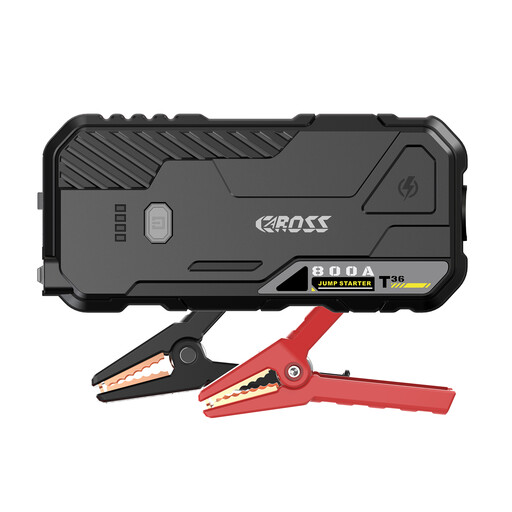
Why it suits this profile: This compact model is designed for drivers of 12V cars, SUVs, motorbikes and light vehicles who want to keep a straightforward emergency jump starter in their car.
The product specifications state 12V compatibility, a boost function, spark protection and reverse-polarity protection. Before buying, check the exact engine-size limit.
800A peak current, 10,000mAh lithium battery, QC 18W charging, digital display and protective case.
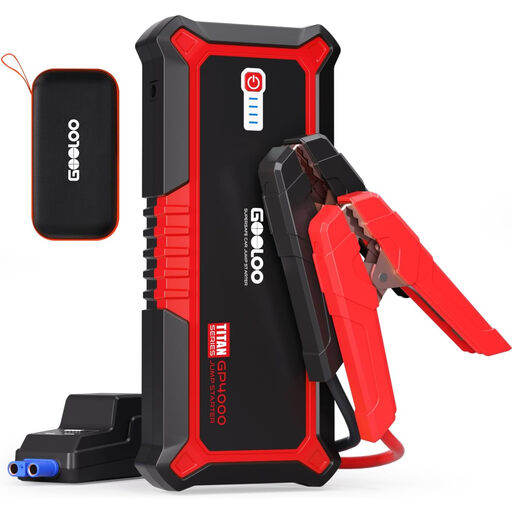
Why it suits this profile: A great choice for motorhome owners, SUV drivers and anyone who wants to charge USB devices on the go as well as having emergency starting power available.
The listed specifications include 10 safety features, a boost button and metal clamps. According to the product information, the stated compatibility covers up to 10.0L petrol and 10.0L diesel engines.
4000A peak current, two USB outputs, USB-C, LED light and supplied cigarette lighter adapter.
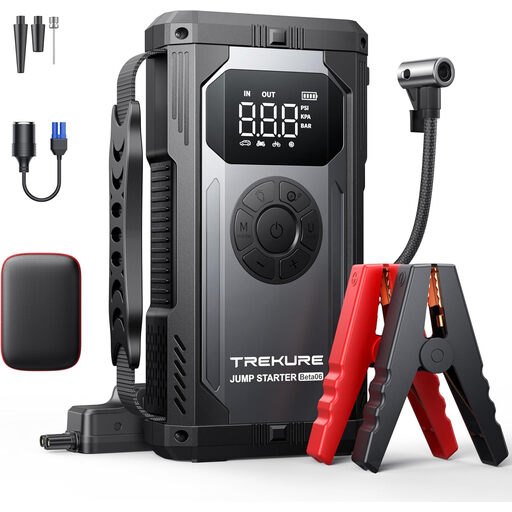
Why it suits this profile: Designed for motorhome and SUV owners, outdoor enthusiasts and drivers who also want to inflate tyres, bicycle tyres or inflatables while on the go.
According to the product description, the built-in compressor has adjustable pressure, an LCD display and automatic shut-off. This lets you check in advance whether the feature meets your needs.
5500A peak current, compressor up to 150 PSI, 23,800mAh battery, 12V output and three LED light modes.
We have put together a complete, up-to-date list of products that fully meet these strict selection criteria and the applicable European safety regulations.
Do not use a jump starter with a damaged, leaking or frozen battery. If starting problems keep recurring, the car battery needs to be checked or replaced; an emergency jump starter will not resolve the underlying cause.
This varies by model and the condition of the battery. Some devices have a boost function for low voltage, but the conditions in the manual still apply. Do not try to activate a damaged battery with a jump starter.
Its lifespan depends on the battery type, temperature, charging habits and storage conditions. Recharge the device periodically according to the product instructions, even when you are not using it. Do not store it for long periods in direct sunlight or in a hot car.
The device uses electricity to recharge itself and also gradually loses capacity while stored. The cost per charge is usually limited, but the exact price depends on the battery capacity and your electricity tariff. A model with a power bank or LED light can also be used for purposes other than emergency starting.
