
Vandaag of morgen in huis

Kwaliteit gegarandeerd

Welkomstaanbiedingen ontgrendelen: GRATIS bezorging | Tot 80% korting | Gratis 30 dagen JoyPlus-proefperiode
Download de app
A flat battery often happens at the worst possible moment: on a cold morning before work, by the motorway or during a weekend away in your campervan. With a car jump starter, you can try to start a 12V vehicle independently, without a second car or long jump leads.
However, not every car battery booster is suitable for every vehicle. High amp figures, large mAh capacities and terms such as “super-safe” do not tell the whole story. Below, you can find out which specifications really matter and which pitfalls you can avoid.
A figure such as 1500A or 4000A sounds impressive, but peak current is a short-term maximum value. Actual starting performance also depends on the battery condition, cables, connections, temperature and engine size.
Always check:
A jump starter for cars with a small petrol engine may not be powerful enough for a diesel van or large SUV.
Battery capacity in mAh indicates the amount of stored energy. This figure does not directly tell you how much starting power the car jump starter can deliver. Also look at the starting current, peak current and stated vehicle compatibility.
Some models also list both a nominal capacity and a total capacity. The Porbi S901, for example, has a battery capacity of 14,000mAh and a nominal capacity of 10,000mAh. This difference matters if you also want to use the device as a portable power bank for your car and other devices.
Protection against reverse polarity, short circuits, overheating and overcharging is practically important. However, check whether these functions are specifically mentioned in the product information or manual. A CE mark mentioned in a listing is not proof that every usage scenario is risk-free.
According to the product information provided by some brands, such as GOOLOO and AstroAI, their models feature multiple protection circuits. Present this as a manufacturer’s claim, not a guaranteed result. Always read the instructions before use and check that the clamps are connected correctly.
A 12V jump starter is designed for many cars, motorbikes, SUVs, campervans and vans. This does not mean that every 12V model can handle the same engine size. Diesel vehicles generally require more starting power than comparable petrol models.
So look for a clear statement such as:
A car jump starter starts a vehicle’s 12V battery. It does not replace an electric vehicle charging station.
Sturdy clamps and well-insulated handles make connecting the device easier and clearer. Some models use smart jump leads with an indicator or audible warning if the connection is incorrect.
A safe procedure is usually:
Do not use a booster with a damaged, leaking or swollen battery.
A portable jump starter gradually loses charge during storage too. Therefore, check the battery level regularly and charge the device according to the manual. Store the booster in a dry place and do not leave it in direct sunlight or extreme heat for extended periods.
Extra features can be useful:
Think in advance about which features you will actually use. A larger model with lots of connections may be heavier and take up more space.

Why it suits this profile: This compact model is aimed at motorists looking for a straightforward car jump starter for 12V petrol and diesel vehicles, without unnecessary extra weight.
The listing states both a 1200A peak current and compatibility with 12V petrol and diesel vehicles. This allows you to compare the claim with your own engine specifications.
Approximately 330 grams, LCD display, 10W USB output and LED lighting with three modes.
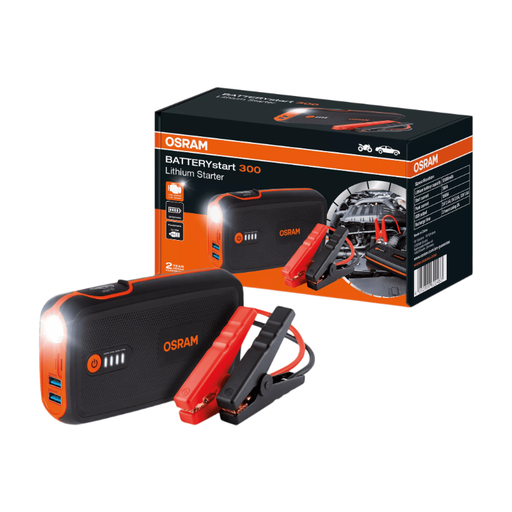
Why it suits this profile: Suitable for drivers who value a well-known brand, a clear vehicle limit and an extended warranty stated in the product information.
The product information explicitly states a maximum of 6L for petrol and 3L for diesel. This makes it easier to check suitability rather than simply looking at the amp figure.
1500A peak output, 13,000mAh according to the listing, dual USB output and a stated 2-year warranty.
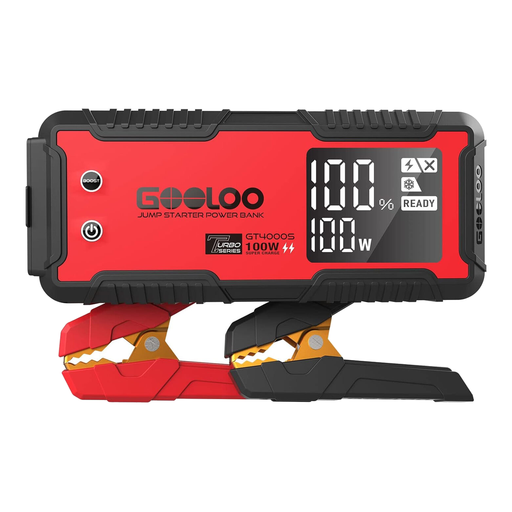
Why it suits this profile: An option for campervan, SUV and van owners, as well as drivers who value fast charging and multiple power outputs in addition to starting assistance.
The listing states 12V compatibility, a stated range of up to 10L diesel and 10 safety features. However, check these limits against your vehicle’s specifications.
4000A peak current, 100W two-way charging, LCD screen, multiple USB ports and a 15V/12V output.
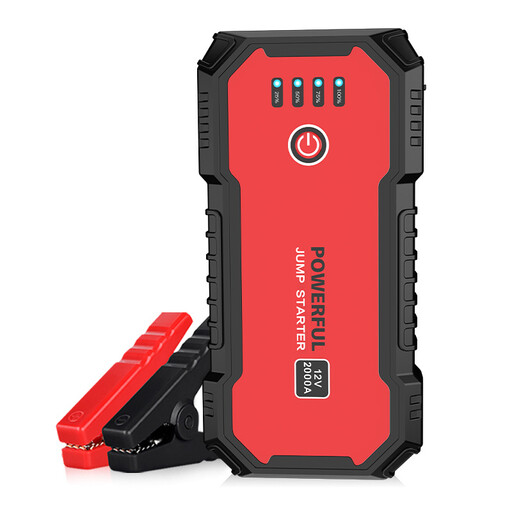
Why it suits this profile: Handy for families and travellers who want to carry a car battery booster for charging phones, dealing with breakdowns at night and starting standard 12V vehicles.
The product description states 12V petrol and diesel compatibility, a Type-C input and a protected casing. Nevertheless, do not leave the device in a hot car for extended periods.
1500A peak current, 14,000mAh battery according to the listing, QC3.0 18W USB charging and LED modes for constant light, strobe and SOS.
We have put together a complete, up-to-date list of products that fully meet these strict selection criteria and the applicable European safety regulations.
First, check that the booster is sufficiently charged and that your vehicle has a 12V battery. Connect the red and black clamps according to the manual, wait for any ready indicator and try to start the engine briefly. Once the vehicle has started successfully, disconnect the cables again in the stated order.
Its service life depends on use, storage temperature and charging maintenance. Charge the device after use and check the battery level regularly, even when the jump starter is kept in the boot. Some manufacturers recommend charging it every few months; follow the manual for your chosen model.
A jump starter may be suitable for both types of vehicle, but diesel engines often require more starting power. Therefore, check the separate limit for petrol and diesel. A model suitable for a 6L petrol engine is not automatically suitable for a 6L diesel engine.
