
Vandaag of morgen in huis

Kwaliteit gegarandeerd

Welkomstaanbiedingen ontgrendelen: GRATIS bezorging | Tot 80% korting | Gratis 30 dagen JoyPlus-proefperiode
Download de app
A flat car battery often happens at the worst possible moment: on a cold morning, during a motorhome holiday or on a dark country road. A car jump starter can get you moving again without relying on another vehicle. However, not every model is suitable for every vehicle or situation.
Pay particular attention to these three common pitfalls:
First check whether your vehicle uses a 12V system. This is common in cars, motorbikes, motorhomes, SUVs and many vans, but always check the vehicle’s manual.
Next, check the maximum engine capacity. A car jump starter suitable for a 6.0-litre petrol engine is not necessarily suitable for a 6.0-litre diesel engine. Diesel engines generally require more starting power. For a small petrol car, a 1,500 A model may be sufficient according to the product specifications. For a large SUV, motorhome, van or diesel car, a greater margin is the safer choice.
A portable jump starter should come with clear instructions and suitable smart leads. Useful safety features include:
These features reduce the risk of incorrect use, but they do not replace careful connection. Always check the positive and negative terminals, and only use the supplied leads if specified by the manufacturer.
Capacity is often stated in mAh or Wh. These values are not always directly comparable because manufacturers may use different measurement methods. So also consider the weight, dimensions and connections.
A jump starter power bank with USB ports is useful for a phone, tablet or dashcam. A model with a 12V output may be able to power a cool box or another vehicle accessory. If you are often on the road, you may want to choose a jump starter with compressor. In that case, check the maximum pressure in PSI, the pressure units and whether it has an automatic stop function.
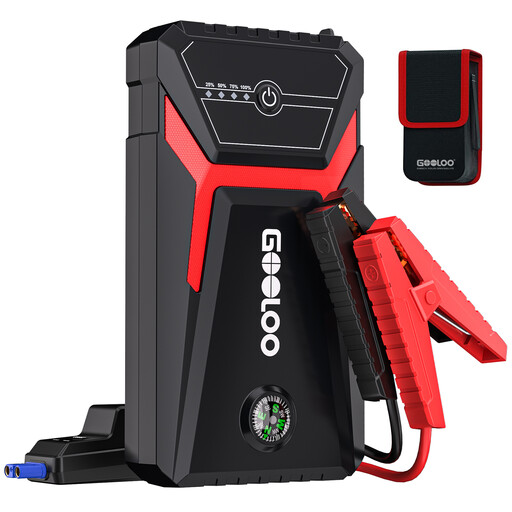
Why it suits this profile: According to the product information, this compact model weighs 0.878 kg and is designed for 12V vehicles with petrol engines up to 6.0 litres or diesel engines up to 4.0 litres.
The vehicle limits are clearly stated. GOOLOO also lists ten safety features, including short-circuit, overcharge and reverse-polarity protection.
1,500 A peak current, two USB outputs and an LED light with three modes. According to the product information, an 18-month warranty is included.
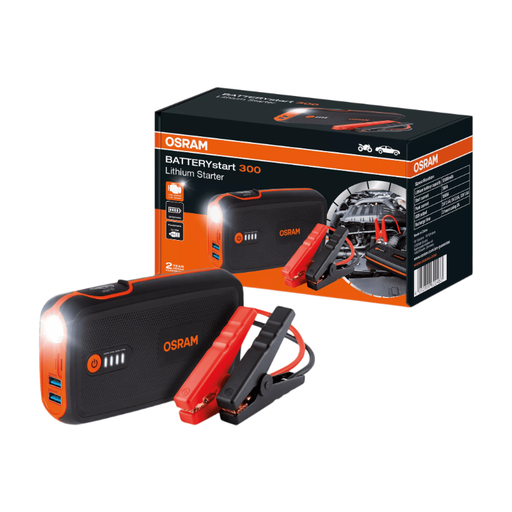
Why it suits this profile: The specifications are aimed at everyday use with cars and motorbikes: 12V, 1,500 A peak current and support for petrol engines up to 6 litres and diesel engines up to 3 litres.
The lower diesel limit makes it clear that this is not a universal solution for large diesel engines. This helps you avoid judging a product solely by its amp rating.
Weighing 706 grams, with two USB outputs and an integrated LED light. According to the product information, it comes with an official two-year manufacturer’s warranty.
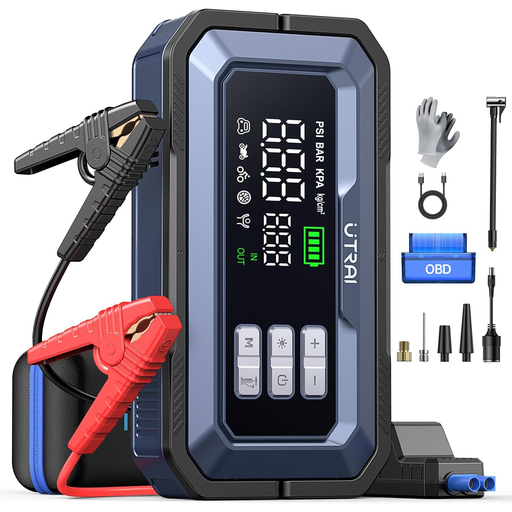
Why it suits this profile: This model combines a 12V jump starter with a compressor, OBD2 adapter, 160W DC output and multiple charging ports. According to the product information, it is designed for petrol, diesel and hybrid vehicles.
According to the product information, the compressor has adjustable pressure, five settings and automatic shut-off. This is more practical than simply having a high PSI rating without pressure control.
7,000 A peak current, compressor up to 150 PSI, 2,000-lumen lighting and a stated vehicle limit of up to 14 litres for diesel engines.
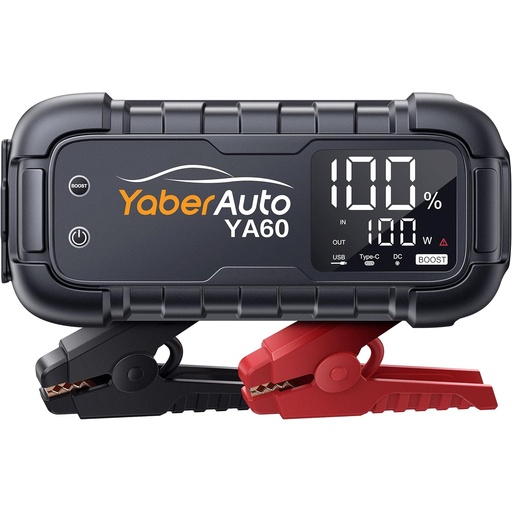
Why it suits this profile: The combination of 65W charging, a 150W DC output and USB connections is ideal for longer journeys with multiple devices and 12V accessories.
The product specifications state not only the peak current, but also the charging power, outputs, battery capacity and operating temperature. This makes comparisons easier.
8,000 A peak current, 26800 mAh, 65W USB-C and a 150W DC output. According to the product information, ten intelligent safety features are built in.
We have put together a complete, up-to-date list of products that fully meet these strict selection criteria and the applicable European safety regulations.
Do not store a car emergency starter in extreme heat, damp conditions or direct sunlight for extended periods. Check the charge level every few months, even if you have not used it. Always follow the manual for the specific model.
Only if the product specifications state that it can. Check both the voltage and the maximum diesel engine capacity. A jump starter for diesel cars with a higher stated limit offers more capacity for larger engines, but the condition of the battery, temperature and connection will still have an effect.
Its service life depends on the battery type, storage temperature, charging frequency and usage. Manufacturers sometimes specify a standby time or number of charging cycles. According to the product information for some models, periodically topping up the charge may be sufficient, but always check the device before a long journey. A damaged, swollen or leaking battery must not be used.
No. A compressor is designed to inflate tyres or other suitable items. The jump starter supplies power briefly to start a vehicle and can power devices via USB or 12V connections. For regular car battery charging, you need a suitable battery charger.
