
Vandaag of morgen in huis

Kwaliteit gegarandeerd

Welkomstaanbiedingen ontgrendelen: GRATIS bezorging | Tot 80% korting | Gratis 30 dagen JoyPlus-proefperiode
Download de app
A flat car battery often happens at the worst possible moment: on a cold morning before work, by the motorway or during a camping trip. With a car jump starter, you can try to start a 12V battery yourself, without relying on another car and jump leads. However, not every model is suitable for every vehicle.
High amp ratings, large battery capacities and extra features may sound appealing. However, these figures do not tell the whole story. As Joybuy’s Product Recommendation Officer, I therefore focus mainly on verifiable specifications and practical use.
A rating such as 2000A, 4000A or even 8000A refers to the peak current. It does not automatically indicate the current available over a longer period. Also check the stated starting current and engine compatibility. A diesel engine generally requires more starting power than a petrol engine.
A jump starter for a petrol engine up to 6.0 litres is not automatically suitable for a diesel engine of the same capacity. Also check whether the device is designed for a 12V system. A 24V system, as used by some lorries or buses, requires a different type of jump starter.
A capacity stated in mAh mainly indicates how often you can charge devices or how much reserve power may be available. It is not a direct indication of starting power. Pay attention to the difference between nominal capacity and usable capacity. For example, the Porbi S306 lists a battery capacity of 12,800 mAh and a rated output of 7,200 mAh.
A car jump starter with a large battery still needs to be charged regularly. A device left in a hot boot for months may lose capacity. Therefore, check the charging advice in the manual and recharge the unit every two to three months, for example, if recommended by the manufacturer.
Protection against reverse polarity, short circuits, overheating and overcurrent is useful. However, it does not prevent incorrect connections from creating risks. Always check the positive and negative terminals, use the clamps according to the manual, and do not attempt to start a vehicle with a damaged, leaking or frozen battery.
Brands’ claims about safety or extreme performance are not established facts. According to information provided by the brands concerned, some models have several protection circuits. Use this information as a product specification, not as a guarantee that every situation will proceed without problems.
First check the maximum engine size for petrol and diesel. A petrol or diesel jump starter should have sufficient capacity for your vehicle. A 1000A peak current may be suitable for a small petrol car, while a large SUV, motorhome or van may require a more powerful model.
Examples from the range:
If in doubt, check your car’s handbook and the jump starter’s specifications.
A portable jump starter must be sufficiently charged before you need it. Some models display the battery level on an LCD screen. This is more practical than guessing based on a few LEDs.
Also look at:
A car battery charger that works from the mains is suitable for slowly charging a battery. A jump starter is intended as a temporary emergency starting aid. These products are therefore not completely interchangeable.
Thick cables, well-insulated handles and sturdy clamps make connection easier. A smart cable with an indicator light or warning signal can help you check the connection. Always follow the sequence given in the manual: usually red to the positive terminal and black to the negative terminal or a suitable unpainted metal earth point.
Do not try to start the engine repeatedly for long periods. Various manufacturers recommend starting for only a few seconds per attempt and then waiting. A jump starter is not designed to repair a faulty starter motor or a physically damaged battery.
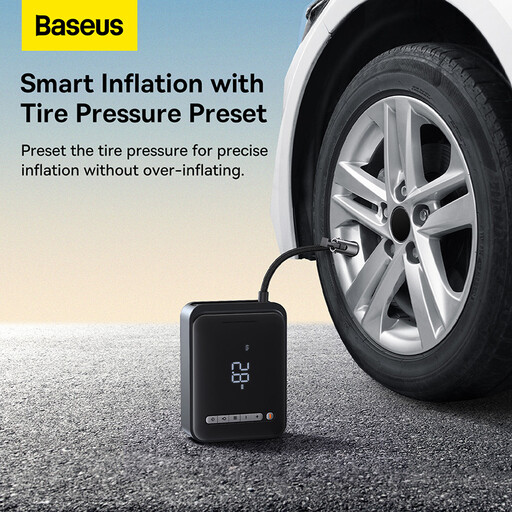
Why it suits this profile: This model combines a jump starter with a compressor, making it suitable for motorists who want to carry one device for starting the car and inflating tyres. The stated pump pressure reaches up to 150 psi; for car tyres, the model supports up to 120 psi according to the description.
The product specifications list both a 1000A peak current and a separately stated starting power of 500A. This makes it easier to compare its performance with other models.
8000mAh battery, USB outputs and an integrated compressor. According to the product information, the device weighs approximately 1360 grams.
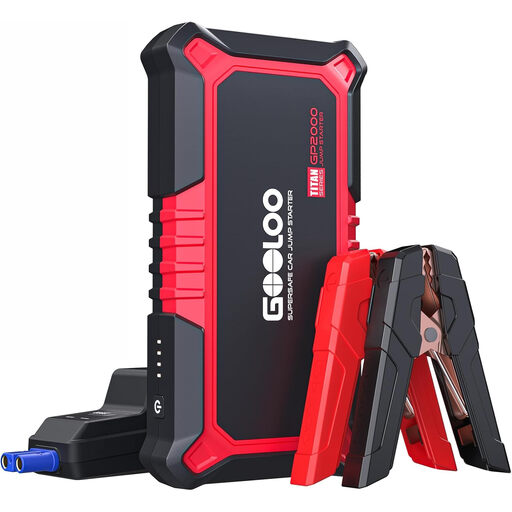
Why it suits this profile: An option for drivers of larger petrol cars, SUVs and light commercial vehicles who also want to charge USB devices.
The manufacturer lists separate compatibility for petrol engines up to 8.0 litres and diesel engines up to 6.0 litres. Ten types of protection are also mentioned; check the manual for details of how they work.
2000A peak current, two USB outputs and a 400-lumen lamp with three modes. The stated weight is approximately 545 grams.
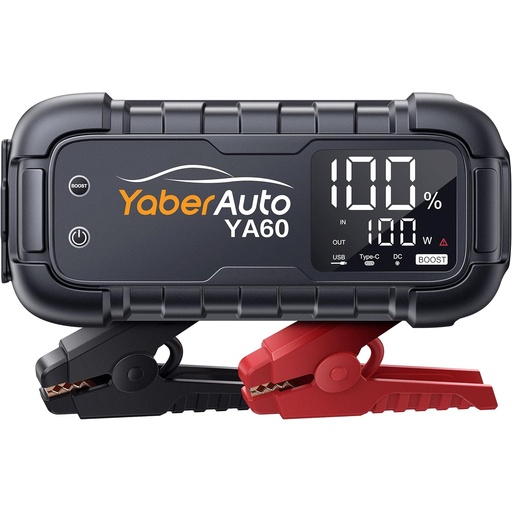
Why it suits this profile: Designed for motorhome owners, SUV drivers and users who want a powerful portable power source in addition to emergency starting assistance.
The description states a temperature range of approximately -20 to 60 °C and ten intelligent protection features. These are points to check against your vehicle’s requirements.
26800mAh, USB-C up to 65W, two USB-A outputs and a 150W DC output. The manufacturer also lists a 600-lumen lamp.
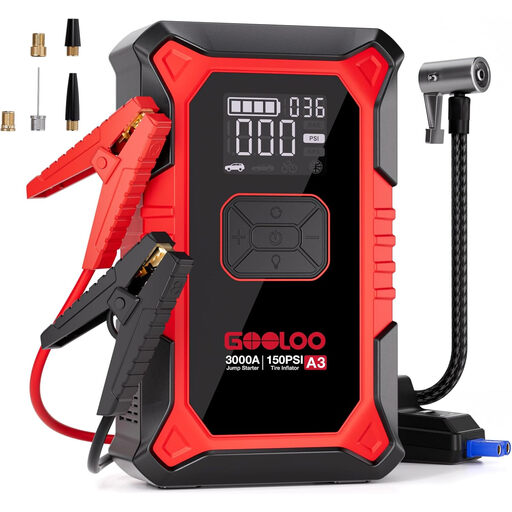
Why it suits this profile: Handy for road trips, caravans and outdoor journeys where you want a car battery booster and tyre inflator in one unit.
According to the product specifications, the compressor has adjustable pressure, automatic shut-off and a maximum pressure of 150 psi. Allow the pump to cool down between uses during prolonged operation.
3000A peak current, support for petrol engines up to 9.0 litres and diesel engines up to 6.5 litres, plus a digital tyre pressure gauge.
A jump starter is not a substitute for a diagnosis. If the car will not start again afterwards, the battery may be worn out, or there may be a problem with the alternator, starter motor or wiring.
We have put together a complete, up-to-date list of products that fully meet these strict selection criteria and the applicable European safety regulations.
No. Check the voltage, fuel type and maximum engine size. Most models in this category are designed for 12V vehicles. Do not use a 12V jump starter with a 24V system.
Its lifespan depends on storage, charging frequency and operating temperature. Follow the manufacturer’s charging advice, recharge it after use and check its status regularly. Do not store the unit for long periods in extreme heat or freezing conditions.
That depends on how you plan to use it. A jump starter with a power bank works independently and does not require a second car. Jump leads are lighter and often cheaper, but they require another suitable car and a correct connection. For commuters, travellers and motorhome owners, an independent emergency starting aid may therefore be more practical.
