
Vandaag of morgen in huis

Kwaliteit gegarandeerd

Welkomstaanbiedingen ontgrendelen: GRATIS bezorging | Tot 80% korting | Gratis 30 dagen JoyPlus-proefperiode
Download de app
A flat 12V battery never happens at a convenient time. You don’t want to wait for breakdown assistance when you need to get to work, are travelling in your campervan or find yourself on a dark country road. A car jump starter can provide portable starting assistance, a battery booster and a power bank for your phone.
However, not every car battery booster is suitable for every vehicle. Marketing often focuses on a high amp rating, but other features are just as important. Read on to find out what to look for and which models suit different needs.
A figure such as 2.000 A, 4.000 A or 8.000 A sounds impressive, but peak current is a brief maximum rating. So check which engine types and capacities the device is suitable for, according to its product specifications. A small petrol car needs something different from a diesel campervan, SUV or van.
Also check the difference between peak current and starting current. If only the peak current is listed, you won’t get a complete picture of the starter’s performance.
Most portable car jump starters are designed for 12V vehicles. This is generally the case for cars, motorbikes, campervans and many vans. However, some heavy goods vehicles and buses use a 24V system. Check your vehicle and its manual before connecting the device. A 12V battery booster is not automatically suitable for a 24V system.
A jump starter with a compressor can come in handy if a tyre is soft, but 150 PSI mainly tells you the maximum pressure. For car tyres, airflow, automatic shut-off, hose length and maximum continuous operating time are important too. Several models recommend letting the pump cool down after around 10 minutes. A car tyre inflator is therefore best suited to topping up tyres and emergencies, rather than prolonged use.
Check the following before buying a car jump starter:
According to the product information, some models from various brands have protection against issues including reverse polarity, short circuits, overloading and overheating. Treat these as product specifications, not as a guarantee that every operating mistake is risk-free.
A high capacity in mAh is useful for charging phones or making several starting attempts, but stated capacities aren’t always directly comparable. Some sellers, for example, list a rated or related capacity alongside the total cell capacity.
Look for:
A jump starter left in the boot for months still needs to have enough charge when you need it. So make a plan to recharge it regularly.
A torch with standard, flashing and SOS modes is useful if you break down at night. A power bank can charge a phone, GPS device or tablet. A compressor is a good option for drivers who also want to top up a flat or soft tyre temporarily.
For a motorbike, small car or daily commute, a compact model is often more convenient. Campervan, boat and SUV owners may benefit more from wider vehicle compatibility, thicker cables and a compressor.

Why it suits this type of driver: According to the product information, this compact model weighs around 330 grams and is designed for 12V petrol and diesel vehicles, motorbikes and boats. It’s easy to keep in a glove compartment or emergency bag.
The specifications list both a 1200 A peak current and a 600 A starting current. The LCD screen also shows the remaining charge, making it easier to remember to top it up.
Stated capacity of 12800 mAh, 10 W USB output, three light modes and dimensions of 165 × 84 × 30 mm.
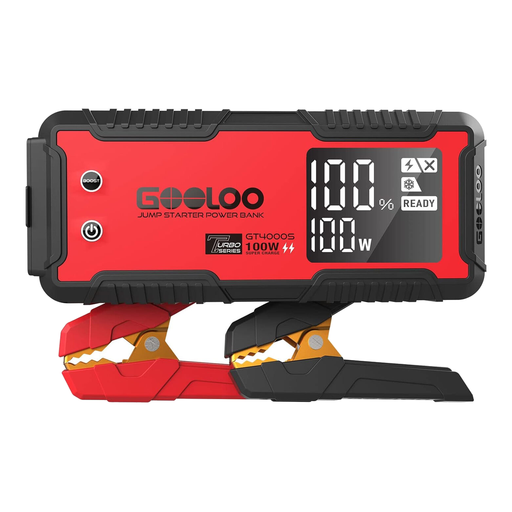
Why it suits this type of driver: For SUVs, campervans, pick-ups and other 12V vehicles, this model is rated for petrol engines up to 12,0 litres and diesel engines up to 10,0 litres, according to the product information.
The vehicle compatibility limits are clearly stated. The screen displays the status, and the supplied smart jump leads have several safety features according to the manufacturer.
4000 A peak current, 100 W two-way charging, three USB ports, a 15V/10A output and a storage bag.
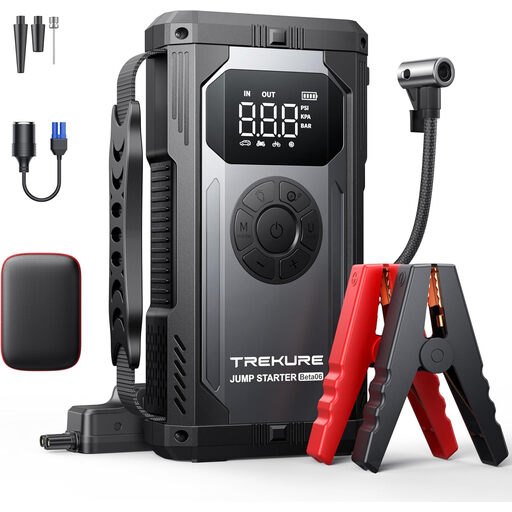
Why it suits this type of driver: This combines a car battery booster, car tyre inflator and power bank. According to the product information, it’s designed for 12V vehicles with petrol or diesel engines up to 10,0 litres.
According to the product specifications, the compressor has adjustable pressure and automatic shut-off. It’s still important to let it cool down as recommended if you’re inflating tyres for longer.
5500 A peak current, 150 PSI compressor, LCD screen, stated capacity of 23800 mAh, 12V output and three light modes.
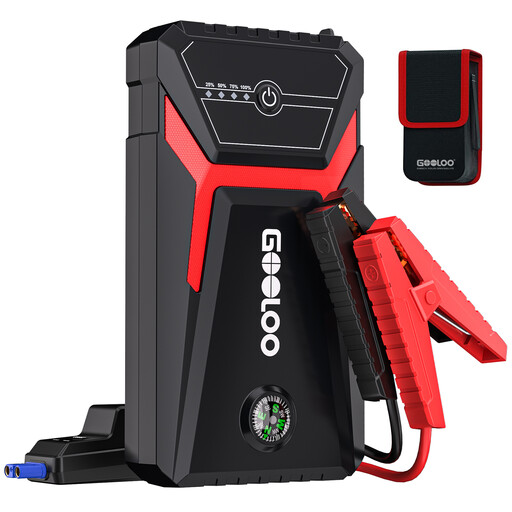
Why it suits this type of driver: According to the product information, this model weighs around 0,878 kg and is suitable for 12V cars, motorbikes, campervans and other vehicles within the stated engine limits.
The product information lists 10 safety features and gives a specific connection sequence. Always read the manual before first use.
1500 A peak current, support for up to 6,0 litres petrol and 4,0 litres diesel, two USB outputs and a 400-lumen light.
We’ve put together a complete, up-to-date list of products that meet these strict selection criteria and the applicable European safety regulations.
No. Check the 12V voltage, engine type and maximum engine capacity. A 12V car jump starter isn’t designed for a 24V system. Don’t use the device if the battery is damaged or leaking.
That depends on the battery type, how it’s used, storage temperature and maintenance charging. Manufacturers sometimes state a warranty period or a number of charging cycles. This is based on the brand’s own information and isn’t a guaranteed lifespan. Regular charging and storing the device away from heat can help preserve its capacity.
Yes. The internal battery slowly loses charge, even when you’re not using it. The power it uses is limited to occasional recharging, but without maintenance the booster may not have enough charge when you break down. So check the battery indicator every few months and recharge the device if needed.
