
Vandaag of morgen in huis

Kwaliteit gegarandeerd

Welkomstaanbiedingen ontgrendelen: GRATIS bezorging | Tot 80% korting | Gratis 30 dagen JoyPlus-proefperiode
Download de app
A flat car battery always seems to happen at the worst time: on a cold morning, at the campsite or just as you’re about to set off after a long journey. With a car jump starter, you can try to start your vehicle yourself in certain circumstances, without needing another car or jump leads.
However, not every portable jump starter is suitable for every vehicle. Marketing terms such as “powerful” and “universal”, along with a high amp rating, only tell you so much unless you compare them with the right technical details. Read on to find out which common pitfalls can lead to the wrong purchase and which features you really need to check.
A jump starter rated at 2.000A or 4.000A may seem automatically more powerful than a model rated at 1.500A. In practice, peak current is only one part of the specification. The stated starting current, battery technology and compatibility with your engine are just as important.
Always compare:
A high peak current doesn’t make a model suitable for a 24V lorry if the device is designed only for 12V systems.
“Suitable for cars” could mean anything from a small city car to a large SUV. Check the maximum engine capacity in litres. Starting a diesel engine generally requires a different power reserve from a comparable petrol engine.
A model described as suitable for petrol engines up to 6 litres and diesel engines up to 3 litres won’t necessarily work with a 6-litre diesel engine. If in doubt, follow the manual and your vehicle manufacturer’s specifications.
A jump starter with a power bank, USB ports and an LED torch is handy. However, these features are no substitute for good connection safety features. At a minimum, look for clear information about:
A protective case is also useful in the boot. It helps prevent damage to the clamps and cables and stops them making unwanted contact.
A 12V jump starter is designed for vehicles with a 12V battery system, such as most cars, motorbikes, motorhomes and light vans. Check your vehicle’s handbook to confirm. Don’t use a 12V car jump starter with a 24V system.
Also consider the type of vehicle. A motorbike or small petrol car may only need a more compact model. An SUV, motorhome, boat or van will often need more starting power.
Don’t just look at the stated amp rating. Pay particular attention to the combination of:
Some models have a Boost function for a battery with a very low voltage. According to the product description, this function can help when the normal detection system doesn’t recognise the battery. Always follow the manual and don’t use this function as a substitute for replacing a faulty battery.
Battery capacity is often given in mAh, for example 10.000, 16.000 or 20.000 mAh. This gives you an indication of the available energy, but doesn’t directly tell you how many starting attempts you’ll get. Cable losses, temperature and the condition of your vehicle’s battery also play a part.
Check the charging options:
Store a lithium jump starter somewhere dry and cool, out of direct sunlight. Check the charge a few times a year, even if you don’t use it. How often it needs maintenance varies by model, so follow the manufacturer’s instructions.
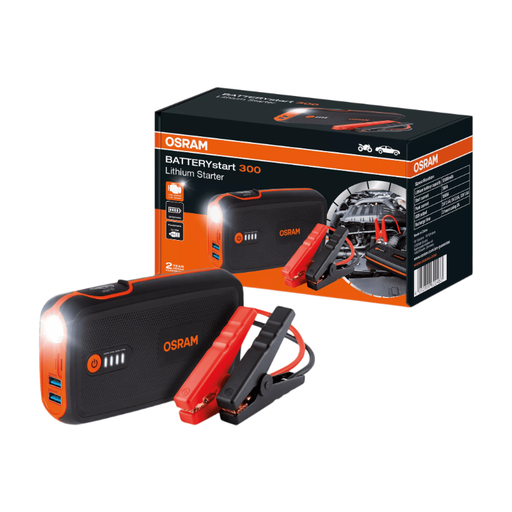
Why it suits this type of user: This compact model is designed for everyday use with cars and motorbikes. The product description states that it supports petrol engines up to 6 litres and diesel engines up to 3 litres.
The specifications state both the 12V rating and separate limits for petrol and diesel engines. That means you don’t have to rely solely on the general claim that it’s “for cars”.
1.500A peak current, a 13.000mAh lithium-ion battery, two USB outputs and an integrated LED torch. According to the product details, it weighs 706 grams.
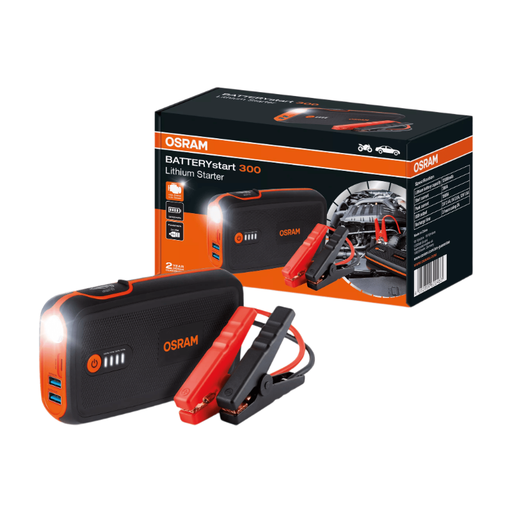
Why it suits this type of user: This model offers extra connection options for drivers who want to power a 12V device as well as start their vehicle, such as a tyre inflator or cool box.
The product information gives specific engine limits: up to 8 litres for petrol and 4 litres for diesel. Be sure to check these against your vehicle’s specifications.
2.000A peak current, 16.800mAh capacity, two USB ports, a 12V output and an LED torch. The stated weight is 1.174 grams.
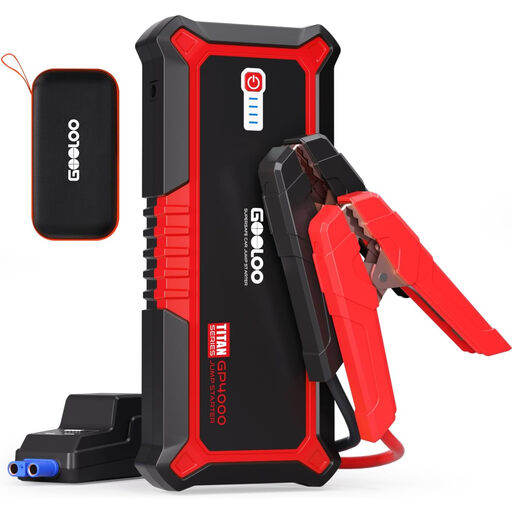
Why it suits this type of user: Its high peak current and support for larger vehicles make this model a good option for SUVs, motorhomes, vans, boats and regular use outdoors.
The description lists a BOOST function, 10 safety features and an operating temperature range of -20°C to 60°C. Don’t exceed the limits set out in the manual.
4.000A peak current, support for petrol engines up to 10 litres and diesel engines up to 10 litres according to the product description, plus USB ports and LED lighting.
We’ve put together a complete, up-to-date list of products that meet these strict selection criteria and the applicable European safety regulations.
Before use, read the manual and check that both the battery and vehicle are 12V. Make sure the car is stationary, switch off electrical accessories and ensure the clamps aren’t touching each other.
The general procedure is:
Stop if you notice damaged cables, a leaking battery, smoke or unusual heat. A jump starter won’t fix a battery that’s faulty beyond repair.
No. Check the 12V voltage, engine type and maximum engine capacity. A jump starter has separate limits for petrol and diesel engines. A completely faulty battery or a vehicle with a 24V system may also fall outside the stated range of use.
That depends on the battery technology, storage temperature and maintenance. Recharge it regularly as instructed in the manual, and don’t leave it in a hot car for long periods. A display or battery indicator makes it easier to check the charge, but doesn’t guarantee the actual condition of your vehicle’s battery.
The USB ports are handy for phones, tablets and other small devices. Capacity and charging speed vary by model. Check the number of ports, the USB specification and the maximum output before using the battery booster as your regular power bank.
