
Vandaag of morgen in huis

Kwaliteit gegarandeerd

Welkomstaanbiedingen ontgrendelen: GRATIS bezorging | Tot 80% korting | Gratis 30 dagen JoyPlus-proefperiode
Download de app
A flat car battery often strikes at the worst possible time: before you leave for work, during a holiday or in a dark car park. A car jump starter can get you going without needing another car and a set of jump leads. However, models vary considerably in starting power, battery capacity, leads and ease of use.
Look out for these three common pitfalls:
First, check that your vehicle has a 12V system. A 12V jump starter is designed for many cars, SUVs, motorbikes, vans, motorhomes and some boats. Don’t use it for a 24V system or an electric vehicle with a high-voltage battery unless it is specifically designed for that purpose.
Next, check the stated engine capacity:
According to their product specifications, car battery jump starters rated at 1,200 to 2,000 A may be suitable for many standard 12V vehicles. More powerful models rated at 3,000 A or above are designed for larger engines, but a higher figure doesn’t automatically mean a model will suit every vehicle.
A jump starter with jump leads should come with clear connection instructions. Many models use smart clamps with features such as:
These are technical features, not a guarantee that incorrect use is impossible. Always read the manual. Many instructions say to connect the red clamp to the positive terminal and the black clamp to a suitable unpainted metal earth point. Then start the engine within the stated time, and don’t keep turning it over for too long during an attempt.
A portable jump starter should fit in your car and be kept away from unnecessary heat or moisture. Check its weight, dimensions and whether it comes with a storage case. A compact model weighing around 330 grams is handy for a small car, while a larger battery may offer more connection options.
Also check:
Don’t leave a battery booster in a hot car for long periods unless the manual says it’s safe to do so. Fully charge the device before using it for the first time, and check its charge level before setting off on a journey.
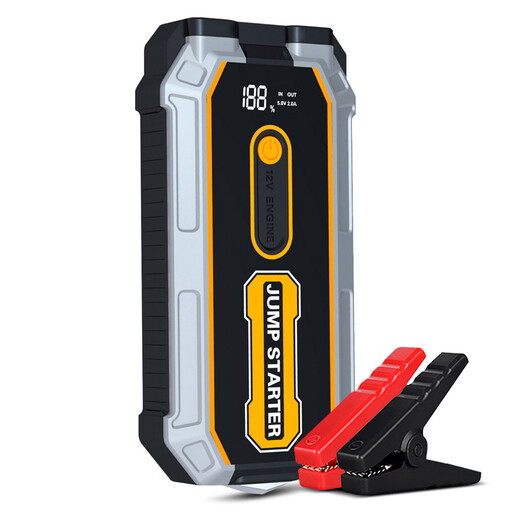
Why it suits this profile: With a peak current of 1,200 A, dimensions of 165 × 84 × 30 mm and a weight of around 330 grams, this model is practical for everyday use in a car or on a motorbike.
The product description lists a peak current of 1,200 A, a starting current of 600 A and a rated capacity of 7,200 mAh. That gives you more information than just a marketing figure.
According to the product specifications, it’s suitable for 12V petrol and diesel vehicles. It features an LCD display, USB output and three-mode LED lighting.
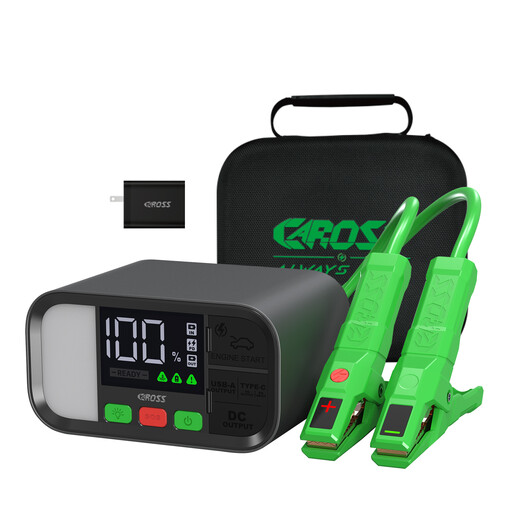
Why it suits this profile: This model is aimed at drivers who value straightforward controls, a sturdy casing and extra charging options on the go.
The 3-inch digital screen displays the status, and the Smart Connect clamps are designed to detect incorrect polarity, according to the product description.
Peak current of 1,600 A, a 16,000 mAh lithium-ion battery and a 65W PD output for compatible devices.
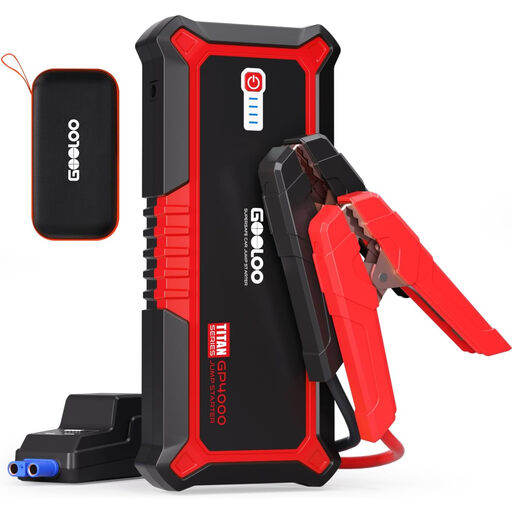
Why it suits this profile: Its stated peak current of 4,000 A and support for larger petrol and diesel engines make it a good fit for motorhomes, SUVs, vans and intensive outdoor use.
As well as the peak current, the product description specifies compatibility with diesel engines up to 10.0 litres and lists built-in safety features. Always check this against your vehicle’s details.
Two USB outputs, USB-C, a storage case, smart jump leads and a built-in LED light for use in low-light conditions.
We’ve put together a complete, up-to-date list of products that meet these strict selection criteria and the applicable European safety regulations.
First, check that the jump starter is sufficiently charged and that the vehicle has a 12V system. Connect the clamps as instructed in the manual, check the status indicator and start the engine within the stated time. Once the engine has started, disconnect the clamps as directed. Don’t use the device with a leaking, frozen or visibly damaged battery.
Its lifespan depends on the battery type, storage temperature, use and maintenance. Recharge your jump starter after use and check the charge level every few months. Store it somewhere dry, away from direct sunlight and out of an extremely hot car for long periods. The warranty period varies by product and is listed in the product specifications.
Many models have USB ports, so they can also be used as a portable power bank for your car. For example, you can use one to charge a phone, GPS device or tablet. Check each model’s output, ports and support for fast charging. Don’t let the power bank feature distract you from checking that the jump starter is compatible with your vehicle.
