
Vandaag of morgen in huis

Kwaliteit gegarandeerd

Welkomstaanbiedingen ontgrendelen: GRATIS bezorging | Tot 80% korting | Gratis 30 dagen JoyPlus-proefperiode
Download de app
A flat battery usually happens at the worst possible time: on a cold morning, on the way to work or at a campsite with no immediate help available. With a car jump starter, you can try to start a 12V vehicle yourself, without a second car or long jump leads. However, not every compact device is suitable for every engine.
Marketing for a car jump starter often focuses on high amp ratings and large battery capacities. Those figures do not tell the whole story. You should also consider engine compatibility, charge level, cable protection and how you store the device.
A figure such as 2,000A or 4,000A sounds impressive, but peak current is not a complete indicator of performance. Also check the stated starting current, vehicle type and maximum engine capacity. A jump starter for petrol and diesel engines may have different limits.
A 12V jump starter for a small petrol engine will not automatically have enough capacity for a diesel engine, motorhome or van. Use your vehicle’s specifications and the product description as your starting point.
A capacity of 10,000mAh or 20,000mAh mainly indicates how much energy is available for repeated use and charging devices. Starting performance is also affected by the battery cells, cables, connections and temperature.
When choosing a jump starter with a power bank, therefore, look at both figures: capacity in mAh or Wh and the stated peak and starting current.
Features such as reverse-polarity, short-circuit, overload and overheating protection are useful. However, you should always follow the instructions. The red clamp generally connects to the positive terminal and the black clamp to the negative terminal or a suitable unpainted metal earth point, depending on the model’s instructions.
Do not use a car battery jump starter with a damaged, leaking or swollen battery. A jump starter is emergency starting equipment, not a way to repair a worn-out vehicle battery.
Most portable jump starters in this category are designed for 12V battery systems. They are not automatically suitable for 24V lorries, buses or the high-voltage batteries used in electric vehicles.
Next, check the limit for your engine:
The stated suitability is based on information provided by the manufacturer or seller. Actual performance may depend on the condition of the battery, outdoor temperature and connection.
Good protected jump leads have sturdy clamps, sufficient cable length and clear positive and negative markings. Look for product information about reverse-polarity, short-circuit, overcurrent and overheating protection.
A display or status light can help you check the charge level and connection. It does not remove the need to connect the cables correctly.
A jump starter with a USB output can also be used as a power bank for a phone, sat-nav or camera. Models with a USB-C input or fast charging are easier to recharge, but check whether the correct cable and adapter are included.
Also consider:

Why it suits this profile: According to the product description, this compact model is designed for 12V petrol and diesel vehicles, including cars, SUVs and motorbikes. It weighs approximately 330 grams.
The stated 1200A peak current is supplemented by a listed starting current of 600A and an LCD display for checking the remaining charge.
12800mAh battery according to the listing, 10W USB output, three light modes and a stated charging time of approximately four hours.
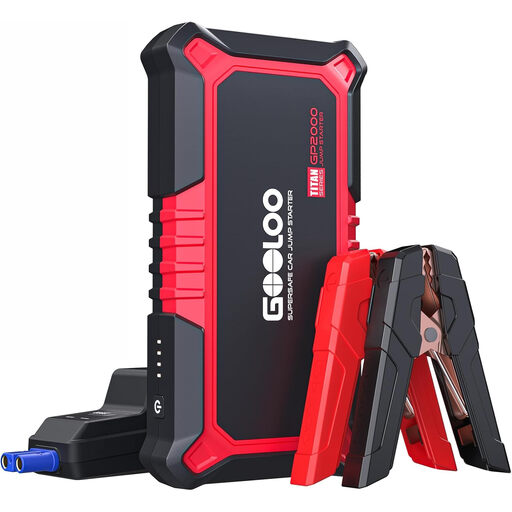
Why it suits this profile: Suitable for drivers looking for a 12V car jump starter with comprehensive cable protection, a power bank and a torch for regular travel.
The product information lists ten protection functions, including short-circuit, overvoltage and reverse-polarity protection. Check the instructions before use.
2000A peak current, reportedly suitable for up to 8.0L petrol and 6.0L diesel engines, plus two USB outputs and a 400-lumen LED light.
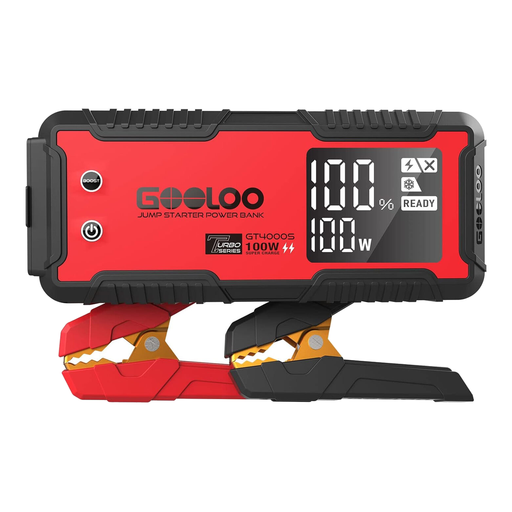
Why it suits this profile: An option for SUVs, motorhomes, vans and intensive use where a higher stated starting capacity and additional connections are important.
In addition to a 4000A peak current, the product information lists a display, ten protection functions and a BOOST mode for very low battery voltage.
According to the product description, suitable for up to 10.0L diesel engines and all petrol engines; it also offers 100W charging, three USB ports and a 15V/10A connection.
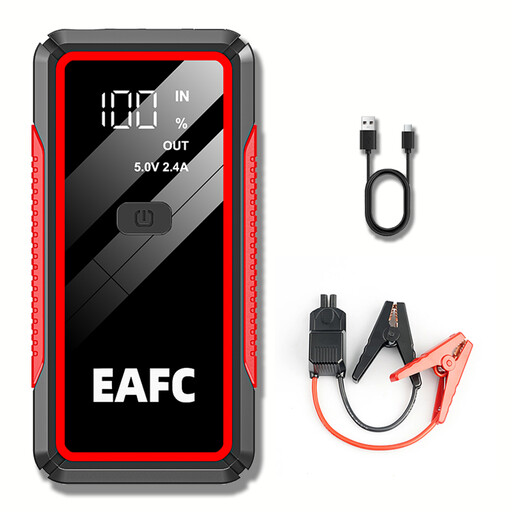
Why it suits this profile: Practical for anyone who wants to keep a compact emergency car starter with a torch and USB function in the boot.
The listing mentions smart clamps with protection against reverse polarity, overload, overvoltage and short circuits.
2000A peak current, 10,000mAh battery, stated suitability for up to 6.0L petrol and 4.0L diesel engines, plus three LED modes.
We have put together a complete, up-to-date list of products that fully meet these strict selection criteria and the applicable European safety regulations.
First, charge the car jump starter sufficiently and read the instructions. Switch off the car, connect the red clamp to the positive terminal and the black clamp to the indicated negative terminal or earth point. Activate the jump starter according to the instructions and try to start the engine briefly. Do not keep the engine running for an extended period during repeated attempts. After a successful start, remove the clamps in the order specified by the manufacturer.
This depends on the battery type, usage, storage temperature and maintenance. Lithium models lose charge during storage. You should therefore check the display regularly and charge the device according to the instructions. Do not store it for long periods in extreme heat or cold if the manufacturer advises against this.
The direct running costs are generally limited to charging the internal battery. However, a model may need to be recharged after being stored for a longer period. Also check whether a charging adapter, storage bag and suitable cable are included as standard. This helps to avoid unexpected additional costs after purchase.
