
Vandaag of morgen in huis

Kwaliteit gegarandeerd

Welkomstaanbiedingen ontgrendelen: GRATIS bezorging | Tot 80% korting | Gratis 30 dagen JoyPlus-proefperiode
Download de app
A flat car battery often strikes at an inconvenient time: in a car park, on a camping trip or on the road in a van. A car jump starter can get you moving again without having to wait for another driver or roadside assistance. However, not every model is suitable for every vehicle.
The main pitfalls usually have less to do with appearance and more to do with specifications and how you use the device.
A high peak current sounds appealing, but it doesn’t tell you everything about whether a jump starter is suitable in practice. Check that it’s designed for your 12V battery, engine type and capacity too. A model for a small petrol engine won’t automatically be suitable for a large diesel engine, motorhome or lorry.
Also look at the difference between the claimed peak current and the regular starting current. Brands don’t always use the same testing method. So, use the product’s compatibility information as your starting point.
A jump starter with a compressor is handy for a slow puncture or topping up your tyres on the go. However, a maximum pressure of, say, 150 or 160 PSI doesn’t mean every tyre will inflate at the same speed. The actual speed depends on the tyre size, its starting pressure and how much heat the pump generates.
Check whether the device has an automatic shut-off, a clear display and suitable valve adaptors. If you’re using it for a long time, stop as instructed in the manual to prevent overheating.
Protection against reverse polarity, short circuits and overheating is useful. Even so, you must connect the red clamp to the positive terminal and the black clamp to the negative terminal or a suitable unpainted metal earth point, depending on the manufacturer’s instructions.
Never let the clamps touch each other. Only use the supplied jump leads, and check before buying that the manual clearly explains how to connect the car jump starter.
Most portable jump starters in this category are designed for vehicles with a 12V lead-acid battery. Then check the maximum engine capacity specified:
A car battery booster won’t start an engine if, for example, the starter motor is faulty, the battery is damaged or there’s a fuel problem.
Peak current is an important point of comparison, but your jump starter also needs to be sufficiently charged. Some manufacturers recommend a charge level of at least 50 per cent before use; always follow the manual.
Battery capacity, often shown in Wh or mAh, mainly determines how often you can charge devices and how much reserve power is available. A higher capacity usually means a heavier device too. For everyday use in a small car, a compact model may be more convenient than a heavy emergency starter with extra features.
Choose a model with sturdy clamps, cables that are long enough and clear status indicators. According to the product descriptions from various brands, selected models include several safety features, such as protection against overload, short circuits, overheating and reverse polarity. These are product specifications provided by the brands; they don’t replace safe use.
Store your jump starter power bank somewhere dry and out of direct sunlight, and don’t leave it in a hot, closed car for long periods. Check its charge level every few months. Some models are recommended for periodic recharging after several months in storage.
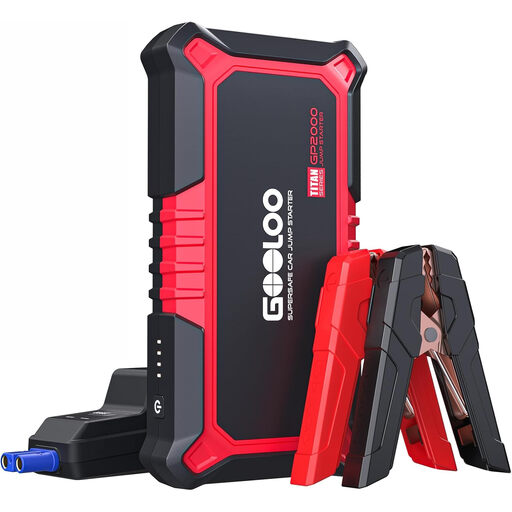
Why it suits this user: This compact model is aimed at motorists and motorcyclists who want to keep a straightforward 12V jump starter and power bank in the car.
The product description clearly states 12V compatibility, support for up to 8,0-litre petrol and 6,0-litre diesel engines, plus ten listed safety features. Even so, check this against your vehicle’s manual.
2000 A peak current, two USB outputs, a 400-lumen LED light and a stated weight of around 545 grams.
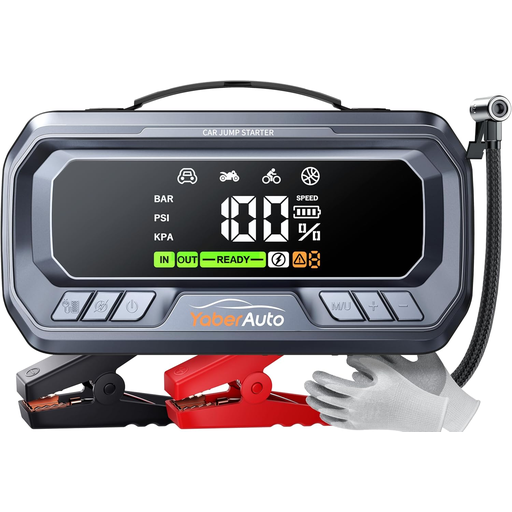
Why it suits this user: The combination of jump starter, compressor, display and charging functions makes this a good fit for drivers looking for one comprehensive emergency device for a car, SUV or motorhome.
The product lists the starting current, peak current, engine compatibility and compressor function separately. This makes it easier to compare its features with your vehicle’s needs, rather than focusing on just one amp rating.
According to the product description: a 160 PSI compressor, 3,3-inch LCD screen, USB-C with two-way 65W PD and a stated peak current of up to 6500 A.
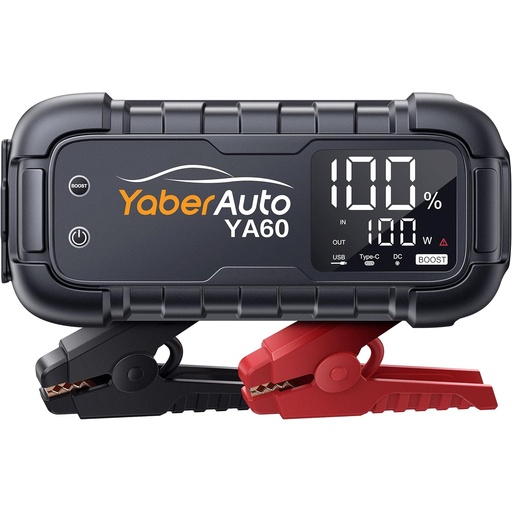
Why it suits this user: This model is aimed at larger petrol and diesel vehicles, long journeys and users who also want to power mobile devices or 12V accessories.
The stated compatibility with diesel engines up to 12,0 litres, along with the charging and safety information, gives you more context than simply calling it a “powerful jump starter”. Only use the boost function as instructed in the manual.
8000 A peak current according to the product description, two-way 65W charging, 150W DC output, a 600-lumen LED light and a 26800 mAh lithium polymer battery.
We’ve put together a complete, up-to-date list of products that meet these strict selection criteria and the applicable European safety regulations.
Only use a compressor with the correct hose and adaptor. After inflating, check the tyre pressure with a separate gauge if accuracy is important.
Sometimes, but it’s not guaranteed. A deeply discharged or damaged battery, or a poor cable connection, can prevent the jump starter from working. Some models have a special boost or forced-start function. Only use it if you’re certain the polarity is correct and the manual allows it.
Its lifespan depends on charge cycles, storage temperature and maintenance. Don’t leave the device in a hot car for long periods, and check its charge level regularly. If you don’t use a model for months, recharge it periodically as instructed.
It depends on how you’ll use it. If you only need a jump starter, a compact model without a pump is often enough. If you drive a lot, go camping, top up motorbike tyres or want a backup for a flat tyre, a model with a compressor, display and automatic shut-off may be more useful. Bear in mind its weight, storage space and the pump’s maximum run time.
