
Vandaag of morgen in huis

Kwaliteit gegarandeerd

Welkomstaanbiedingen ontgrendelen: GRATIS bezorging | Tot 80% korting | Gratis 30 dagen JoyPlus-proefperiode
Download de app
A flat car battery often happens at an inconvenient time: before leaving for work, in a dark car park or while travelling in a motorhome, boat or van. With a car jump starter, you may be able to start a 12V vehicle yourself, without a second car and without traditional jump leads.
However, not every model is suitable for every vehicle. High amp ratings, large capacity claims and extra features only mean something when they match your engine, usage situation and maintenance routine. Below, we explain what to look for in a portable jump starter, car starting aid or battery booster.
A rating such as 2000A or 4000A sounds clear, but you should also check the stated engine compatibility. Peak current is a short-term maximum value; starting current and the recommended engine size provide additional information.
A compact 12V jump starter for a small petrol car does not need the same capacity as a portable battery starter for a diesel van, SUV or motorhome. Choose based on your vehicle’s specifications, rather than simply looking at the biggest number on the packaging.
Battery capacity in mAh mainly indicates the amount of stored energy. A jump starter with 20.000mAh does not automatically have more starting power than a model with 10.000mAh. Therefore, check each of the following separately:
Also pay attention to the difference between nominal capacity and actual usable capacity. Some product descriptions state both values.
Features such as reverse-polarity protection, spark protection, overcurrent protection and short-circuit protection can make operation more straightforward. They do not replace connecting the clamps correctly or following the instructions.
According to the product information provided by the relevant brands, various models have multiple protection circuits. This is a product specification, not a guarantee that every incorrect connection will be risk-free. Use the red clamp on the positive terminal and the black clamp on the negative terminal or a suitable unpainted metal earth point, as stated in the instructions.
A jump starter for petrol and diesel must be suitable for the engine size. For many passenger cars and motorbikes, a model for 12V systems with a moderate peak current is sufficient. Vans, motorhomes, boats and larger diesel engines generally require higher specifications.
Also check whether your vehicle uses a conventional 12V lead-acid battery. A car jump starter is not intended for the high-voltage system of an electric car. If in doubt, you can find the battery specifications in your vehicle’s manual.
A good jump starter with safety clamps should have clear positive and negative markings. Look for insulated handles, strong springs, sufficient cable length and a clear status indicator. An LCD screen can show the remaining battery level and operating status, but always check how the manufacturer explains the indicators.
According to the product information, a boost function can help when the battery voltage is very low. Only use it when the instructions permit this for your vehicle.
A jump starter with power bank can charge USB devices during a journey or breakdown. Pay attention to the output power: 5V/2A is suitable for basic charging, while USB-C Power Delivery or QC3.0 offers more options for compatible devices.
A jump starter with LED light is practical when checking your vehicle in the dark. A steady light, strobe and SOS mode are common features. Also check the storage conditions. Lithium batteries should not be left in direct sunlight or in an extremely hot car for long periods.
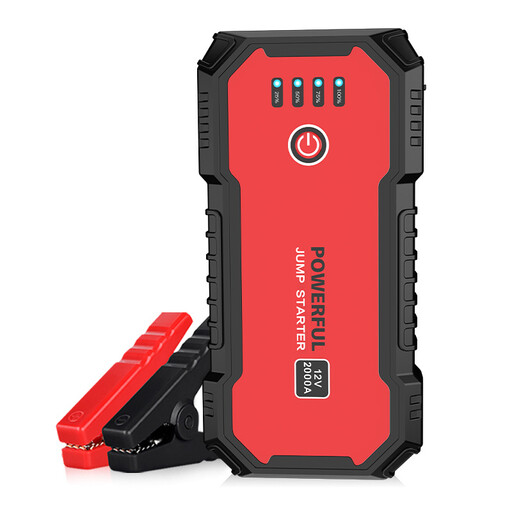
Why it suits this profile: According to the product specifications, this compact model weighs approximately 430 grams and is suitable for 12V petrol and diesel vehicles. This makes it easy to store in a glove compartment or emergency kit.
The product information lists 1500A peak current, 12V compatibility and QC3.0 charging separately. You therefore do not have to choose based on battery capacity alone.
Stated capacity of 20.000mAh, 18W charging, a simple LCD-free design and an LED light with three modes.
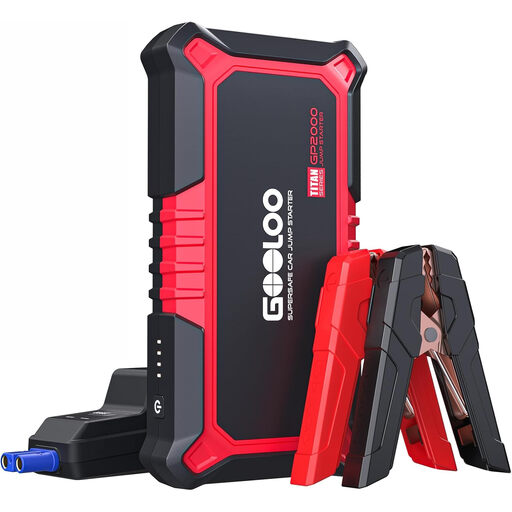
Why it suits this profile: The manufacturer states a peak current of 2000A, support for up to 8,0-litre petrol engines and 6,0-litre diesel engines, as well as multiple USB outputs. This makes the model appealing to motorists who want to combine emergency starting with portable power.
The stated vehicle limits, 12V specification and ten listed protection features are described separately. You should still check these details against your vehicle manual.
Two USB outputs, LCD display, 400-lumen lamp and a stated operating temperature of -20°C to 60°C.
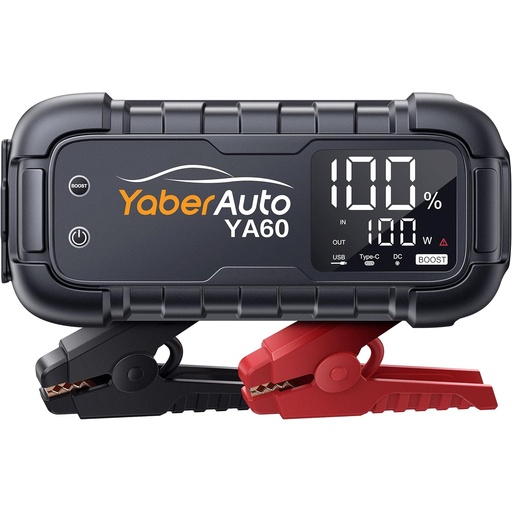
Why it suits this profile: According to the product description, this model is intended for 12V vehicles, all petrol engines and diesel engines up to 12,0 litres. The 150W DC output may also be suitable for certain accessories, provided they fall within the stated limits.
The specifications state engine compatibility, charging capacity, safety features and maintenance interval. This is helpful when using the device in motorhomes, SUVs, boats or work vehicles.
Stated peak current of 8000A, 65W two-way charging, 26.800mAh battery, 150W DC output and 600-lumen LED lamp.
We have compiled a complete, up-to-date list of products that fully meet these strict selection criteria and the applicable European safety regulations.
Do not use a jump starter with a damaged, leaking or swollen battery. A car emergency starter is designed to help start the vehicle; it does not replace diagnosing or repairing a worn battery.
Only if the model supports diesel engines and the stated engine size matches your vehicle. Starting a diesel engine may have different requirements from starting a petrol engine. Therefore, check both the product specifications and your car’s manual.
This varies by model. Manufacturers often recommend charging an unused jump starter periodically, for example every two to six months. Store the device in a dry place and do not leave it in a hot car for long periods. Check the charge level before a long journey.
A power bank function means that the device can charge USB devices; it does not automatically mean that it is suitable for every car battery. First check the 12V compatibility, starting current, engine limit and clamp protection. This helps you avoid buying a compact charger that is not suitable for your vehicle.
