
Vandaag of morgen in huis

Kwaliteit gegarandeerd

Welkomstaanbiedingen ontgrendelen: GRATIS bezorging | Tot 80% korting | Gratis 30 dagen JoyPlus-proefperiode
Download de app
A flat battery often happens at the worst possible moment: before leaving for work, during a camping trip or in a dark car park. With a car jump starter, you can try to start a vehicle with a flat 12V battery independently in certain circumstances. However, not every portable jump starter is suitable for every car.
As a Joybuy Product Recommendation Officer, I filter the key product specifications out of the marketing copy. This helps you see what to look for and which version suits your vehicle and intended use.
A high figure, such as 3000A or 7000A, sounds impressive. However, the stated peak power is not the only criterion. Also check:
A jump starter for a small petrol car has different requirements from a car battery booster for an SUV, van or lorry.
A jump starter with a compressor, LED light and power bank is versatile, but extra features also make the device larger and heavier. A tyre inflator and jump starter is useful for long journeys, but may be unnecessary if you are mainly looking for a compact emergency car starter to keep in the glove compartment.
Also pay attention to the stated capacity. Manufacturers sometimes list both the nominal capacity and the actual available capacity. For example, the Porbi S306 lists 12,800 mAh, with a rated output of 7,200 mAh.
A lithium jump starter is not a device you buy once and then leave unused for years. The products in this selection recommend charging them regularly. Some listings mention every two to three months; other models recommend topping up the charge periodically at a minimum.
Do not store a jump starter in a hot car, damp area or direct sunlight for long periods. Check the charge level before setting off and inspect the cables and clamps for damage.
The peak current indicates the maximum current the car jump starter can deliver for a short time. Do not treat this figure as a guarantee that every vehicle will start. Always compare the engine limit in the product description.
Examples from the listed specifications:
These figures come from the brands’ product listings. Check your vehicle’s manual and specifications before buying.
A 12V jump starter is intended for vehicles with a 12V starting system. Check that the red clamp is connected to the positive terminal and the black clamp to the negative terminal or a suitable earth point, exactly as stated in the manual.
Many models list protection against reverse polarity, short circuits, overloads and overheating, among other things. Treat this as an additional safety feature, not permission to connect the clamps carelessly. Only use the supplied cables when instructed by the manufacturer, and do not attempt to start a damaged or frozen battery.
A jump starter with a compressor can be useful when a tyre is under-inflated. Look beyond the maximum pressure of, for example, 150 PSI:
A compact model weighing around 330 grams is easy to carry. A multifunctional model with a compressor, larger battery and additional connections may weigh around one kilogram or more.

Why it suits this profile: Weighing around 330 grams, this compact model is suitable for motorists who want to carry a simple emergency car jump starter with them.
The listing states both the 1200A peak current and support for 12V petrol and diesel vehicles. This makes it easier to compare suitability more accurately.
Stated 12800mAh battery capacity, LCD display, USB output and LED lighting with three modes.
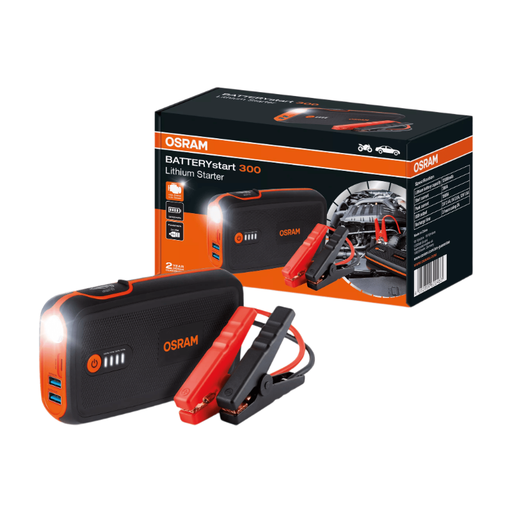
Why it suits this profile: An option for drivers looking for a branded model with additional connection options and a stated two-year warranty period.
The product specification states the maximum engine capacity: up to 8-litre petrol and 4-litre diesel engines. This helps you check vehicle compatibility.
Stated 2000A peak power, 16800mAh lithium-ion battery, two USB ports and a 12V output.
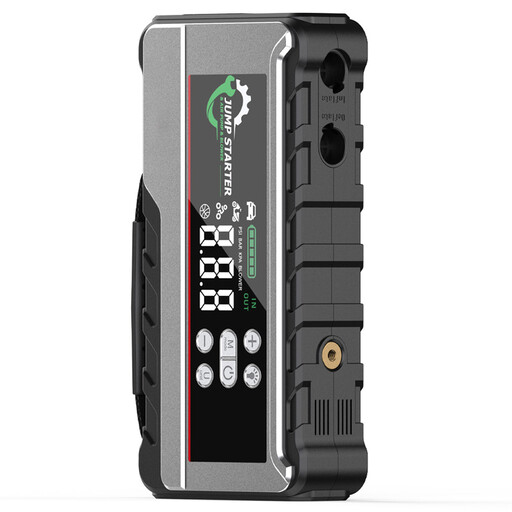
Why it suits this profile: Suitable for SUV, van and outdoor enthusiasts who want to inflate tyres and other inflatables as well as start their vehicle.
The specification states both the vehicle applications and compressor capacity. However, the maximum operating time and storage instructions are still important to check.
3000A peak current, compressor up to 150 PSI, PD65W charging and an LED light with steady, strobe and SOS modes.
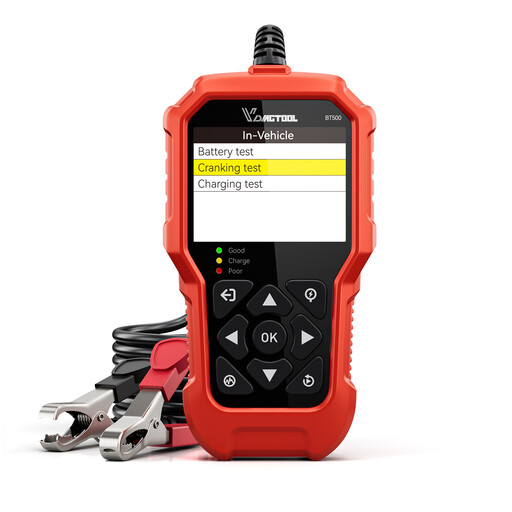
Why it suits this profile: For DIY enthusiasts and fleet operators who want to check the battery and charging system before buying an emergency car starter.
According to the product description, the BT500 tests voltage, resistance, charge level, starting power and the charging system. The listing excludes lithium and deep-cycle batteries.
Support for 6V, 12V and 24V systems and various conventional battery types according to the listing.
We have put together a complete, up-to-date list of products that fully meet these strict selection criteria and the applicable European safety regulations.
A jump starter is not a substitute for a repair. If a battery repeatedly goes flat, there may also be a problem with the battery, starter motor or alternator. A car battery tester can help identify the possible cause more precisely.
Check the charge level regularly. Several product listings recommend charging every two to three months when the device is not in use. Store the model somewhere cool and dry, and recharge it before a long journey.
This depends on the battery, temperature, connection and specifications of the car jump starter. Some models have a boost or force-start function for very low battery voltage. Only use this function as instructed in the manual, and do not attempt to start a damaged or frozen battery.
For drivers who often take long journeys, go camping or use an SUV, motorbike or van, a tyre inflator and jump starter can be practical. If you simply want to be prepared for a flat battery, a lighter portable jump starter without a compressor may be sufficient. Therefore, compare the features, weight, charging ports and stated vehicle limits rather than just the amp rating.
