
Vandaag of morgen in huis

Kwaliteit gegarandeerd

Welkomstaanbiedingen ontgrendelen: GRATIS bezorging | Tot 80% korting | Gratis 30 dagen JoyPlus-proefperiode
Download de app
A flat battery or soft tyre usually catches you at the worst possible moment: in a dark car park, on a road trip or just before setting off in your campervan. A car jump starter with compressor combines several functions in one portable device. According to the product description, you can use it to start a 12V vehicle, inflate tyres, charge a phone and provide lighting.
However, not every model is suitable for every vehicle. Marketing terms such as “150 PSI”, “3000A” or “for all cars” only tell you so much unless you know how to interpret them. Read on to find out what to look for before buying a portable jump starter, car battery booster or electric tyre inflator.
A high peak current sounds impressive, but suitability also depends on the engine type, engine capacity, battery condition and temperature. A compact 12V car jump starter for a small petrol car is not automatically suitable for a diesel van, SUV or campervan.
So always check:
Don’t treat “suitable for all vehicles” as a universal guarantee. Check the specific product specifications and follow the instructions.
A 150 PSI compressor may indicate a high maximum pressure, but that doesn’t mean it will inflate a car tyre quickly. The actual speed depends on factors including airflow, the motor, the hose and heat build-up.
For a car tyre inflator, it’s also important to check whether the device:
A higher PSI figure is mainly a maximum technical value. The recommended tyre pressure for passenger cars is generally much lower. Always use the pressure specified for your vehicle, for example on a sticker inside the door frame or in the handbook.
A car emergency starter only works when its built-in lithium battery is sufficiently charged. A device left in the boot for months without being maintained may be less useful when you need it.
Check the charging instructions. Some models’ product information says to charge the device for several hours before first use. Others recommend charging it every three to six months. Store your jump starter somewhere dry, away from direct sunlight and not in extreme heat for long periods. Also check that the cables, connections and casing aren’t damaged.
Don’t just look at the stated peak current. Consider the combination of starting current, peak current and engine size. For example, a product may be described as suitable for petrol engines up to 4.0 litres and diesel engines up to 2.0 litres. Another model may be specified for much larger engines.
A compact model may be practical for a small city car. For an SUV, van or campervan, it’s wiser to allow extra headroom, provided the manufacturer specifies the vehicle type and engine capacity. If in doubt, check your car’s specifications and the jump starter’s instructions.
A built-in portable air compressor is handy for an underinflated tyre, bicycle tyre or inflatable camping item. Look for a digital tyre inflator with preset pressure and automatic shut-off. This means you won’t have to keep checking the pressure while inflating.
A compressor can get hot. For example, the UTRAI JS-9 instructions state that the compressor must not be used for more than ten minutes at a time and should be allowed to cool down between uses. These usage limits aren’t a minor detail: they determine whether the device is suitable for a single emergency top-up or for inflating several tyres in a row.
The capacity of a car power bank is often given in mAh. A higher capacity may offer more charging options, but it doesn’t tell you exactly how many phones you can charge. That depends on conversion losses, your phone’s battery and the USB port you use.
Useful extras include:
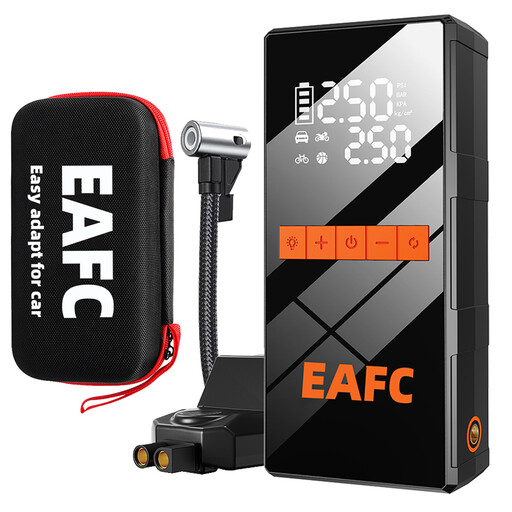
Why it suits this profile: According to the product description, this compact model combines jump starting, inflation, charging and lighting. Its stated support for petrol engines up to 4.0 litres and diesel engines up to 2.0 litres makes it suitable for many everyday passenger cars.
The product specifications list a maximum pressure of 150 PSI, automatic shut-off and several pressure units. So you can see more than just a marketing figure.
1200A peak current according to the product information, an 8000mAh battery, USB output and a compact size of 190 × 87 × 42 mm.
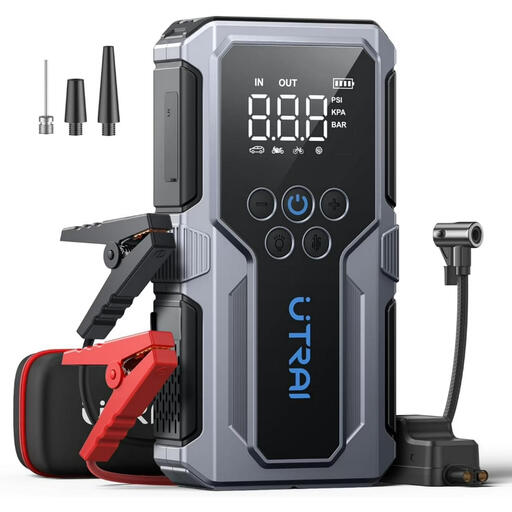
Why it suits this profile: According to the product description, this model is designed for 12V vehicles, including SUVs, lorries and boats. The display and safety detection are useful for anyone who wants clear feedback.
According to the description, the LCD screen shows the battery level and tyre pressure. The cable indicates whether the connection is correct; don’t use the device if you see a red warning signal.
3000A peak current, 15000mAh capacity, a 150 PSI compressor with automatic shut-off, plus USB and USB-C ports.
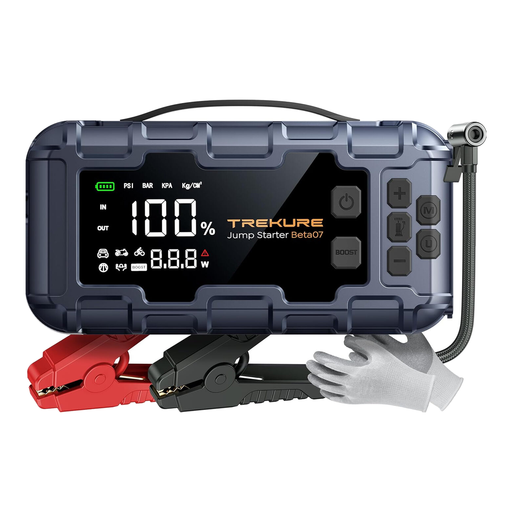
Why it suits this profile: According to the product description, this model is aimed at larger 12V petrol and diesel vehicles, such as SUVs, vans and campervans. The extra connections are useful for longer journeys and outdoor use.
The specifications list a 160 PSI compressor, preset pressure modes and a large display. However, always check that your engine falls within the stated vehicle limits.
According to the product description: 6000A peak current, 45W USB-C PD, 160 PSI, a 600-lumen lamp and a stated airflow of 45 litres per minute.
Put the car in park or neutral and switch off electrical systems before connecting the clamps. Connect red to the positive terminal and black to the negative terminal or the designated metal earth point. Don’t use a jump starter with a damaged, leaking or frozen battery.
When inflating a tyre, connect the hose securely, set the desired pressure and keep the maximum operating time in mind. Let the compressor cool down when instructed to do so in the manual. Also, don’t leave the device loose among heavy luggage, as this could damage the connections or casing.
We’ve put together a complete, up-to-date list of products that meet these strict selection criteria and the applicable European safety regulations.
No. Check the voltage, fuel type, maximum engine capacity and whether it’s compatible with hybrid vehicles. A 12V model isn’t automatically suitable for every 12V vehicle.
That depends on the battery type, usage, storage temperature and maintenance. Charge the device according to the manual and check its charge level every few months. If the internal battery is flat, the emergency starter may not work when you need it.
The maximum pressure is generally well above the normal tyre pressure for a passenger car. Digital pressure measurement, automatic shut-off, airflow and the permitted operating time are more important. Always use the tyre pressure specified for your vehicle.
